

Image Courtesy: Tesla
Tesla recorded a significant decline in vehicle registrations in California during the first quarter of 2026, reflecting broader weakness across the electric vehicle market. The company’s sales in the state dropped by more than 24 percent compared to the same period last year, marking one of its steepest regional declines in recent years.
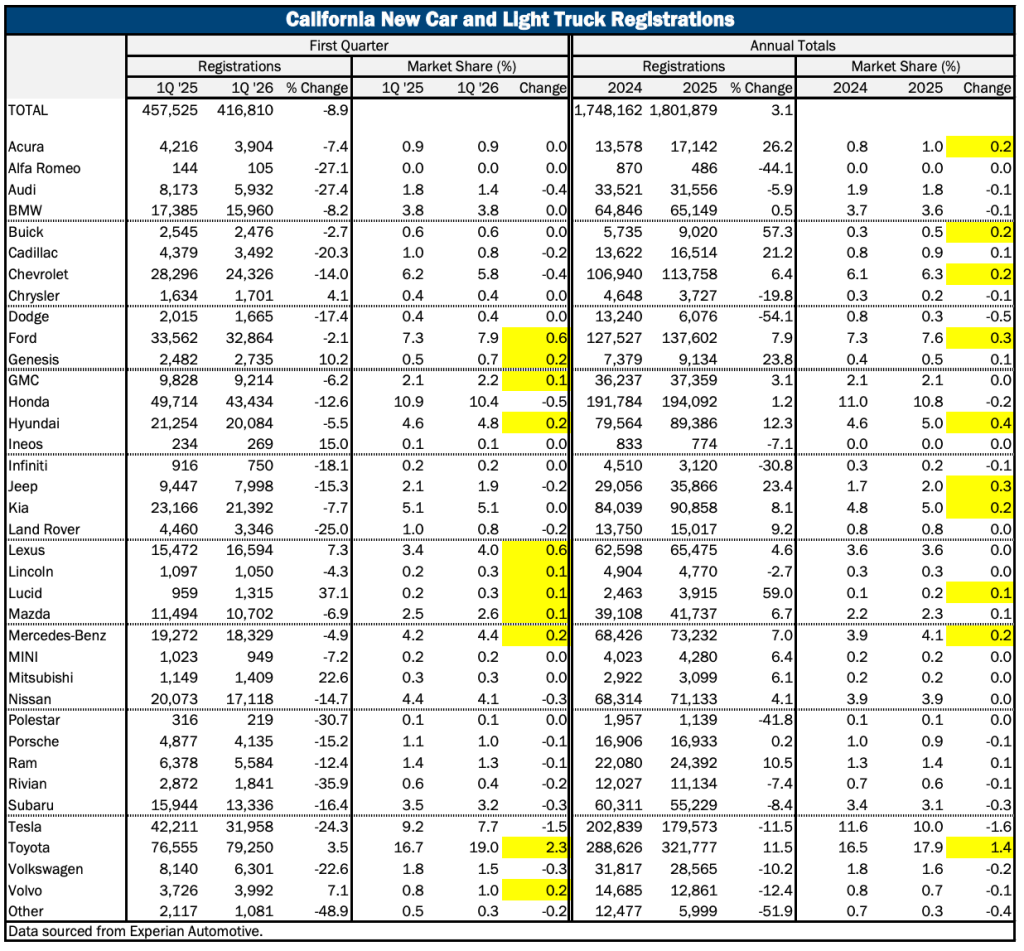
The figures, released by the California New Car Dealers Association, show that Tesla registered 31,958 vehicles in the state, down from 42,211 a year earlier. The downturn coincides with a wider contraction in zero emission vehicle adoption, with California’s EV market share falling to 13.7 percent, its lowest level since 2021, according to Electrek.
The decline represents a reduction of more than 10,000 units year over year and follows an already weak first quarter in 2025, when production adjustments for the Model Y affected supply. Tesla’s overall market share in California also fell, dropping from 9.2 percent to 7.7 percent. Despite the slowdown, the Tesla Model Y remained the top selling light SUV in the state, while the Tesla Model 3 continued to contribute to overall volume, though both models saw reduced registrations.
Courtesy: Electrek
The broader EV market in California experienced an even sharper contraction. Total zero emission vehicle registrations declined by more than 40 percent year over year, falling from over 95,000 units to just above 57,000. The downturn affected nearly all major manufacturers, with brands such as Mercedes Benz, BMW, Ford, and Kia reporting substantial drops in EV registrations.
In contrast, hybrid vehicles gained traction during the same period, reaching a market share of 20.9 percent and surpassing fully electric vehicles. Gasoline powered vehicles also increased their share, rising to 61.1 percent of total registrations. The shift suggests a change in consumer behavior, with buyers opting for more flexible or cost effective options amid evolving market conditions.
One of the primary factors behind the slowdown is the expiration of the 7,500 dollar federal tax credit for electric vehicles in late 2025. The removal of this incentive has had a measurable impact on purchasing decisions, contributing to declining demand across the United States. As the largest EV market in the country, California has been particularly affected by the policy change.
Amid the downturn, Lucid Motors emerged as a rare exception, posting a 37 percent increase in registrations in California. Its recent product lineup, including the Gravity electric SUV, appears to be gaining traction despite the broader market decline.
The data highlights a period of adjustment for the EV sector, as automakers and consumers respond to shifting incentives, pricing pressures, and evolving technology strategies. While electric vehicles remain a central part of long term industry plans, the latest figures indicate that growth may not be consistent across all markets and timeframes.


