

Image Courtesy: BP
BP has reported a sharp increase in profits, with earnings more than doubling in its latest financial results. The rise comes amid higher global oil prices following disruptions linked to conflict in the Middle East, which have tightened supply and pushed energy costs upward.
The company said underlying profits for the first quarter reached 3.198 billion dollars, significantly above both last year’s figure of 1.381 billion dollars and analyst expectations. The increase was driven largely by strong oil trading performance and higher commodity prices, particularly as crude markets reacted to instability around key shipping routes, as reported by Sky News.
A major factor behind the price surge has been disruption to the Strait of Hormuz, a critical passage through which a large share of global oil and liquefied natural gas is transported. Since early March, benchmark oil prices have climbed sharply, in some cases exceeding 100 dollars per barrel, although only part of that increase is reflected in BP’s current results.
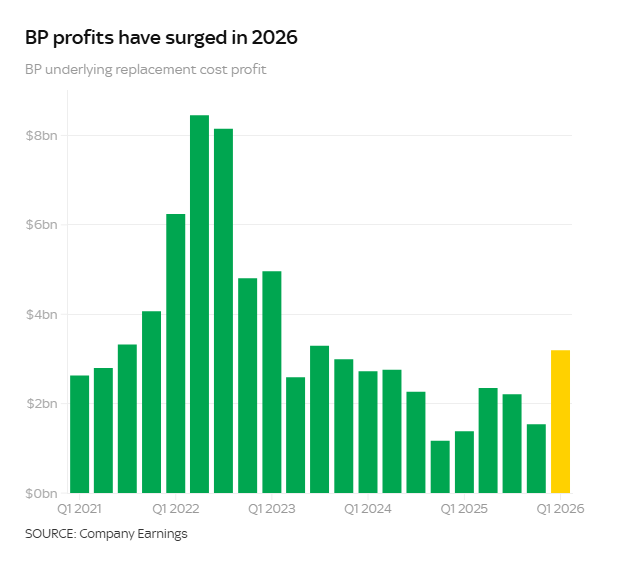
Courtesy: SkyNews
Despite the geopolitical tensions, BP’s operations have remained relatively insulated from direct disruption. Much of its production is based in North America, allowing the company to benefit from higher prices without experiencing significant supply interruptions. However, it noted that production volumes and margins remain sensitive to ongoing developments in the region.
The financial gains come with broader economic implications. Rising energy prices are expected to increase costs for households and businesses, with potential impacts on fuel bills and overall inflation. Analysts have warned that prolonged high prices could lead to higher energy bills in the coming months.
BP also reported a lower overall effective tax rate compared to the previous year, though it continues to pay elevated taxes in certain regions. In the United Kingdom, fossil fuel producers remain subject to a windfall tax introduced after earlier energy price spikes, aimed at redistributing excess profits.
The results have drawn criticism from some policymakers and environmental groups, who argue that energy companies are benefiting disproportionately from global instability. Calls for stronger taxation and regulatory measures have intensified as profits rise alongside consumer costs.
BP’s performance reflects the broader dynamics of global energy markets, where geopolitical events can quickly reshape supply, pricing, and corporate earnings. As the situation evolves, both industry and consumers are likely to feel the effects of sustained volatility.


