

Image Courtesy: SCMP
A self-taught Chinese inventor known online as the “Madman of Science” believes low-cost space travel could become commercially viable after his team successfully launched a self-developed liquid rocket earlier this year. The launch has drawn attention across Chinese social media and the country’s growing private aerospace sector.
In February, the 12-meter Shenzhen Pioneer rocket reached an altitude of 3,700 meters during a launch in Qinghai province, setting a local record for a liquid rocket launch in the region. The rocket was reportedly built in just 15 days by a five-person team led by 31-year-old entrepreneur Lu Yulong. Details about the project and Lu’s background were shared in a feature published by South China Morning Post.
Lu’s path into aerospace has been unconventional. Originally from Jiangxi province, he developed an early fascination with chemistry and electricity after suffering severe burns from an accidental acid exposure as a child. By primary school, he had reportedly taught himself advanced chemistry and began experimenting with explosives and high-voltage systems.
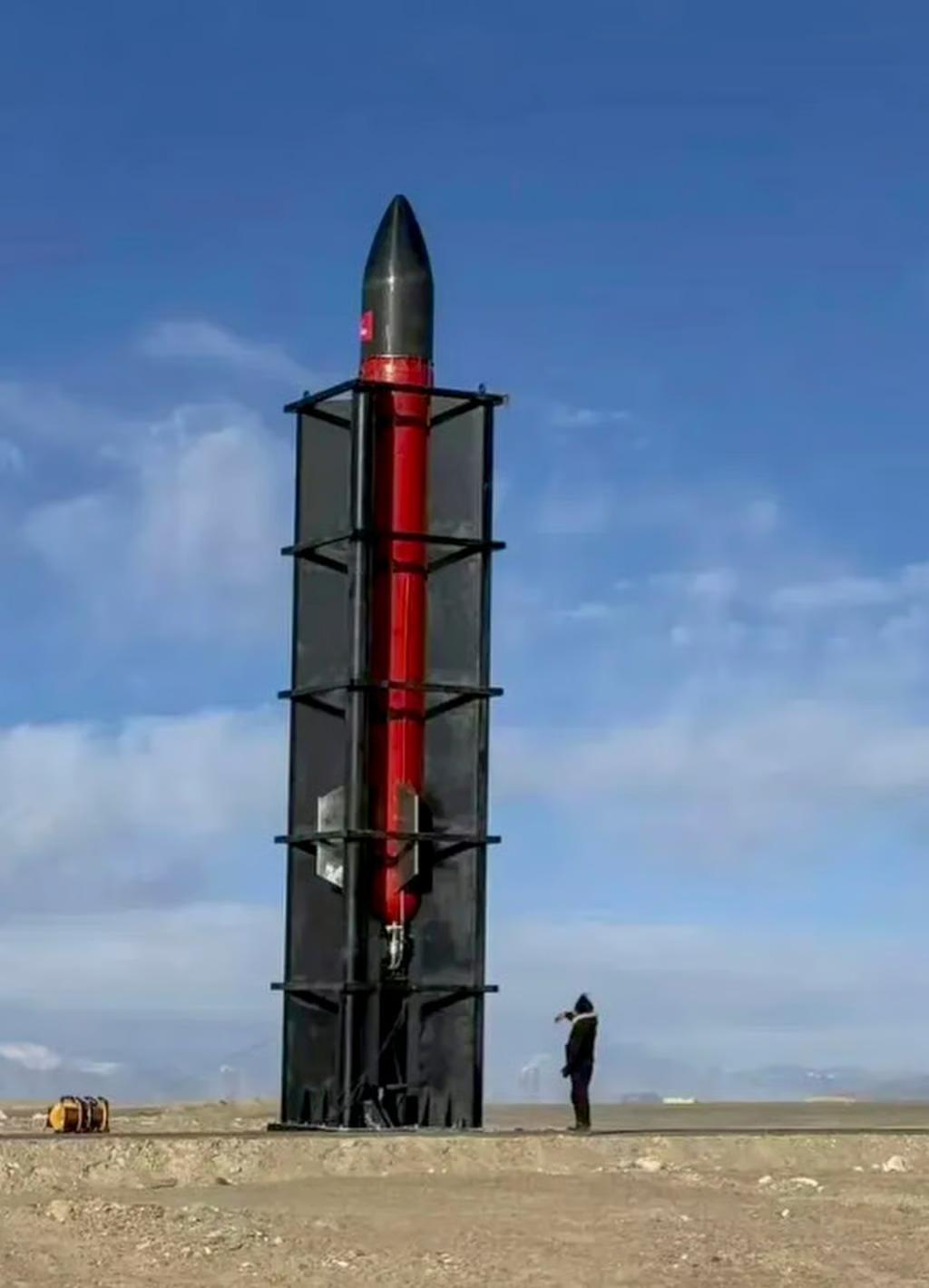
Lu Yulong stands next to his rocket before the countdown to launch. Photo: Sohu
In 2007, one of those experiments caused a major explosion that left him seriously injured. He underwent multiple surgeries, received hundreds of stitches, and permanently damaged one of his eyes. Despite pressure from his family to stop, Lu continued building laboratories and conducting experiments, sometimes in remote rural locations after his father repeatedly dismantled his home setups.
At 17, Lu left school and founded Yulong Aerospace Technology in Shenzhen. The company later developed products outside the aerospace sector, including an “electric flame stove” that uses plasma generated through electricity. The invention reportedly provided substantial funding for further rocket development.
Lu claims his company’s focus is reducing launch costs through large-scale manufacturing and simplified rocket systems. He says his liquid rocket engines cost less than 1,000 yuan per tonne of thrust, while launches for small satellites could cost significantly less than existing commercial options.
The company previously launched China’s first private liquid rocket in 2016 and successfully tested another sounding rocket in 2024. Lu now says his long-term goal is to reduce launch costs to a fraction of current reusable rocket systems and help support China’s expanding low Earth orbit satellite ambitions.
Yulong Aerospace plans to test a 100-tonne rocket engine later this year and begin commercial launch operations by 2027. The company is also preparing to build a manufacturing facility aimed at supporting larger-scale satellite launches.
Lu has gained a substantial online following by documenting the engineering process behind his projects. While some compare him to Elon Musk, Lu says his approach is different, with a stronger emphasis on cost reduction and industrial-scale production rather than premium aerospace systems.
His work reflects a broader trend in China’s growing private space industry, where lower launch costs and rapid manufacturing are becoming increasingly important competitive goals.


