

Within hours of the Wi-Fi Alliance officially approving Wi-Fi 7, information on its successor, Wi-Fi 8, has already begun to seep out, and it appears to go in a completely new direction. Wi-Fi 8, however, is not seeking even higher speeds; instead, it is putting emphasis on stability, low latency, and realistic performance at high loads or in environments with high interference.
Qualcomm reports that Wi-Fi 8 will be founded on 802.11bn. Where Wi-Fi 7 was all about bandwidth and raw throughput, Wi-Fi 8 is being engineered to maintain that performance when under pressure. The goal? More predictable and fluid interaction with the space we actually occupy, i.e. busy offices, smart homes, and places.
This evolution is determined by two key trends. One is the inflammable growth of latency-prone tools like AR glasses, wearables, and future generation health technology. Such devices require high-speed and continuous connections to other devices in the vicinity. Second is the increasing demand of AI systems which necessitates stable and high-speed access to edge or cloud servers. The traditional routers are being stretched to the limit by these trends.
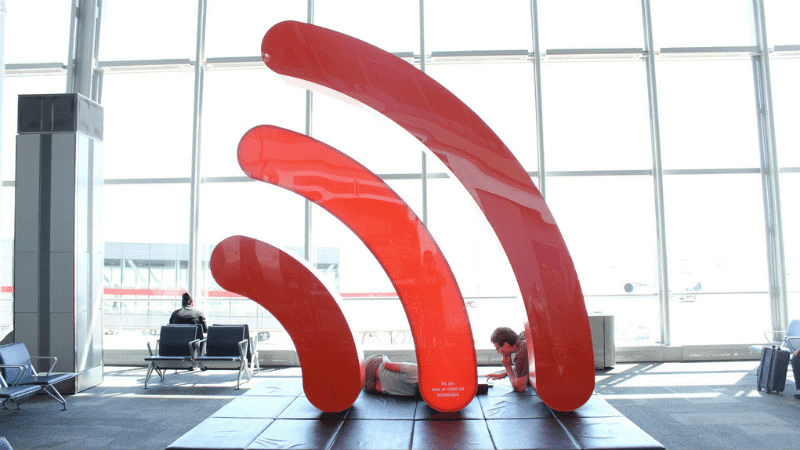
Wi-Fi 8 responds to this by reinventing how networks operate. One of the important innovations is the ability to roam across access points with a single mobility domain where the devices do not lose connectivity at all—which is ideal in airports, hospitals, and large offices. In the meantime, multi-access point coordination refers to the fact that several routers or extenders will not compete but coordinate, which is perfect in housing development in a dense urban area or a big facility.
Wi-Fi 8 introduces new innovations to the physical layer at the boundary of the signal where existing Wi-Fi 7 systems already struggle to prevent dropouts, rather than simply ramping up the signal strength. The other area of critical attention is on-device coexistence, which is the optimization of antenna use when radios such as Bluetooth, UWB, and Wi-Fi tend to interfere with each other.
Wi-Fi 8 is supposed to be completed by 2028, and it is not about being faster but smarter. It is designed to provide a wireless experience that acts like a wired one, consistent, seamless and invisible. It might not be splashed across headlines with gigabit benchmarks, but in the real world, it will offer a stunningly quiet revolution.


