

With the successful live-fire trials of its YILDIRIM-100 Directed Infrared Countermeasure (DIRCM) system, Aselsan, Turkey’s top defense company, has made a major advancement in improving airborne survivability. The YILDIRIM-100 system, which was created to counter infrared-guided missile threats in combat, is currently a crucial defense layer for both fixed- and rotary-wing aircraft.
By using high-energy, multi-band laser beams to target the seeker heads of air-to-air and surface-to-air missiles, the system was able to detect, track, and defeat them during the live tests. Using precisely targeted laser fire, the YILDIRIM-100 autonomously detected approaching missiles and interfered with their tracking systems, successfully rerouting them from their path prior to impact. These outcomes highlight the system’s ability to manage multiple threats at once and provide complete 360-degree hemispherical coverage.
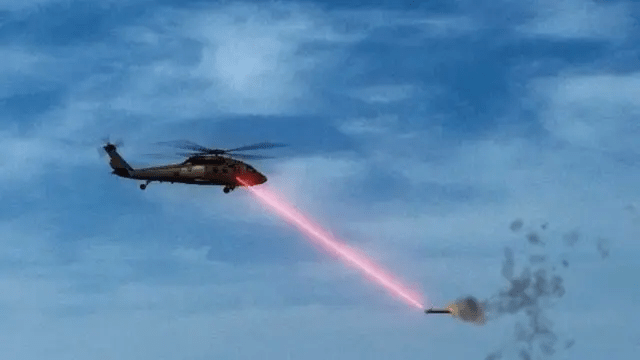
The YILDIRIM-100 is outfitted with a high-power laser module and a fast-tracking sensor as part of its twin-head turret system. To guarantee synchronized engagements, it communicates with both ultraviolet and infrared-based onboard missile warning systems. Particularly in high-threat situations, the system’s operational relevance for both new and legacy aircraft is increased by its low power consumption, small size and weight, and compatibility with NATO-standard warning systems.
DIRCM technology has become crucial as low-cost man-portable air defense systems (MANPADS) proliferate. The effectiveness of conventional flare countermeasures against sophisticated heat-seeking missiles has decreased, making directed infrared solutions the next frontier in defense.
A more sophisticated variant, the YILDIRIM-300, is also being developed by Aselsan and will be incorporated into Turkey’s fifth-generation KAAN fighter jet. After Russia’s Su-57, the KAAN will be the second fighter jet in the world with DIRCM capabilities once it is in service. Turkey’s strategic vision for air superiority and defense sovereignty is reflected in this development, especially as the KAAN goes into serial production in the early 2030s.


 system, Aselsan, Turkey’s top defense company, has made a major advancement in improving airborne survivability. The YILDIRIM-100 system, which was created to counter infrared-guided missile threats in combat, is currently a crucial defense layer for both fixed- and rotary-wing aircraft. By using high-energy, […]&media=https://wonderfulengineering.com/wp-content/uploads/2025/07/maxresdefault-1.jpg)