

Charles Lieber leaves federal court after he and two Chinese nationals were charged with lying about their alleged links to the Chinese government, in Boston, Massachusetts, U.S. January 30, 2020. Courtesy: Reuters
A former Harvard scientist convicted of misleading U.S. authorities about his ties to China has reestablished a major research lab in Shenzhen, focusing on brain computer interface technology. Charles Lieber, once a leading figure at Harvard, is now directing a state backed institute working on embedding electronics into the human brain.
Lieber was convicted in 2021 on charges including making false statements and tax offenses related to payments from a Chinese university. After serving a short prison sentence and house arrest, he has resumed research abroad, now leading the Institute for Brain Research, Advanced Interfaces and Neurotechnologies, part of China’s expanding science ecosystem, as reported by Reuters.
The new lab operates under the Shenzhen Medical Academy of Research and Translation and has access to infrastructure that was not available to Lieber in the United States. This includes dedicated nanofabrication equipment and facilities for primate research, which are considered important for advancing invasive brain computer interfaces toward human trials.
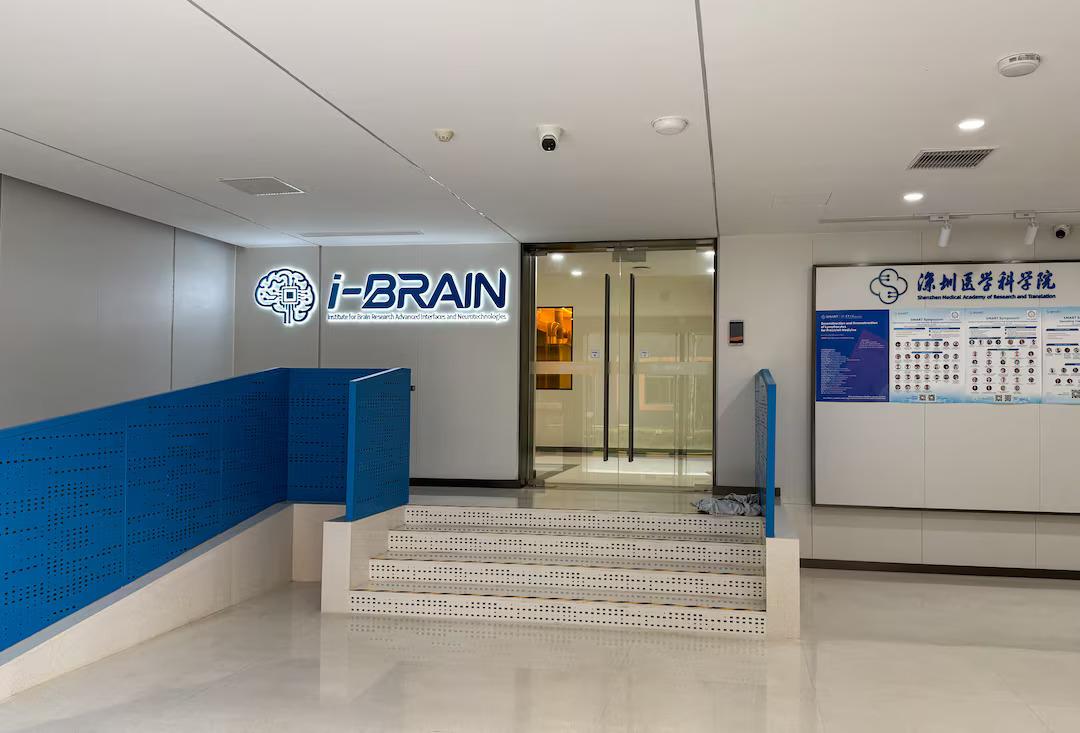
The entrance to the Institute for Brain Research Advanced Interfaces and Neurotechnologies (i-BRAIN), which is part of the Shenzhen Medical Academy of Research and Translation (SMART), in Shenzhen, Guangdong province, China, March 26, 2026. Courtesy: Reuters
Brain computer interface technology is being explored for medical applications such as treating ALS and restoring movement in paralyzed patients. At the same time, it has drawn attention for potential military uses. U.S. officials have previously noted that similar technologies could enhance cognitive performance and situational awareness in defense settings.
Lieber’s lab is part of a broader network of state funded institutions in Shenzhen, backed by significant government investment. The academy overseeing his work has increased its budget in 2026, while nearby research hubs are being developed with multi billion dollar funding. These facilities are also actively recruiting scientific talent, including researchers returning from U.S. institutions.
The availability of primate research infrastructure is particularly notable. Such facilities face regulatory and funding challenges in the United States, making them less accessible for many researchers. In contrast, the Shenzhen setup provides integrated access to animal testing, chip fabrication, and collaborative research within a single ecosystem.
Analysts say the case reflects wider concerns about the movement of advanced research and expertise across borders. While Lieber’s conviction addressed specific legal violations, it did not prevent him from continuing his work elsewhere. Some experts argue this highlights gaps in how countries manage sensitive technologies with both civilian and military applications.
China has identified brain computer interfaces as a strategic priority in its latest economic planning, aiming to develop the field into a major technology sector. Meanwhile, similar research continues in the United States through agencies such as DARPA, indicating growing global competition in this area.
Lieber has not publicly detailed his current work, but his return to active research underscores how high level scientific expertise continues to circulate internationally, even after legal and institutional setbacks.


