

Image Courtesy: AJLabs
A Ukrainian developed system called Sky Map is being deployed in the Gulf as part of efforts to counter large scale drone attacks. The system combines detection software, acoustic sensors, and interceptor drones to provide a lower cost alternative to traditional air defense methods.
The platform was developed by Sky Fortress and is designed as a command and control system that integrates multiple layers of detection and response. It has been used extensively in Ukraine and is now being introduced in Gulf countries in cooperation with US forces, as reported by Al Jazeera.
At its core, Sky Map relies on a network of sensors to detect incoming drones. One of its key features is the use of acoustic detection, thousands of ground based microphones that can identify the distinct sound signatures of drone engines. These are combined with radar inputs and AI analysis to track threats in real time.
Once a drone is detected, the system coordinates a response using interceptor drones rather than traditional missile systems. These interceptors are significantly cheaper, typically costing between $1,000 and $3,000 per unit, compared to millions of dollars for missile based defenses.
The system is primarily designed to counter one way attack drones such as the Shahed-136, which have become widely used in recent conflicts. These drones are relatively inexpensive and are often deployed in large numbers, making them difficult and costly to counter with conventional air defense systems.
Interceptor drones used with Sky Map are built for speed and maneuverability. They can chase down incoming drones, track them using onboard cameras and sensors, and neutralize them before impact. Some models can also return to base if they do not engage a target, improving operational efficiency.
The system also incorporates elements of autonomy. AI assisted navigation allows interceptor drones to adjust flight paths, track moving targets, and continue operating even if GPS signals are disrupted. However, human operators remain involved, typically guiding the drones using real time video feeds.
The adoption of Sky Map reflects a broader shift in air defense strategy. Instead of relying solely on expensive, centralized systems, militaries are increasingly turning to distributed, lower cost solutions that can scale to match high volume threats.
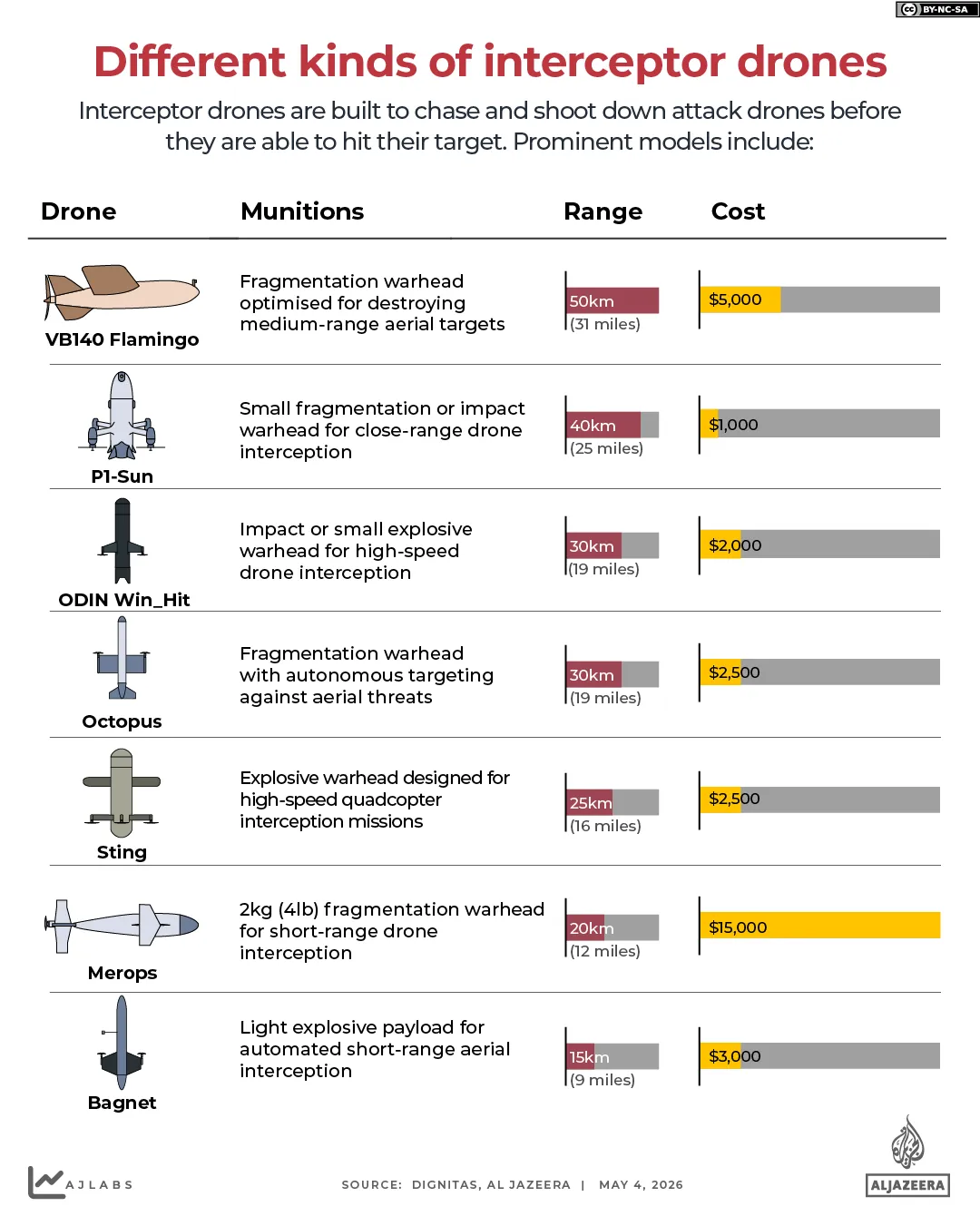
Image Courtesy: AJLabs
While effective against drones, the system has limitations. It is not designed to intercept ballistic missiles or other high speed threats. Instead, it focuses on addressing the growing use of low cost unmanned aerial systems in modern conflicts.
As drone warfare continues to evolve, systems like Sky Map are becoming an important part of layered defense strategies, offering a more economically sustainable way to counter large scale aerial attacks.


