

For decades, the Boeing 747 and later the Airbus A380 defined long-haul air travel, serving as the unmistakable giants of the jet age. Their double decks, four engines, and enormous passenger capacity made them icons around the world. But as the era of quad-engine superjumbos winds down, airlines are shifting toward a new flagship that can deliver similar capacity with far greater efficiency. That aircraft is the Boeing 777X, positioned as the most capable successor to the A380 and the natural heir to the widebody throne.
The trend away from four engines did not happen overnight. Early jetliners relied on multiple engines to meet range and redundancy requirements, but advances in turbofan reliability and changes in ETOPS rules gradually opened long-distance routes to twin-engine aircraft. By the time the A380 entered service in 2007, the market had already begun embracing smaller, fuel-efficient widebodies. Rising fuel costs, limited airport compatibility, and a global shift toward point-to-point travel eroded the business case for very large aircraft. As a result, most airlines retired their A380s early, with Emirates becoming one of the few carriers still committed to the type.
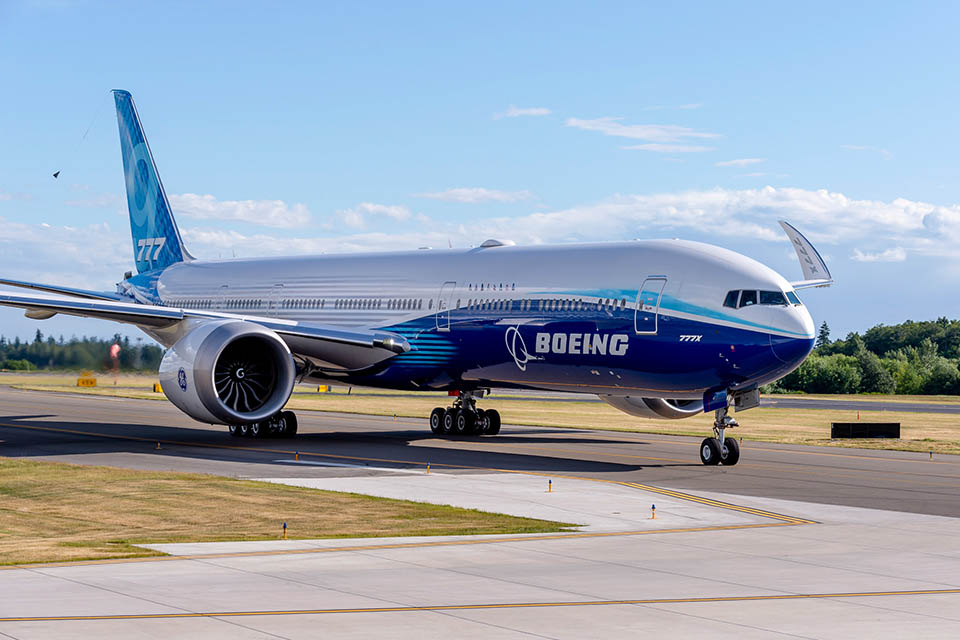
The Boeing 777X is designed to meet the modern airline’s need for flexibility, efficiency, and range. When it enters service, it will become the world’s longest commercial aircraft at 76.7 meters. Its most distinctive engineering feature is its folding composite wingtip, which extends the wingspan for better aerodynamic performance in flight but allows the aircraft to use standard 777-size airport gates on the ground. This solves one of the biggest challenges the A380 faced without compromising capability.
Powered by GE’s GE9X engines, the 777X promises a significant reduction in fuel burn compared to the 777-300ER. With seating for more than 400 passengers in a typical layout, it delivers near-superjumbo capacity while operating at far lower cost. Airlines from Lufthansa to Emirates have identified it as a future flagship, with the type expected to replace both older 777s and some former 747 and A380 routes. Its delayed entry into service, now expected in 2026, reflects a new era of stringent certification standards rather than a lack of demand.
As airlines modernize their fleets with an emphasis on efficiency and environmental performance, the future of long-haul travel belongs firmly to advanced twinjets. The 777X is emerging as the leading candidate to succeed the world’s largest commercial airliner, marking a shift in aviation history where smarter design triumphs over sheer size.


