

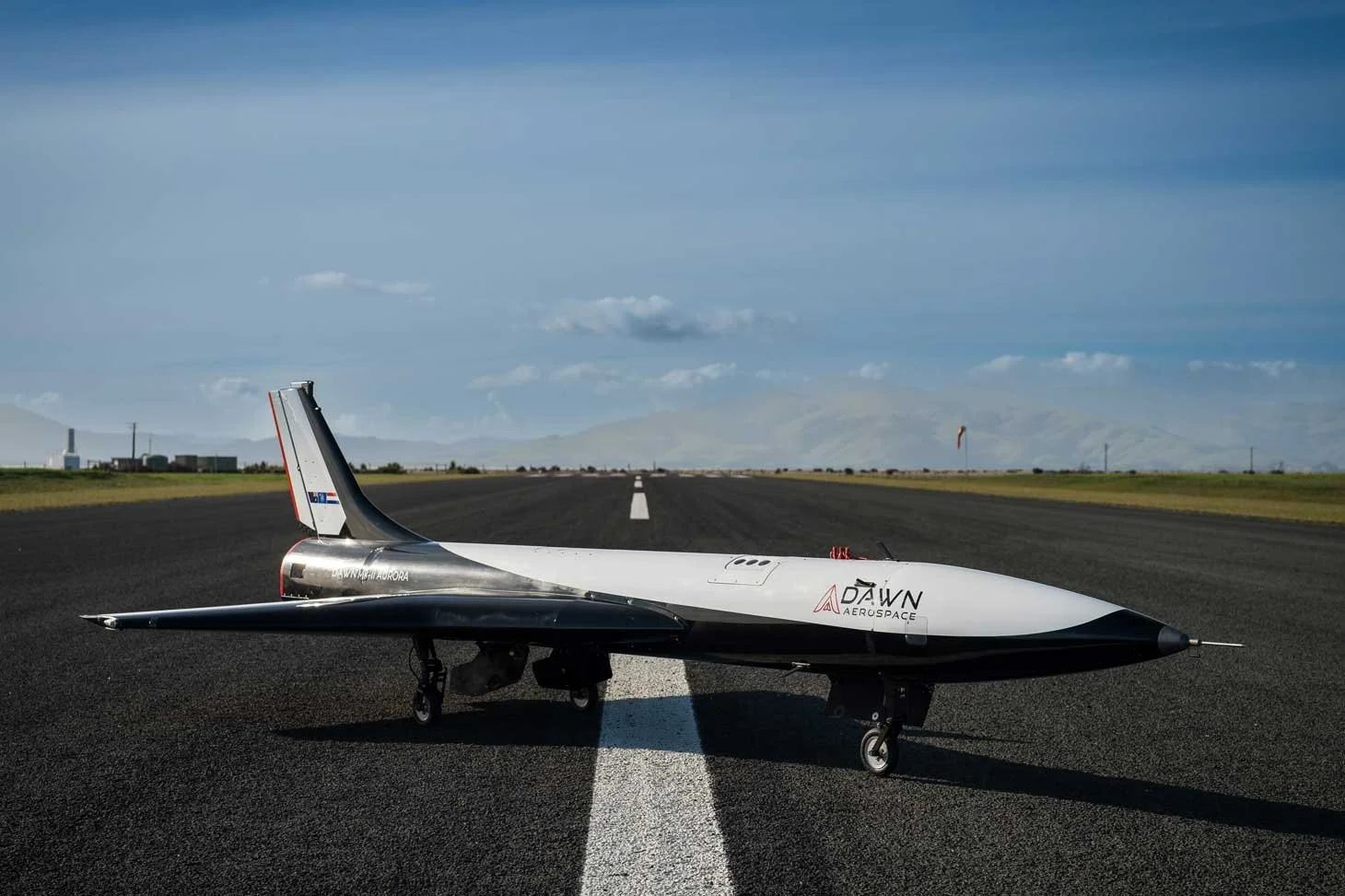
In a breakthrough for responsive space operations, Dawn Aerospace’s Aurora rocket-powered spaceplane has completed a landmark flight carrying Scout Space’s Morning Sparrow optical payload signaling the first step toward gathering space-domain awareness (SDA) data from high-altitude aircraft rather than satellites.
The mission was conducted in New Zealand. On July 17, 2025, Aurora took off from the T?whaki National Aerospace Centre, using a conventional runway before accelerating to Mach 1.03 and climbing to 67,000 feet (about 20 km). The unpiloted spaceplane then glided back to land on the same strip, proving it could deliver payloads to near-space and return within a single sortie.
Scout Space’s Morning Sparrow—a twin-sensor optical system combining narrow- and wide-field lenses to create a stereoscopic panorama—was accessible to engineers right up until take-off. This capability, impossible with traditional satellite launches, allows last-minute adjustments before flight. After landing, teams immediately retrieved data, demonstrating a “fly-process-fly” turnaround far quicker than orbital launch cycles.
The long-term ambition is to turn these sub-orbital flights into an operational service that can monitor Very Low Earth Orbit (VLEO), a zone becoming crowded with fast-deployed small satellites. Scout Space CEO Philip Hover-Smoot described the potential as:
“Rapidly deployable, high-performance, high-altitude platforms are notoriously few and far between… Accelerating flexible access to VLEO represents a leap forward in how we think about taskable surveillance and space security.”
Unlike satellites that may take months or years to build and launch, Aurora’s aircraft-style operations could quickly investigate unknown objects in orbit, offering governments and commercial operators a faster, more agile SDA tool.
Upcoming missions will see Morning Sparrow attempt to track and image unrecognized spacecraft, providing an alternative to costly space-based sensors and slow, ground-based telescopes.

For Dawn Aerospace, the flight validated years of engineering aimed at treating near-space as just another navigable airspace. CEO Stefan Powell stated: “This is exactly what the Aurora is designed for, repeatable, tactical access to near space, supporting payloads that can’t wait months or years for launch.”
He emphasized that spaceplanes “can and will play an integral role in the future of responsive space operations by complementing traditional SDA assets.”
Although this sortie only touched the lower stratosphere, it proved that supersonic, runway-launched platforms can reach the speed and altitude necessary for VLEO observation while keeping the fast turnaround of aviation logistics.


 data from high-altitude aircraft rather than satellites. The mission was conducted in New Zealand. On July 17, 2025, Aurora took off from […]&media=https://wonderfulengineering.com/wp-content/uploads/2025/08/image-133.png)