

Researchers at Rice University have unveiled a breakthrough method that could significantly improve the way data centers recycle waste heat. Their new system, which combines solar thermal power with existing cooling processes, has the potential to boost electricity recovery from data center exhaust heat by 60 to 80 percent annually while lowering costs.
Data centers are among the world’s biggest energy consumers, burning through hundreds of terawatt-hours of electricity each year as demand for cloud computing and artificial intelligence soars. But all that energy comes with an invisible byproduct: vast streams of warm air vented into the atmosphere.
“There’s an invisible river of warm air flowing out of data centers,” said Laura Schaefer, professor of mechanical engineering at Rice and co-author of the new study. “Our question was: Can we nudge that heat to a slightly higher temperature with sunlight and convert a lot more of it into electricity? The answer is yes, and it’s economically compelling.”
The key challenge in turning waste heat into usable electricity lies in temperature. Heat leaving data centers is generally not hot enough to generate power efficiently. While electric heat pumps can increase the temperature, they also consume large amounts of power, cutting into any energy savings.
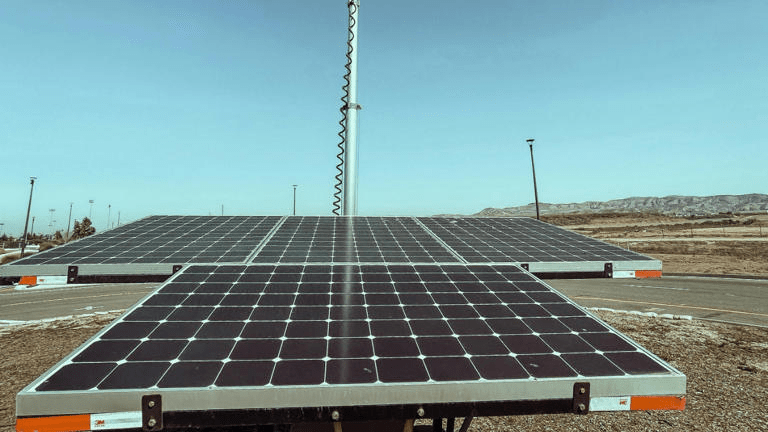
Rice’s solution is a solar thermal-boosted organic Rankine cycle (ORC), a closed-loop system that generates electricity from heat. Standard flat-plate solar collectors pre-heat the data center’s liquid coolant before it enters the ORC, providing what researchers call a “solar bump.” This extra lift increases the efficiency of the system without adding to the electrical load.
Tests modeled in two major U.S. data center hubs showed strong results: a 60 percent gain in electricity recovery in Ashburn, Virginia, and an 80 percent gain in Los Angeles. Costs per unit of recovered electricity dropped by 5.5 percent and 16.5 percent in the two locations respectively. The system also operated more than 8 percent more efficiently during peak sunny hours.
“Efficiency gains are being outpaced by demand,” said Kashif Liaqat, a Rice graduate student and the study’s lead author. “If we want the digital economy to be sustainable, we have to reclaim some of the energy that is currently just thrown away.”
The design is particularly well-suited to modern data centers that rely on liquid cooling, which often operates at lower temperatures. “What the industry considers a weakness becomes a strength once you add solar,” Liaqat explained.


