

Image Courtesy: Eso/ Luis Calçada/ Herbert Zodet
Deep in Chile’s Atacama Desert, one of the world’s most unusual scientific facilities doubles as a setting straight out of a James Bond film. Known as the Residencia, the futuristic building serves as a secluded home for astronomers and engineers working at some of Earth’s most advanced observatories.
Built into the barren landscape to remain nearly invisible from a distance, the Residencia features a hidden entrance that opens into a lush indoor oasis complete with tropical plants, humid air, and a swimming pool beneath a giant dome. The striking structure even appeared in the 2008 Bond film Quantum of Solace, where it was used as a villain’s headquarters.
Far from Hollywood, however, the facility plays a critical role in modern astronomy. Operated by the European Southern Observatory, the Residencia houses scientists working at the nearby Very Large Telescope and the under-construction Extremely Large Telescope, two of the most powerful ground-based astronomy projects ever built.
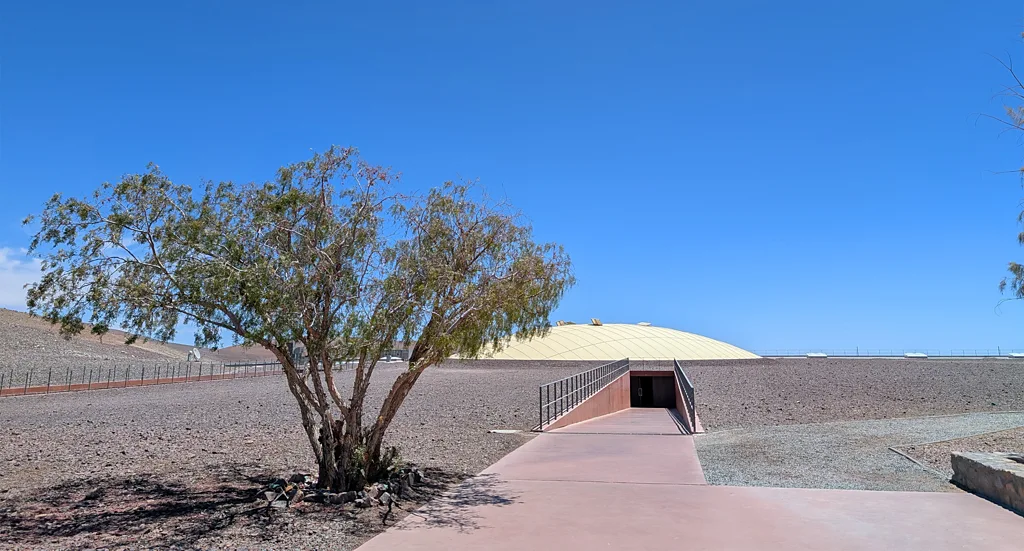
Image Courtesy: Richard Fisher
The building was specifically designed to support research in one of the harshest environments on Earth. Located more than 2,000 meters above sea level and surrounded by one of the driest regions on the planet, it provides a comfortable refuge from intense ultraviolet radiation, extreme dryness, and isolation. Alcohol is banned on-site due to dehydration risks, while outdoor activity is carefully managed because of the demanding conditions.
Perhaps the most important feature of the Residencia is something visitors barely notice: darkness. Even small amounts of artificial light can interfere with sensitive telescope observations, so strict rules govern illumination across the site. Cars switch off their main headlights at night, windows are carefully shielded, and the building’s giant atrium dome is covered after sunset to prevent light from escaping into the surrounding landscape.
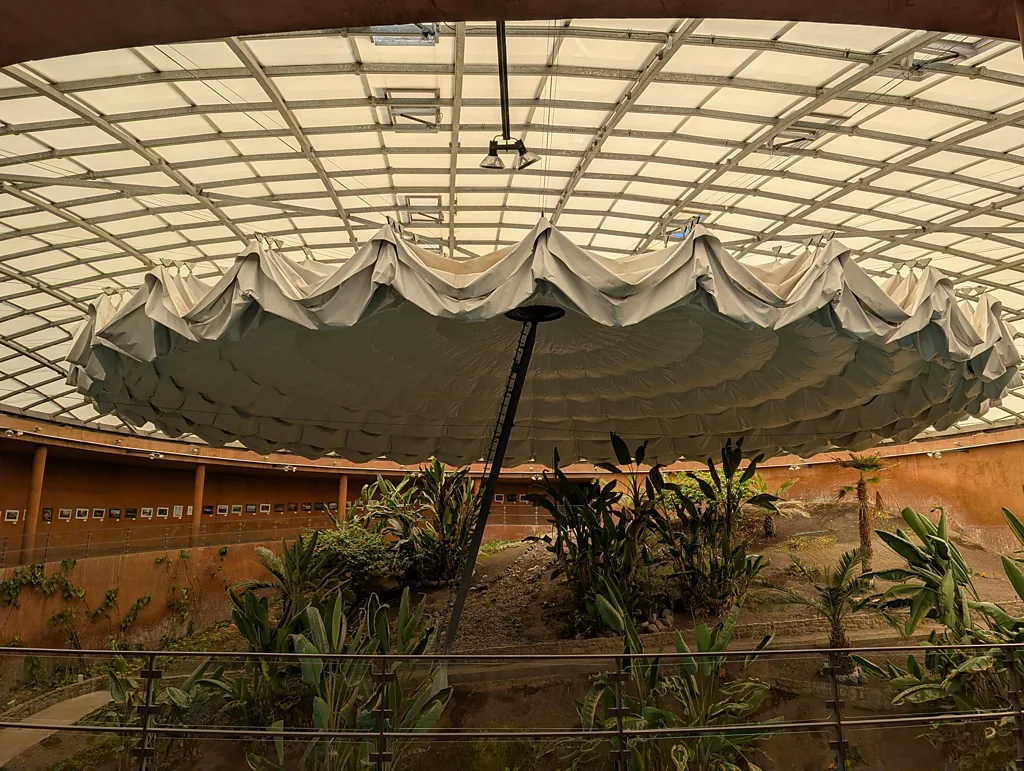
Image Courtesy: Richard Fisher
That commitment to preserving darkness helps make the Atacama Desert one of the premier locations for astronomical observation. On clear nights, residents can see distant galaxies, satellite trains, and some of the brightest star fields visible from Earth. Nearby telescopes regularly probe the farthest reaches of the universe, contributing to discoveries ranging from exoplanets to insights into the supermassive black hole at the center of the Milky Way.
The observatories supported by the Residencia have played a central role in many of the most significant astronomical breakthroughs of the past two decades. As next-generation telescopes come online, the remote desert outpost is expected to become even more important to humanity’s effort to understand the cosmos.


