

The physics of fusion energy is no longer the great unknown. Scientists are confident that if you confine superheated plasma at nearly 100 million °C using heavy hydrogen isotopes, you’ll get a self-sustaining reaction capable of delivering abundant, clean power. The real challenge now lies elsewhere: finding materials that can survive the extreme demands inside a fusion reactor.
As Phil Ferguson, Ph.D., Director of the Material Plasma Exposure eXperiment (MPEX) at Oak Ridge National Laboratory, put it: “You need a material solution. Give me the materials that can hold this thing together, at temperature, to be efficient. We are still lacking a breakthrough in materials.”
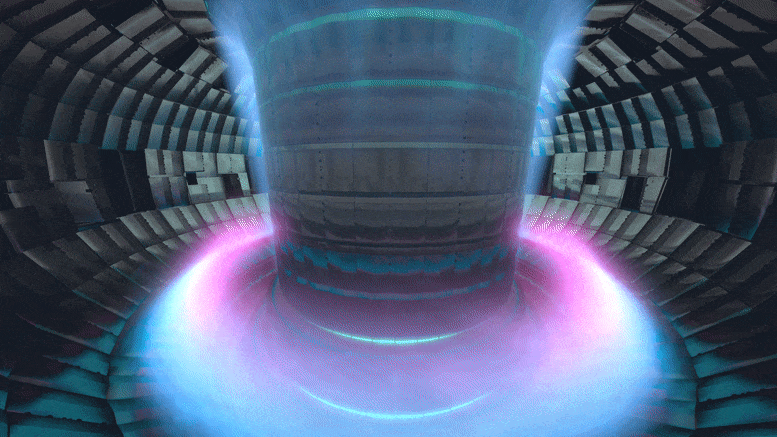
Inside a tokamak, different components face vastly different conditions some endure blistering heat from plasma, while others, like the central solenoid, operate near absolute zero. The central solenoid, crucial for generating the magnetic flux that sustains the plasma, relies on ultracold superconducting cables housed in steel jackets. These jackets must retain mechanical and thermal strength at cryogenic temperatures while also withstanding intense magnetic forces.
Currently, ITER, the world’s most advanced tokamak (targeting first plasma by 2034), uses 316LN stainless steel, rated for magnetic fields up to 11.8 Tesla. But Chinese researchers may have gone a step further. According to the South China Morning Post, they’ve developed China High-Strength Low-Temperature Steel No. 1 (CHSN01), a “super steel” capable of enduring 20 Tesla and stress levels up to 1,500 MPa.
The breakthrough, published in Applied Sciences this May, was the result of a 12-year research effort.
Li Laifeng of the Chinese Academy of Sciences emphasized the importance of such advancements: “While ITER’s maximum 11.8 Tesla field design is enough for itself, future higher-field magnets will require advanced materials. Developing next-gen cryogenic steel isn’t optional, it’s essential for the success of China’s compact fusion energy experimental devices.”
CHSN01 will debut in the central solenoid of China’s Burning Plasma Experiment Superconducting Tokamak (BEST), a transitional step between current reactors and the Chinese Fusion Engineering Test Reactor — the country’s first full-scale fusion plant prototype. The BEST reactor aims for first plasma in late 2027.


