

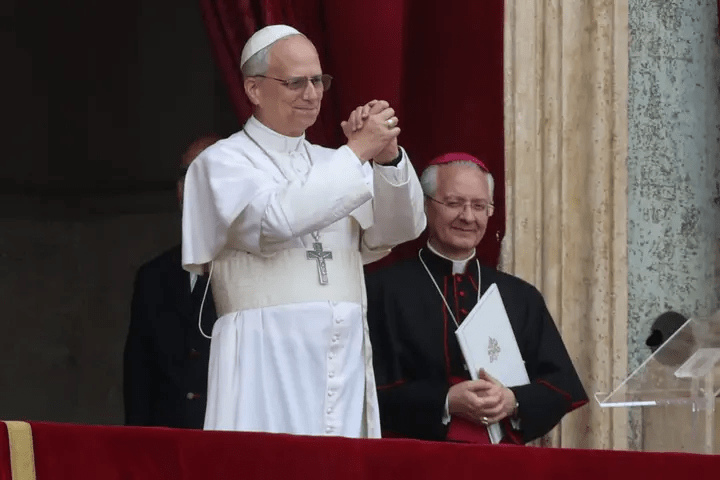
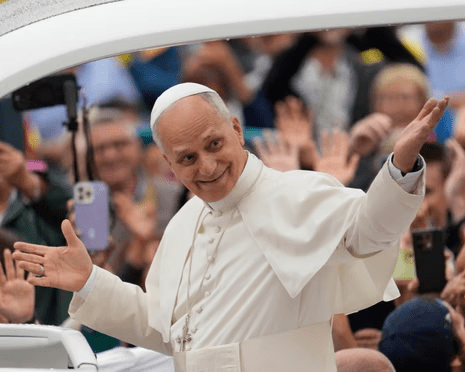
Pope Leo XIV has used his first major interview as pontiff to issue a stern warning about the world’s growing economic divide. Speaking on the widening gap between CEOs and their employees, he pointed directly at Tesla’s Elon Musk and his path toward becoming the world’s first trillionaire as a troubling sign of imbalance.
In a conversation with Catholic news outlet Crux, the 70-year-old Pope expressed concern that corporate power and wealth accumulation are outpacing moral responsibility. Highlighting how executive pay has skyrocketed over the decades, he remarked:
“CEOs that 60 years ago might have been making four to six times more than what the workers are receiving, the last figure I saw, it’s 600 times more than what average workers are receiving.”
His comments come at a time when Tesla’s board has floated a proposed $1 trillion compensation package for Musk tied to long-term company growth. The pontiff dismissed such payouts as excessive, adding:
“Yesterday, the news that Elon Musk is going to be the first trillionaire in the world: What does that mean and what’s that about? If that is the only thing that has value anymore, then we’re in big trouble.”
Even as Musk purchased another $1 billion worth of Tesla stock, critics warn that such wealth concentration underscores broader inequality. According to the Institute for Policy Studies, CEOs at the lowest-paying S&P 500 firms earned an average of $17.2 million in 2024 compared to a median worker salary of $35,570. That’s a staggering pay ratio of 632 to 1.
Meanwhile, billionaire fortunes are multiplying at record speed. Oxfam data shows that in 2024 alone, billionaire wealth grew three times faster than the year before, with the top 1% amassing $34 trillion over the last decade. This figure, experts say, could eradicate poverty 22 times over if redistributed. Oracle’s Larry Ellison recently demonstrated just how quickly fortunes can swell, setting a record with an $89 billion surge in wealth in a single day.
But philanthropy is lagging behind. A decade after Warren Buffett and Bill and Melinda French Gates launched The Giving Pledge, only 9 of the 256 signatories have meaningfully delivered on their promise to donate at least half of their fortunes. Most donations, according to the Institute for Policy Studies, have been funneled into private foundations, an estimated 80% of the $206 billion pledged rather than direct charitable action.
The Giving Pledge has pushed back on this critique, stating that the findings “paint a misleading picture of the impact and intent of Giving Pledge signatories.” Still, even the organization acknowledges the need for “greater giving.”
For Pope Leo XIV, however, the urgency is clear: unchecked executive wealth, combined with faltering philanthropy, risks widening global inequality at a dangerous pace.


