

Physicists from Julius-Maximilians-Universität Würzburg (JMU) have set a new benchmark in display technology by developing the world’s smallest light-emitting pixel. This innovation overcomes long-standing challenges in miniaturizing light sources while maintaining brightness and efficiency, opening the door to ultra-compact, high-resolution displays that can fit into a space smaller than a pinhead.
The breakthrough, led by Professors Jens Pflaum and Bert Hecht, has been detailed in Science Advances. Using optical antennas, the team created an organic light-emitting diode (OLED) pixel for orange light that measures just 300 by 300 nanometers about one-sixteenth the size of a typical OLED pixel.
“With the help of a metallic contact that allows current injection into an organic light-emitting diode while simultaneously amplifying and emitting the generated light, we have created a pixel for orange light on an area measuring just 300 by 300 nanometers. This pixel is just as bright as a conventional OLED pixel with normal dimensions of 5 by 5 micrometers,” said, Prof. Bert Hecht.
To visualize the scale: a nanometer is one millionth of a millimeter. This means that a Full HD display (1920×1080 pixels) could fit on an area of just one square millimeter small enough to be embedded into the arm of a pair of smart glasses, projecting vivid images directly onto the lenses.
OLEDs, unlike traditional displays, don’t need backlighting. Each pixel emits its own light, producing deep blacks, vibrant colors, and efficient energy use essential qualities for augmented and virtual reality (AR/VR) systems.
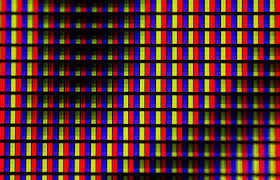
However, simply shrinking down conventional OLED designs doesn’t work. According to Prof. Jens Pflaum, “As with a lightning rod, simply reducing the size of the established OLED concept would cause the currents to emit mainly from the corners of the antenna.”
This uneven current distribution can create intense electric fields strong enough to make gold atoms migrate, forming filaments that eventually short-circuit the pixel. The Würzburg team solved this by developing a specially designed insulation layer placed on top of the optical antenna. This layer leaves only a 200-nanometer circular opening in the center, ensuring that current flows evenly and preventing destructive filament growth.
The result is a stable, long-lasting nanopixel that can operate for over two weeks under normal conditions—a remarkable achievement at this scale.
The current prototype achieves an efficiency of about one percent, but researchers are optimistic. The next goals are to increase brightness efficiency and expand the color spectrum to include red, green, and blue (RGB), paving the way for full-color nanodisplays.
If successful, the technology could make displays so small they could be embedded invisibly into wearable devices from eyeglass frames to contact lenses. As Prof. Hecht notes, these advancements could usher in a new generation of miniature display systems “made in Würzburg.”


 have set a new benchmark in display technology by developing the world’s smallest light-emitting pixel. This innovation overcomes long-standing challenges in miniaturizing light sources while maintaining brightness and efficiency, opening the door to ultra-compact, high-resolution displays that can fit into a space smaller than a pinhead. The breakthrough, led by […]&media=https://wonderfulengineering.com/wp-content/uploads/2025/10/image-182.png)