

In a development that could dramatically reshape the future of autonomous navigation, scientists have engineered a penny-sized laser that promises to deliver greater speed, precision, and compactness in vehicle sensing systems.
It is created by a joint research team from the University of Rochester and the University of California, Santa Barbara. More than just a smaller tool, this micro-laser offers a reimagined approach to optical metrology using light to measure and identify objects with potential to benefit everything from self-driving cars to quantum computing.
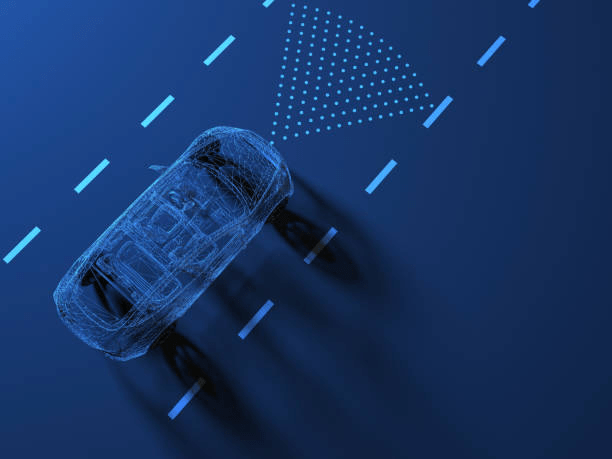
Modern autonomous vehicles rely on lidar (light detection and ranging), a sensing method that shoots out invisible laser beams and measures how long they take to bounce back after hitting nearby objects. This helps vehicles gauge the size, distance, and velocity of everything from other cars to pedestrians.
However, as the research team noted, today’s lidar systems are complex, bulky, and prone to errors. Some even require large rotating towers mounted on top of vehicles, which compromise aerodynamics and aesthetics. The team’s compact laser solution could offer a more reliable, streamlined alternative that performs at higher speed and accuracy than existing systems.
“A more advanced form [of lidar] known as frequency-modulated continuous-wave LiDAR requires a large tuning range and fast tuning of the laser’s frequency, and that’s what our laser can do,” explained Shixin Xue, the study’s lead author.
What makes this laser special isn’t just its size it’s what it can do. The laser can emit an astonishing 20 quintillion pulses of light per second, and can track fast-moving objects with remarkable precision. To prove its capabilities, researchers used the device to detect Lego-built letters “U” and “R” on a spinning disc, mimicking how it might read fine details on fast-moving vehicles or objects in real-world conditions.
At a speed of 131 feet per second (40 meters per second) and a detection range of 1.3 feet (0.4 meters), this laser is already showing promise for autonomous navigation, drone operations, and other motion-sensitive applications.
Traditionally, achieving the kind of laser frequency stability required for high-end lidar systems involves a clunky setup called Pound-Drever-Hall (PDH) laser locking. This setup includes multiple components — like isolators and modulators often the size of a desktop computer.
Xue and his team have managed to shrink that entire system onto a chip. “Our laser can integrate all of these things into a very small chip that can be tuned electrically,” Xue said.
This leap in miniaturization and integration opens the door for compact, energy-efficient, and scalable lidar units that can be easily embedded into vehicles including those where low air drag is essential, such as autonomous aircraft.
While its primary appeal lies in next-generation self-driving cars, the researchers see broader potential. Because the laser’s accuracy is so high, it could support future technologies like: Quantum information processing, detection of gravitational waves and optical clocks with extreme time precision.
The device’s 60-minute run time and stable operation make it a reliable tool not only for mobility tech but also for high-end scientific research and defense-related applications.


