

Nike has officially stepped into the world of wearable robotics with its latest project, and it’s about as futuristic as sneakers can get. Called Project Amplify, the system is being described as the world’s first “powered footwear,” a kind of high-tech running assistant designed to help people move faster and farther with less effort. Think of it as an e-bike, but for your legs.
According to The Verge, Nike built the prototype with robotics company Dephy, combining motors, sensors, and a lightweight battery into a sleek ankle brace that fits around the calf. The design hides a compact motor and drive belt that provide subtle propulsion with each stride. Rather than being aimed at elite runners, it’s built for everyday people moving at about a 10-to-12-minute mile pace. The idea is to make running, walking, and even climbing hills feel smoother and easier.
Nike says Project Amplify acts like a “second set of calf muscles,” helping users maintain speed without exhausting their own legs. The goal isn’t to break world records but to make the simple act of moving more efficient. In a statement shared on Nike’s newsroom, the company said the system “gives athletes of all kinds more power for everyday movement.” And when Nike says “athletes,” it means everyone – anyone with a body, as the company likes to put it.
The prototype has been in development for several years, tested by more than 400 participants who collectively took over 2 million powered steps. So far, feedback suggests that the system really does make a noticeable difference in stride economy. It’s currently in the testing phase, but Nike says it plans to bring it to consumers “in the coming years.”
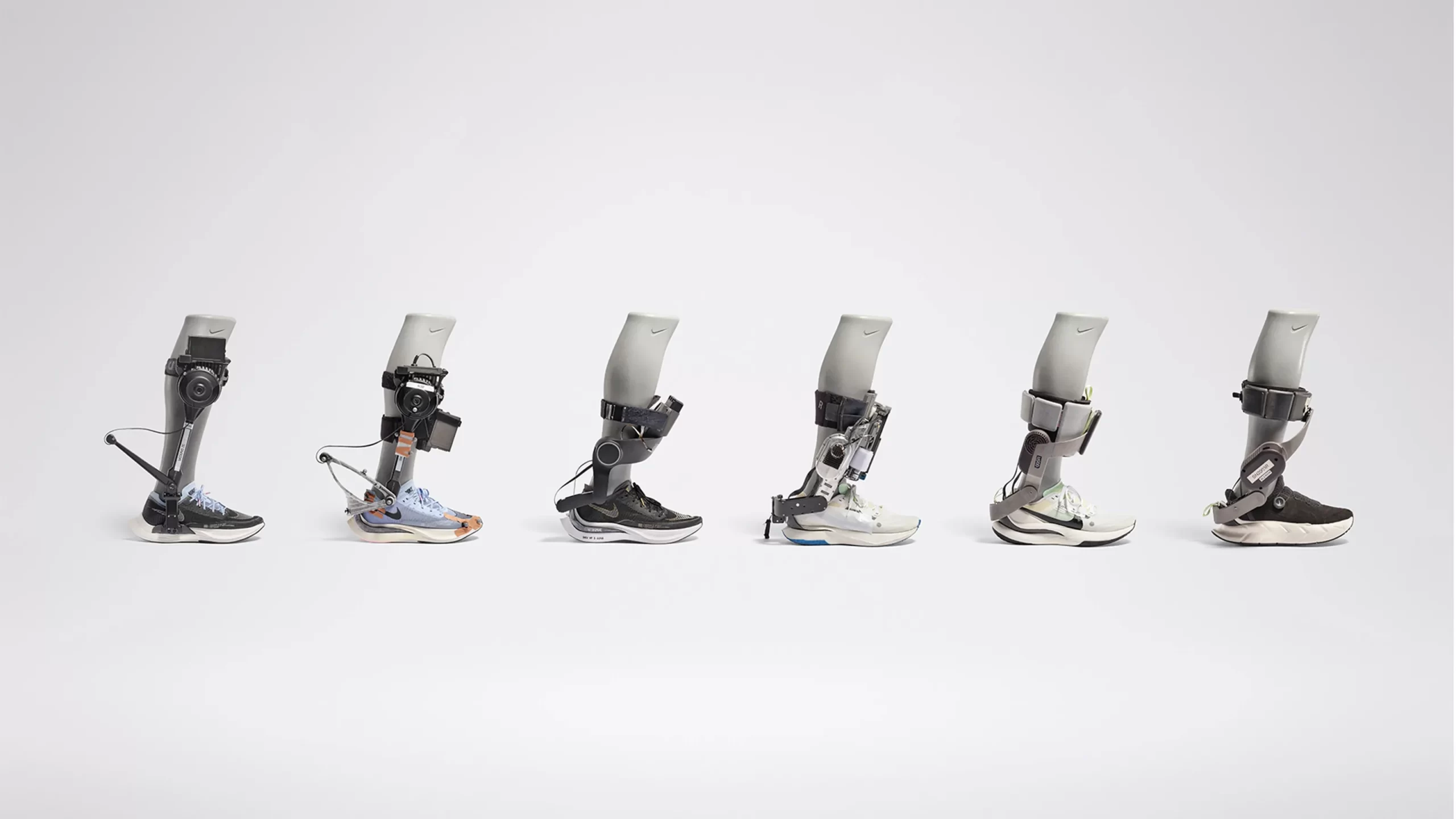
What’s surprising is that the powered footwear doesn’t look particularly bulky. Early images show a minimal design that resembles an ankle brace attached to a normal sneaker. Inside, a rechargeable battery drives the mechanism, while embedded sensors read the user’s motion and adjust assistance in real time. It’s a small taste of what could become mainstream wearable robotics – and, judging by Nike’s history, probably a fashion statement too.
Alongside Project Amplify, Nike also revealed other experimental technologies, including “neuroscience-based footwear” that adapts to how the brain processes motion and new cooling fabrics meant to regulate body temperature during workouts.
The concept might sound excessive to some – after all, running shoes already cost a fortune – but if Project Amplify delivers on its promise of effortless motion, it could mark the start of a new era in wearable performance gear.


