

A US defense-backed technology effort is pushing wireless power transmission out of the lab and into the sky. PowerLight Technologies says it has successfully completed development and testing of a laser-based system capable of beaming energy to aircraft in flight, potentially allowing drones to stay airborne far longer than current battery limits allow, as reported by The Defense Post.
The work was carried out under the Power Transmitted Over Laser to UAS program, known as PTROL-UAS, which is supported in part by United States Central Command. According to PowerLight, the project has now moved beyond individual component testing into fully integrated system trials, a key milestone on the path toward live flight demonstrations.
At the heart of the system is a high-power, autonomous laser transmitter paired with a lightweight airborne receiver. Together, they form what the company describes as a wireless power line in the air. The transmitter emits a precisely controlled laser beam capable of delivering kilowatt-class energy over several miles to friendly aircraft operating at altitude.
Recent tests demonstrated that the ground-based transmitter can safely generate, steer, and sustain a high-energy laser beam while tracking a moving aerial target. PowerLight says the system successfully delivered power to aircraft flying at altitudes of up to 5,000 feet. The transmitter is designed to be mobile and forward-deployable, making it suitable for expeditionary or contested environments where traditional infrastructure is unavailable.
Safety was a major focus of the trials. The system incorporates multiple layers of automated controls, continuous monitoring, and expert oversight to ensure safe operation in shared airspace. The control software provides real-time analytics and is designed to integrate with existing drone command-and-control systems as well as standard ground power sources.
“This is much more than point-to-point power transfer,” said Tom Nugent, chief technology officer and co-founder of PowerLight Technologies. He explained that the transmitter actively communicates with the aircraft, tracks its motion, and delivers energy precisely where needed, validating the core architecture for future flight tests.
On the aircraft side, PowerLight has developed a compact receiver weighing about six pounds. The unit uses laser power converters to capture non-visible laser energy and convert it into electrical power, which is then used to recharge the drone’s onboard batteries. An embedded control module collects telemetry data and sends it back to the ground station, while also laying the foundation for future optical data links.
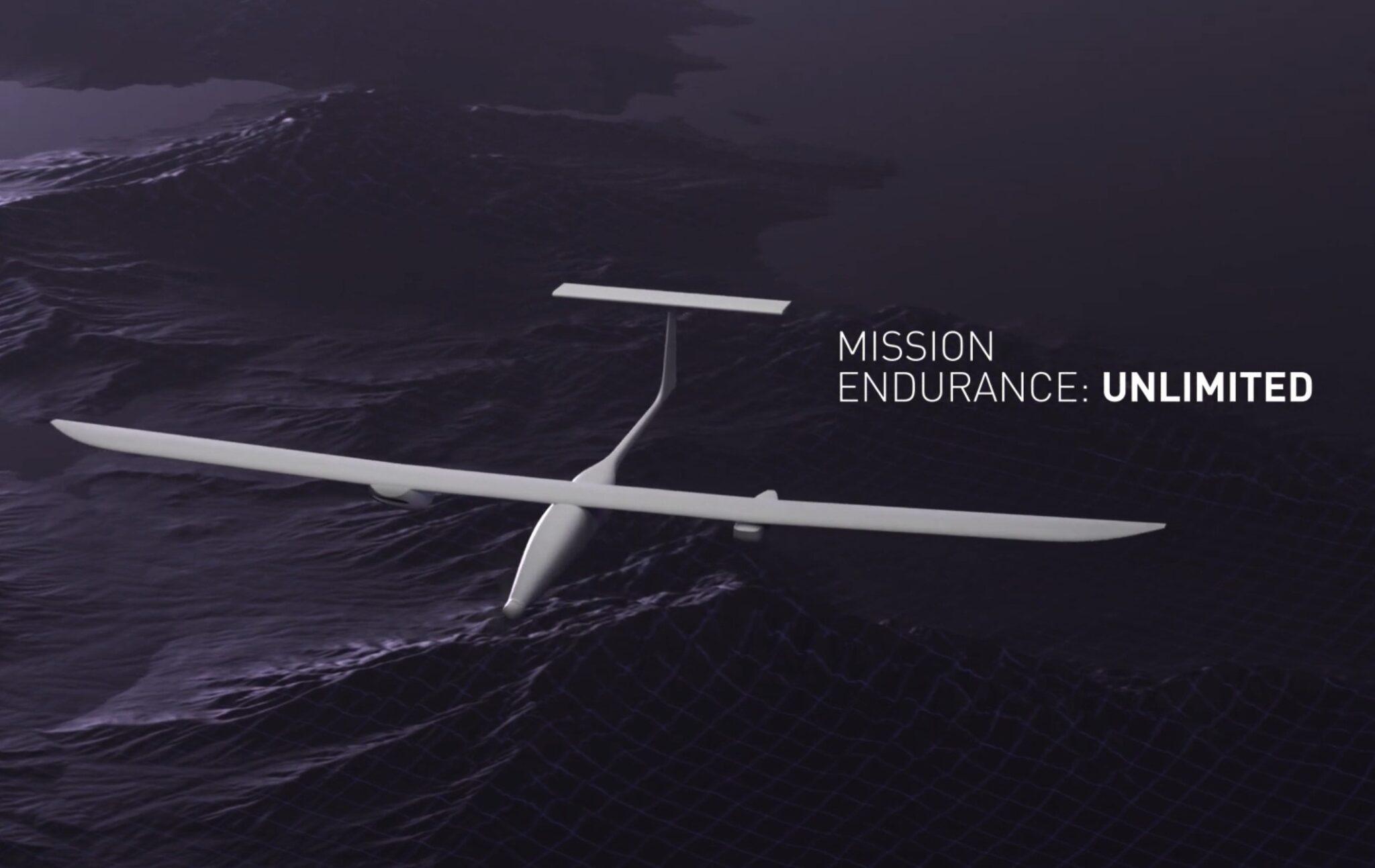
The broader goal of PTROL-UAS is to make power beaming a practical operational capability, fundamentally changing how autonomous aerial systems are deployed. PowerLight is working with Kraus Hamdani Aerospace to integrate the technology onto the K1000ULE, an ultra-long-endurance unmanned aircraft designed to support US Navy and Army missions where persistence is critical and refueling options are limited.
“The K1000ULE was built to push the limits of endurance,” said Fatema Hamdani. “Adding laser power beaming introduces a new level of persistence for wide-area missions.”
With subsystem testing largely complete, PowerLight says it is preparing for fully integrated flight tests in early 2026. Those demonstrations are expected to show continuous in-flight charging of a K1000ULE equipped with the laser receiver, a capability the company describes as enabling effectively infinite flight under controlled conditions.
If proven at scale, laser power beaming could dramatically alter drone operations, reducing reliance on ground-based refueling, extending mission duration, and opening the door to persistent airborne platforms that remain aloft as long as a power source is available on the ground.


