

In what could signal a transformation for the future of road construction, a groundbreaking trial in the United Kingdom has shown that roads infused with graphene can outperform traditional asphalt. The experimental material, known as Gipave, was tested in Essex County, just outside London, and officials report that it offers significantly greater durability and resilience compared to conventional pavement.
Every year, governments around the world pour staggering amounts of money into keeping roads usable. In 2021 alone, the U.S. spent $206 billion on highway and street repairs roughly six percent of all public spending and yet the problem persists. According to Pew Research, another $105 billion in maintenance projects remains deferred.
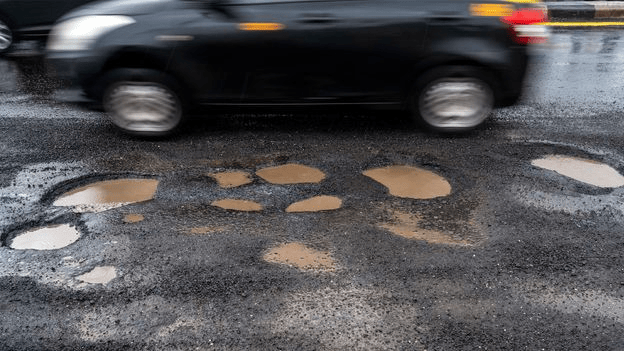
Potholes, cracks, and surface wear are more than nuisances they represent billions in repair costs and vehicle damage. The average pothole-related repair costs about $600, and collectively, U.S. drivers spend an estimated $26.5 billion each year fixing damages caused by poor road conditions.
Traditional asphalt is made by combining stone aggregates with bitumen, a viscous, petroleum-based binder. Over time, this mixture deteriorates under the stress of traffic and weather, leading to cracks and potholes.
Enter graphene, a material just one atom thick but 200 times stronger than steel. It’s composed of carbon atoms arranged in a honeycomb lattice, making it not only incredibly durable but also lightweight, flexible, and highly conductive. Since its commercial debut in the early 2000s, graphene has found use in everything from semiconductors and batteries to aerospace and energy storage.
Recognizing its potential in infrastructure, engineers in Essex launched a pilot program in 2022 to test graphene-enhanced asphalt, dubbed Gipave. The county’s public works team laid 165 tons of Gipave on one lane of a highway entrance road near London, while another lane was paved with standard asphalt for comparison.
When engineers later extracted core samples for testing, the results were striking. The graphene-reinforced asphalt showed a 10 percent improvement in stiffness and 20 percent better resistance to water damage compared to the traditional mix. Moreover, when Gipave did fracture, it was the stone aggregate that cracked not the bitumen or the bond between the materials proving that the graphene significantly strengthened the pavement’s structure. This makes Gipave not only more durable but also potentially safer and more sustainable over time.
The only immediate drawback appears to be cost. Engineers estimate that Gipave costs about 30 cents per square foot, which sounds modest until scaled up. A single mile of a four-lane highway contains around 253,000 square feet, and with 4.2 million miles of highway across the United States many with more than four lanes, the total cost to repave every mile with Gipave would reach an estimated $124.3 billion.
Still, proponents argue that strategic implementation, such as using Gipave for high-traffic routes or pothole repairs, could yield immense long-term savings by reducing ongoing maintenance expenses and extending road lifespan.


