

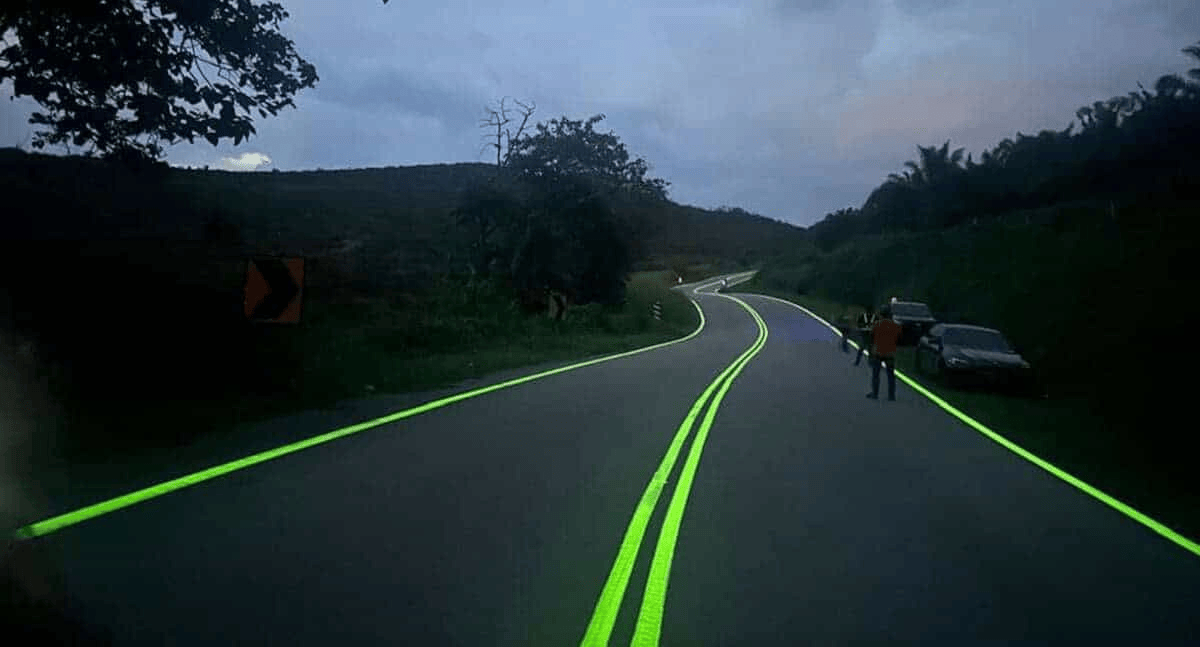
In 2023, Malaysia captured global attention with a luminous experiment on a quiet stretch of road near Semenyih. Instead of traditional streetlights, the tarmac glowed with photoluminescent paint – an innovative coating capable of shining for up to ten hours after sunset. The initiative, spearheaded by the Public Works Department (JKR), aimed to make rural travel safer in regions often left in the dark due to frequent power outages and insufficient lighting.
But what began as a symbol of progress and ingenuity dimmed within a year. By late 2024, the government decided not to expand the project nationwide, citing high costs and limited durability.
Malaysia’s glowing road project stretched across 245 meters of a rural two-lane route. It wasn’t just a visual novelty, it represented a thoughtful response to a deadly problem. With over 6,000 road fatalities annually, many on poorly lit rural roads, the idea of self-illuminating paint was both creative and pragmatic.
Public feedback, as reported by The Straits Times, was overwhelmingly positive. Drivers appreciated how the glowing lanes cut through darkness, heavy rain, and fog conditions where standard road markings often fail. One social media user even quipped, “Malaysian roads will look really lit no pun intended,” capturing the mix of humor and hope surrounding the project.
The glow-in-the-dark markings used strontium aluminate, a compound that absorbs sunlight during the day and releases it slowly through the night no electricity required. Similar trials had taken place in the Netherlands and Japan, though typically on smaller or more decorative scales, like bike paths.
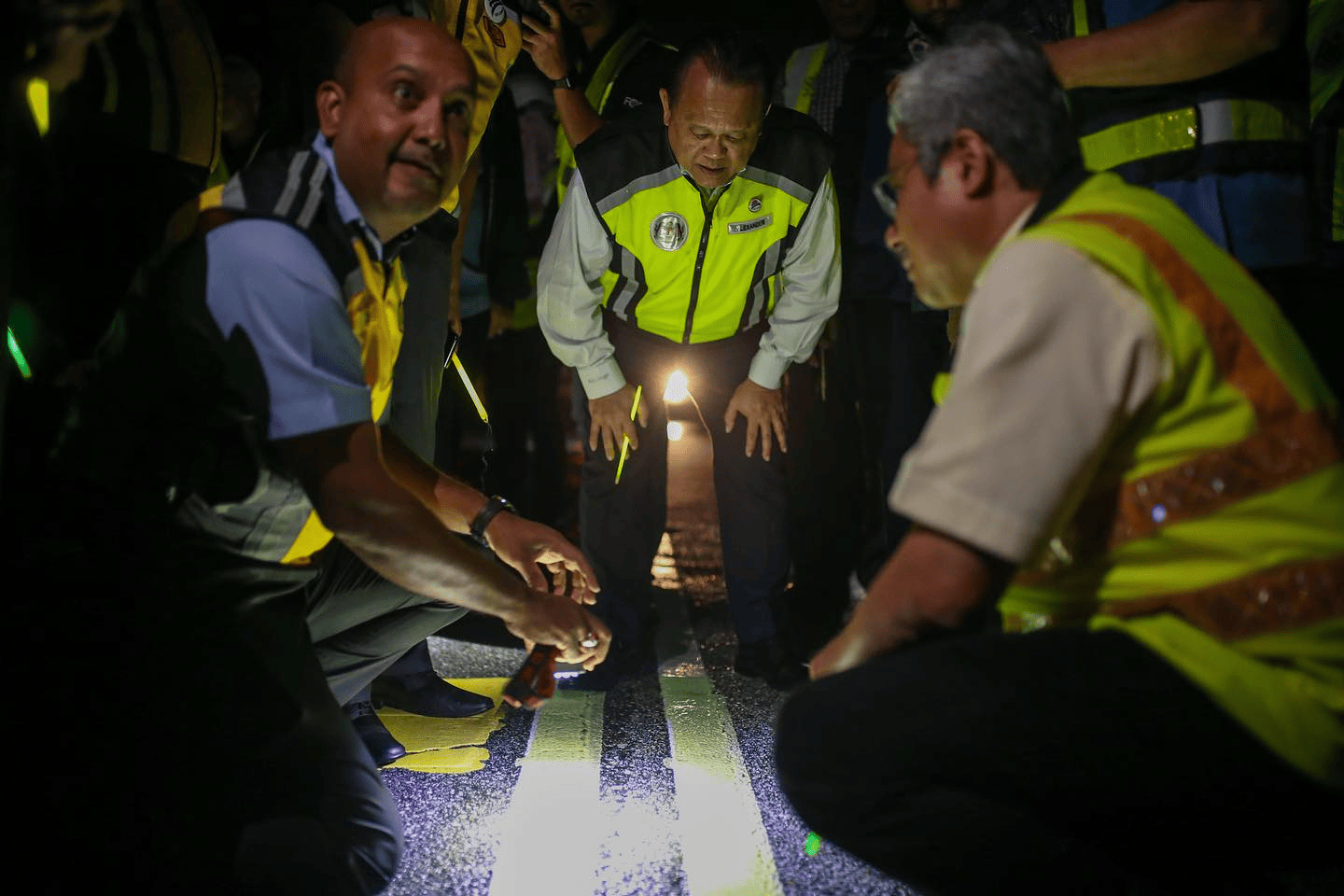
During a site inspection, Works Minister Alexander Nanta Linggi praised the paint’s visibility, especially under adverse conditions, noting it could be a cost-effective alternative in remote or low-income regions.
However, the bright idea quickly collided with fiscal reality. Deputy Works Minister Ahmad Maslan revealed in Parliament that the photoluminescent paint cost RM749 per square meter, compared to just RM40 for standard road paint, making it nearly twenty times more expensive.
Trials in Selangor and Johor soon faced setbacks. The performance was underwhelming, and the high cost couldn’t be justified for large-scale use. Internal reviews led to the cancellation of expansion plans to 15 locations in Selangor and 31 pilot roads in Johor.
Experts from the Malaysian Institute of Road Safety Research (MIROS) raised further concerns about the coating’s durability. In Malaysia’s hot, humid, and rainy climate, the paint degraded faster than expected. A 2021 study in the International Journal of Pavement Research and Technology supported these findings, noting that tropical environments often require reapplication within 18 months.
As Maslan candidly put it, “We ran tests, but it did not satisfy the experts from the ministry.”
Public enthusiasm eventually waned. As the novelty faded, citizens turned their attention to more pressing issues potholes, faded markings, and poor signage. On platforms like Facebook and X (formerly Twitter), users voiced frustration that resources were being spent on “glowing experiments” instead of fixing everyday road hazards.
One commenter captured the frustration perfectly: “Ask your officers to drive during rain or at night -you’ll see the poor visibility, potholes, and uneven roads. That’s what causes accidents.”
Although Malaysia has put its glow-in-the-dark ambitions on hold, global research continues. Teams at Delft University of Technology in the Netherlands and Japan’s National Institute for Land and Infrastructure Management are refining photoluminescent materials to improve their longevity and reduce costs.
For now, the glowing lanes of Semenyih remain a symbol of Malaysia’s willingness to experiment, a bright idea dimmed not by failure, but by financial and practical realities.


, aimed to make rural […]&media=https://wonderfulengineering.com/wp-content/uploads/2025/10/image-134.png)