

During intense operations in the Middle East, the U.S. Navy faced a cluster of costly airborne mishaps that resulted in three Super Hornet losses, collisions at sea, damaged equipment, and accountability actions across multiple commands. As reported by The War Zone, newly released Navy findings offer the first full picture of how these incidents unfolded and reveal how high-pressure decision-making, limited coordination, and mechanical failures converged during active combat conditions.
The most dramatic case occurred on December 22, 2024, when an F/A-18F returning to USS Harry S. Truman was mistakenly shot down by the cruiser USS Gettysburg. The carrier strike group had just intercepted incoming threats launched by Houthis, including anti-ship missiles and drones, and radar operators were tracking additional unidentified aircraft nearby. Amid the confusion, Gettysburg fired an SM-2 interceptor at what it believed was a hostile aircraft. Investigators concluded that a breakdown in communication between the strike group and the cruiser led to a misidentification of the friendly aircraft and even resulted in a near-engagement with another Super Hornet. Both aviators ejected and were recovered, but the jet was lost in deep water.
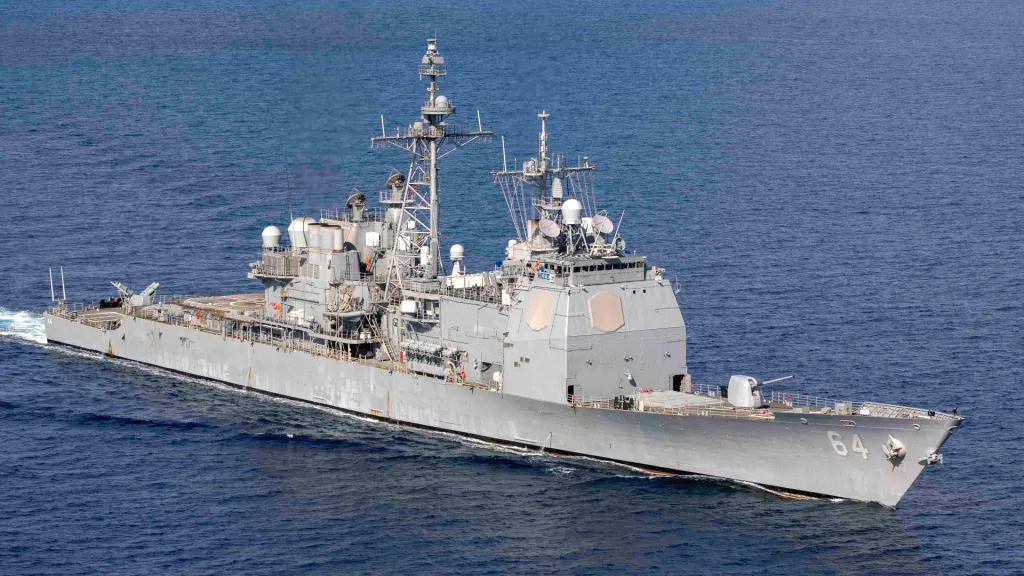
The Ticonderoga class cruiser USS Gettysburg. (USN)
The same deployment also saw the Truman collide with a merchant vessel while transiting near Egypt. Damage was concentrated along the starboard rear quarter, tearing through the sponson area and forcing emergency structural reinforcement when the ship pulled into Greece. The Navy later relieved the carrier’s commanding officer after determining that the collision was avoidable and stemmed from poor bridge coordination while maneuvering at night.
Just weeks later, another Super Hornet was lost when the ship executed sharp evasive turns in response to an inbound ballistic threat. The jet had been under tow beneath the hangar structure when crew members lost control of it. The aircraft rolled off the edge, along with the tow tractor pulling it. Investigators ruled its brake failure as the primary cause but emphasized that communication gaps between the bridge, hangar bay control, and flight deck personnel contributed to the incident. Only one minor injury was reported.
In May, the final mishap occurred when an F/A-18F coming in for recovery slammed off the deck after the arresting gear failed to stop it. The cable failure was traced to a damaged sheave assembly that had not been properly serviced. Maintenance shortfalls, limited technical staffing, and operating tempo all played a role. Again, both crew members survived.
Officials say lessons from every incident are being incorporated into new training and fleet-wide safety submissions. Navy leadership described the deployment as a test of readiness under live threat conditions, acknowledging serious failures while praising the crews who reacted quickly, improvised solutions, and continued flight operations almost immediately after each event.


