

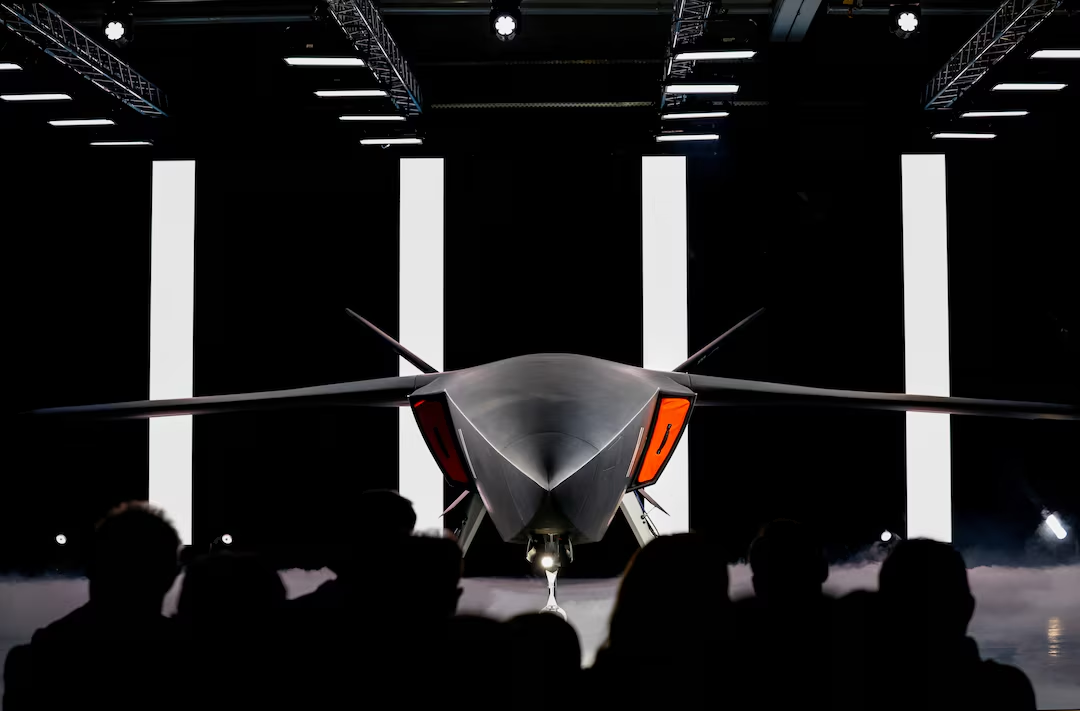
A German defence startup, Helsing, has unveiled a full-size model of an autonomous combat drone, the “CA-1 Europa” pitching itself into a fast-moving contest to build AI-driven, remote-piloted systems that can swarm with other robots or operate alongside crewed fighters.
Unveiled at a factory outside Munich, the angular, V-tailed CA-1 Europa is Helsing’s bid to become a major supplier of next-generation Unmanned Combat Aerial Vehicles (UCAVs). These systems are being developed as cheaper, more expendable complements to traditional fighter jets useful in contested airspace where risk to crewed platforms is high.
Helsing framed autonomy and artificial intelligence as the technological leap that enables this new class of weaponry. As co-founder Gundbert Scherf told Reuters, “AI changes everything in many areas of life, but also in defence. And the key thing that it enables is autonomy.” The company says the CA-1 Europa will be able to operate independently, in swarms with other uncrewed systems, or under the direction of manned fighters in a so-called “wingman” role.
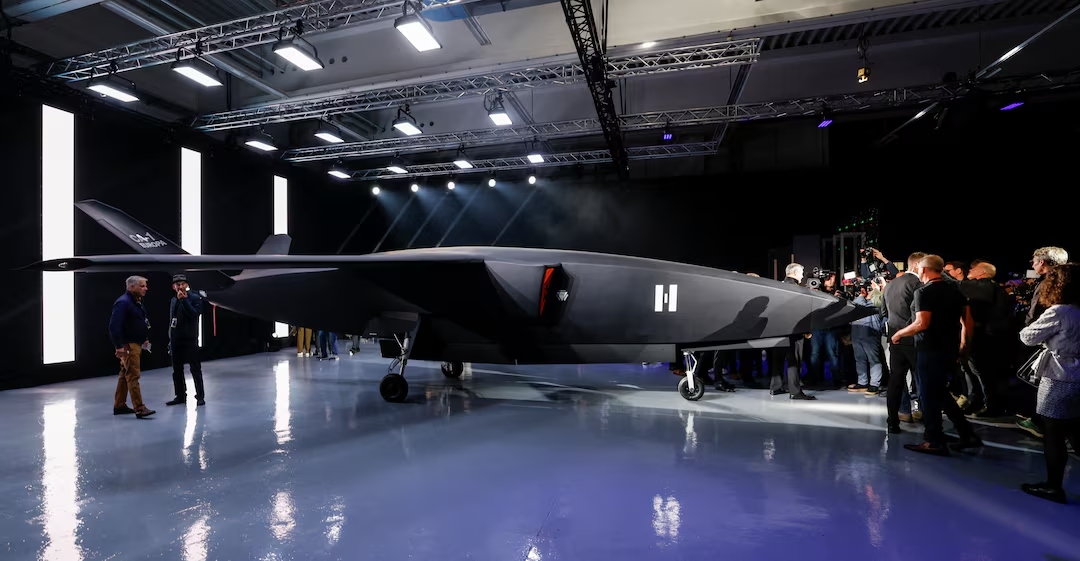
The move follows other recent efforts to field collaborative uncrewed aircraft: last year the U.S. Air Force tapped startups including Anduril and General Atomics for the first fleet of Collaborative Combat Aircraft (CCA), and manufacturers such as Airbus have shown concepts for drones to team with jets like the Eurofighter Typhoon. Helsing says it will invest “hundreds of millions of euros” and cooperate with unnamed European partners to bring the CA-1 to market, though it declined to detail specific weapons or a price only saying the drone would cost a “fraction” of an ordinary fighter jet.
Helsing has also moved strategically into airframe production: the design was revealed in hangars belonging to Grob, a light aircraft maker Helsing acquired in June. Grob’s propeller-trainer footprint aircraft of roughly three to five tonnes roughly matches the size of many current “wingman” designs. Analysts caution, however, that turning trainer-aircraft manufacturing experience into full-blown CCA production is a significant step up. Douglas Barrie of IISS noted the gap between Grob’s historic output and the demands of a large, advanced collaborative combat aircraft program.
Founded in 2021, Helsing began life producing AI software for defence firms and pivoted towards drone design after Russia’s invasion of Ukraine. Backing has been substantial: the company has raised over $1 billion from investors including Saab and Spotify CEO Daniel Ek, and Dealroom has valued it at about $12 billion prompting the claim that it is “Europe’s largest defence start-up.”
Yet observers point out that the firm still has limited battlefield track record. Helsing has delivered 2,000 HF-1 drones out of an order for 4,000 destined for Ukraine, and in February said it had started production of 6,000 in-house HX-2 strike drones though when pressed about deliveries, Scherf said the HX-2 was being tested and would be introduced “in the very future.”


