

Ford Motor Company has officially ended production of the all electric F 150 Lightning, marking a major retreat from one of the most high profile electric vehicle launches of the past decade. According to NPR, the automaker will pivot away from large, fully electric trucks and instead focus on hybrid models and a new generation of smaller, more affordable electric vehicles.
The decision reflects a blunt assessment from Ford that the Lightning was structurally unprofitable. Executives concluded that even at higher price points, the truck had no realistic path to long term profitability. Andrew Frick, president of Ford Blue and Ford Model e, said consumers still want the advantages of electrification such as instant torque and onboard power, but not at the cost of high prices associated with large battery electric trucks. As a result, Ford is reallocating investment away from big EVs and into products with higher expected returns.
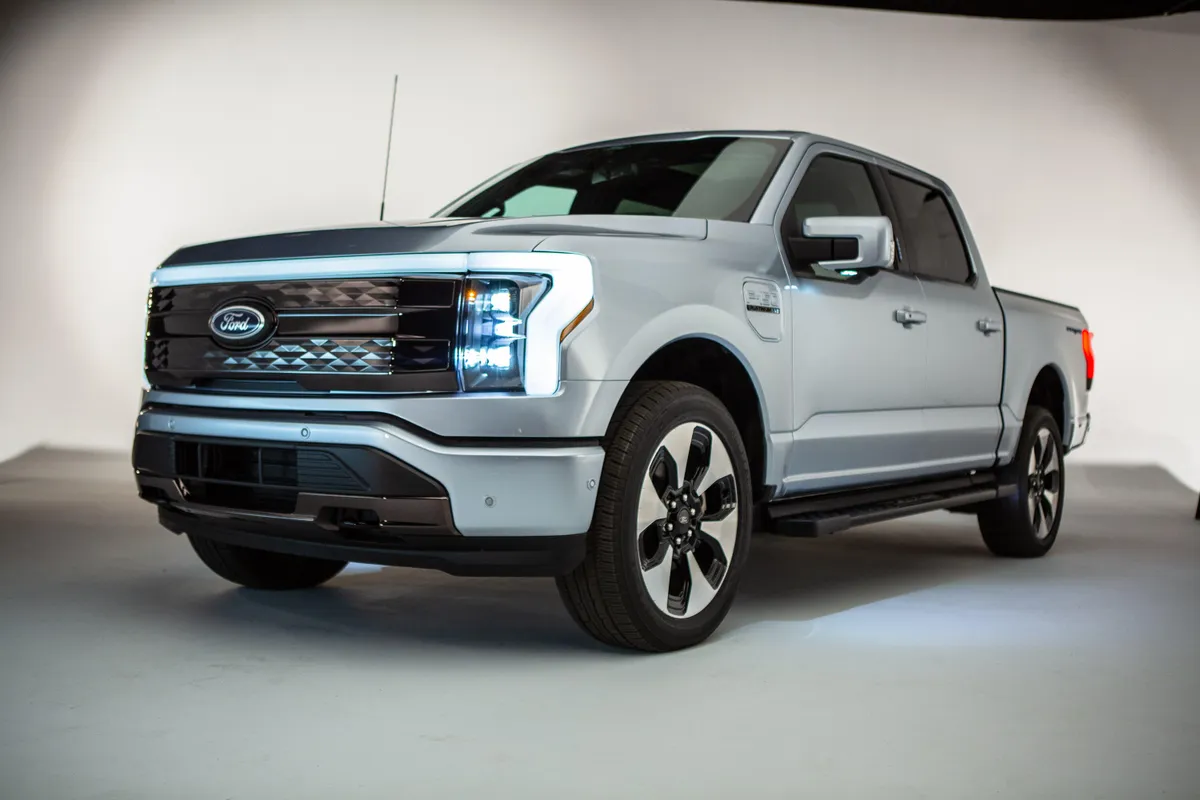
The Lightning was first unveiled in 2021 to widespread acclaim, with Ford promising a starting price near $40,000 and positioning the truck as a mainstream electric alternative to its gas powered bestseller. By the time the truck reached showrooms, however, costs had risen sharply. The 2025 Lightning started closer to $55,000, limiting its appeal to price sensitive truck buyers.
Despite strong reviews and multiple awards, including 2023 Truck of the Year from MotorTrend and top rankings from Kelley Blue Book, the Lightning struggled in the market. Customers cited reliability issues and sharply reduced driving range when towing, a critical drawback for a vehicle marketed as a work truck. Ford also acknowledged that it lost money on every unit sold, even after raising prices.
Broader market and policy shifts also played a role. EV adoption has slowed compared with earlier expectations, and recent changes in federal policy have eliminated incentives that once helped offset high EV costs. The removal of tax credits and the rollback of emissions standards reduced pressure on automakers to keep unprofitable electric models in production.
Ford now plans to bring the F 150 full circle with a plug in hybrid version that uses a gasoline engine as a generator for extended range. At the same time, the company is betting on smaller EVs, including a midsize electric pickup targeted at around $30,000, expected within the next year.
The shift will cost Ford billions in write downs and leave it with excess battery capacity. To address that, the company plans to repurpose a Kentucky battery plant to produce stationary storage systems for the electric grid, turning a surplus into a new business opportunity.


