

Deep beneath our planet’s surface, far from human eyes, the Earth’s inner engine has been behaving in unexpected ways. In recent years, scientists from the United States and China uncovered something astonishing: the Earth’s core once thought to rotate steadily has slowed down dramatically, and at certain times, even appears to stop moving relative to the crust. Though this phenomenon has been unfolding since at least 2009, most of us on the surface have barely felt a difference.
The Earth’s core, made primarily of iron and nickel, is divided into two distinct regions: a molten outer core, which helps generate the planet’s magnetic field, and a blazing-hot solid inner core, reaching temperatures up to 5,700°C. The outer layer begins about 1,800 miles beneath our feet, while the inner core lies deeper, at around 3,200 miles.
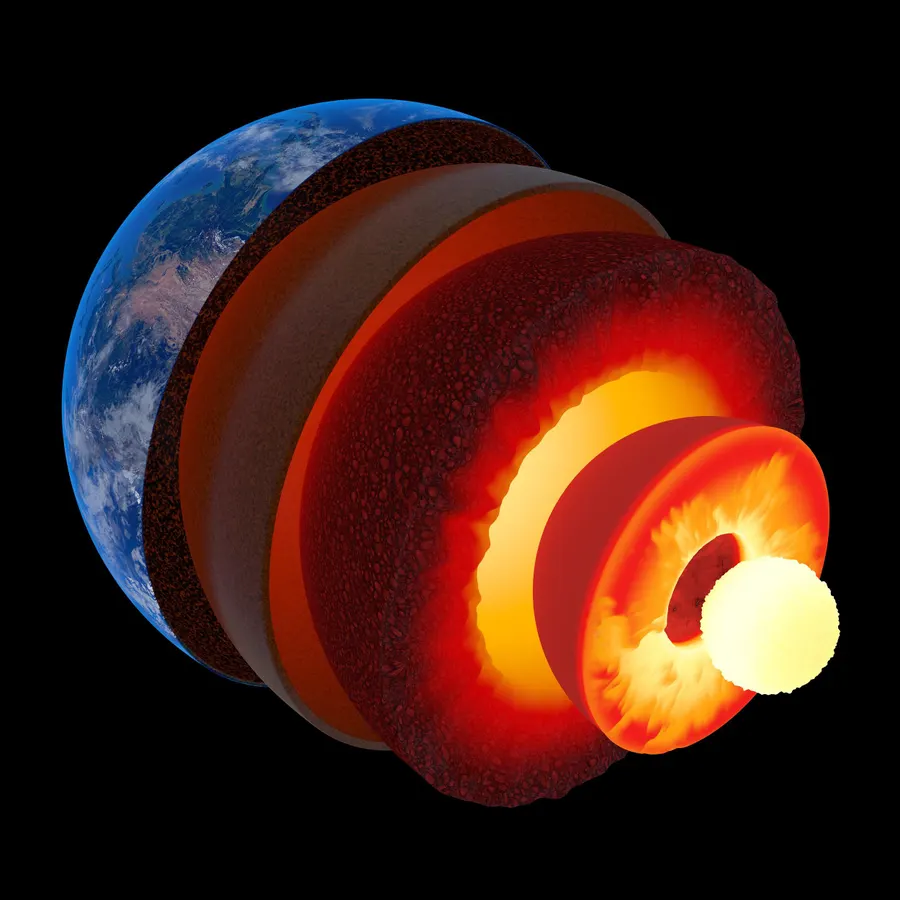
For decades, scientists assumed the inner core rotated smoothly and consistently. But seismic research—studies based on how earthquakes send waves through the planet—painted a very different picture. These findings revealed that the core’s motion is not fixed but fluctuates. As one explanation notes, the Earth’s core can “move as fast as the Earth’s crust and then appear to stand still.”
Importantly, this does not mean the core suddenly reverses its spin. Rather, it only seems that way because it slows down relative to the crust. In truth, the core never fully stops; it simply changes pace in comparison to the outer layers. Researchers now believe that the inner core’s rotation follows a cycle: slowing, shifting, and aligning roughly every 35 years, creating a full cycle of about 70 years.
The latest slowdown is believed to have begun around 2009. Since then, the core has been gradually falling out of sync with the crust.
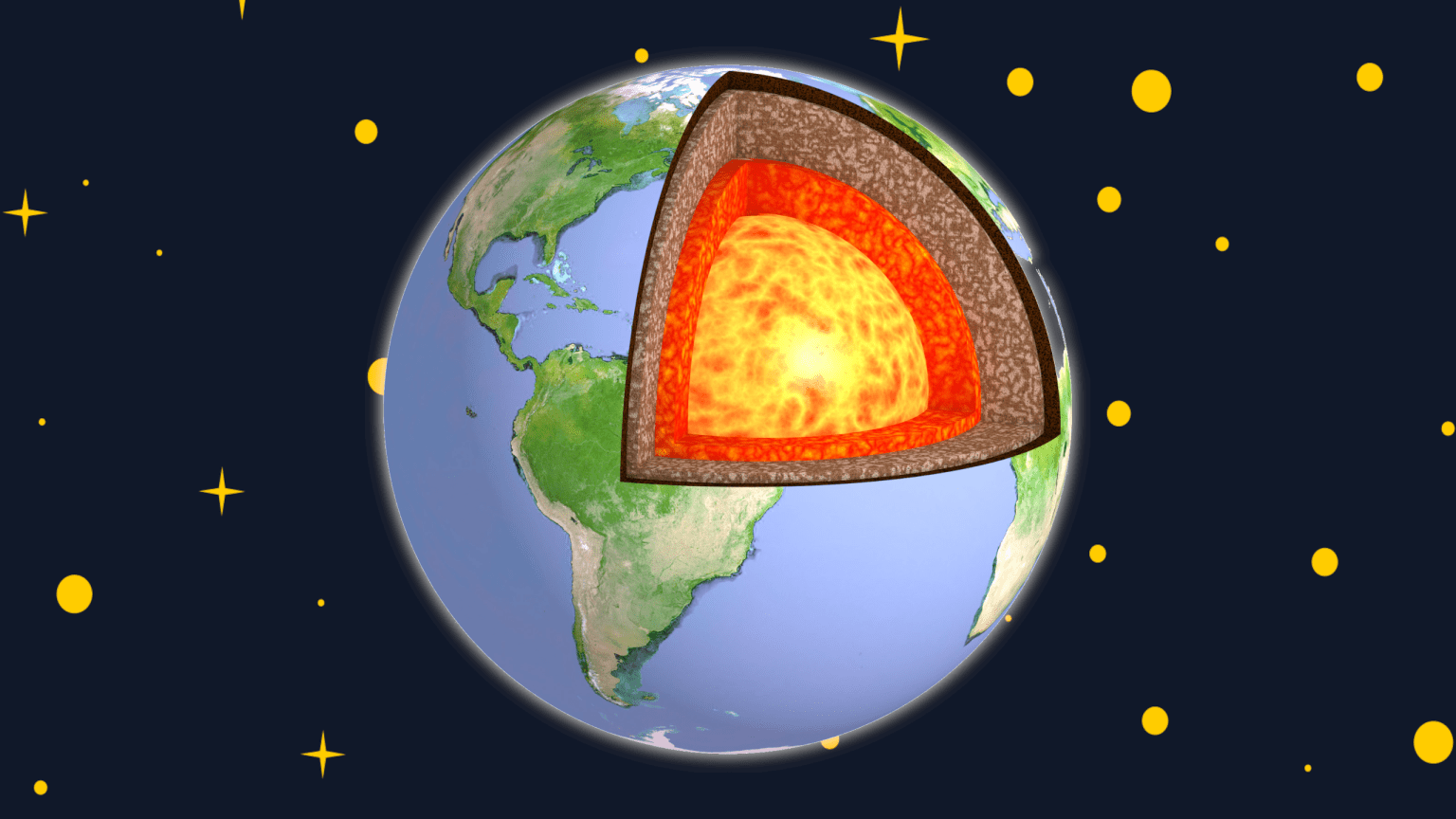
So what does this mean for life on Earth? The impact on our daily existence is subtle. The slowing of the core can technically lengthen or shorten the length of a day—but only by milliseconds, a change imperceptible to humans. However, such shifts may still affect delicate astronomical measurements, satellite systems, and potentially influence both Earth’s magnetic field and long-term climate patterns.
For most of us, life carries on unchanged, but beneath the ground, Earth’s hidden heart is quietly following its ancient rhythm.


