

Moving forward in electronic warfare (EW), Chinese scientists claim to have created a breakthrough system that could change how future conflicts are fought. The new technology, still in the simulation phase, can reportedly jam enemy communications while preserving friendly operations in a protected zone—likened to the calm at the center of a storm.
To understand this, imagine a violent storm of electromagnetic interference blanketing the battlefield. Traditionally, everything in its path enemy and ally alike would be overwhelmed. But in this Chinese-developed system, there’s a pocket of calm within the chaos, similar to the eye of a hurricane, where friendly forces remain untouched.

This effect is achieved by using coordinated drones acting as synchronized jamming nodes. While one drone bombards the battlefield with disruptive signals, the second emits a counter signal, which cancels out the interference at a specific location where friendly units are stationed.
In technical terms, this method employs beamforming and phase cancellation, well-known in signal processing but now repurposed for advanced warfare. By carefully controlling waveform, amplitude, phase, and timing, these drones create a finely tuned bubble of communication safety within a zone otherwise filled with noise.
Conventional EW systems whether omnidirectional or directional lack precision. Systems like the EA-6B Prowler, EA-18G Growler, or Russia’s Khibiny use directional jamming for better focus, but they still risk jamming friendly systems within the same area. The new Chinese approach, however, introduces a dual-drone configuration that allows for simultaneous attack and protection, a feature traditional systems cannot achieve.
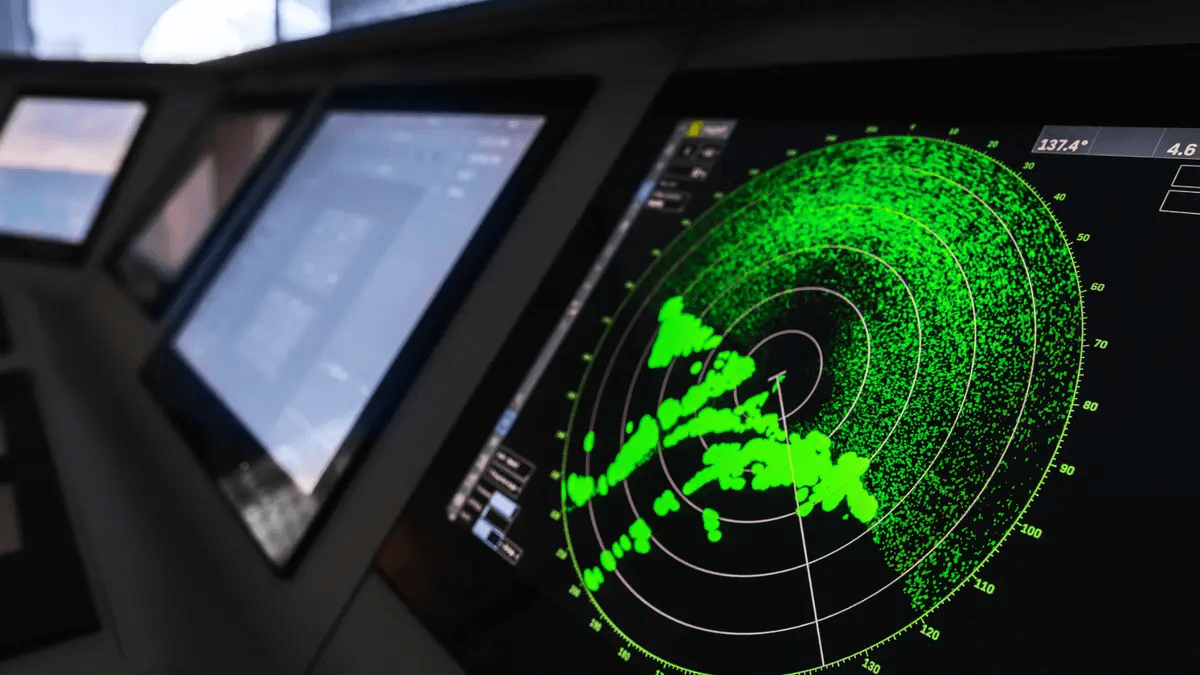
In effect, this creates a kind of selective jamming, a targeted strike that disables enemy systems while leaving friendly electronics fully functional, an invaluable capability in complex, GPS-denied or high-threat zones.
While the concept is captivating, it currently exists only in simulation. According to a paper published in the Chinese journal Acta Electronica Sinica, the team led by Professor Yang Jian from the Beijing Institute of Technology demonstrated that under conditions of extreme jamming, friendly receivers still operated without interference.
“Under the simulation condition of a 20 dB interference-to-signal ratio, electromagnetic interference at the target legitimate user can be reduced to zero,” the researchers reported.
This implies that even when the enemy jamming signals were 100 times stronger than the legitimate communication signals, the system managed to carve out a clean, interference-free zone.
If this technology can be replicated outside simulations, it would be nothing short of revolutionary. Armies could deploy precision EW, jam only what they intend to disable, and do so without harming their own systems. Such systems would be ideal for multi-domain operations, stealth drone swarms, or covert missions in contested airspace.
However, challenges remain. Real-world conditions are unpredictable, and precise synchronization between drones is notoriously difficult under combat stress. Moreover, terrain, weather, enemy countermeasures, and electronic clutter could all throw off such fine-tuned coordination.


, Chinese scientists claim to have created a breakthrough system that could change how future conflicts are fought. The new technology, still in the simulation phase, can reportedly jam enemy communications while preserving friendly operations in a protected zone—likened to the calm at the center of a storm. To understand […]&media=https://wonderfulengineering.com/wp-content/uploads/2025/08/image-52.png)