

China is rapidly transforming itself into the world’s dominant renewable energy power, building massive solar and wind installations at a pace unmatched by any other country, even as the United States pulls back from climate commitments under President Donald Trump.
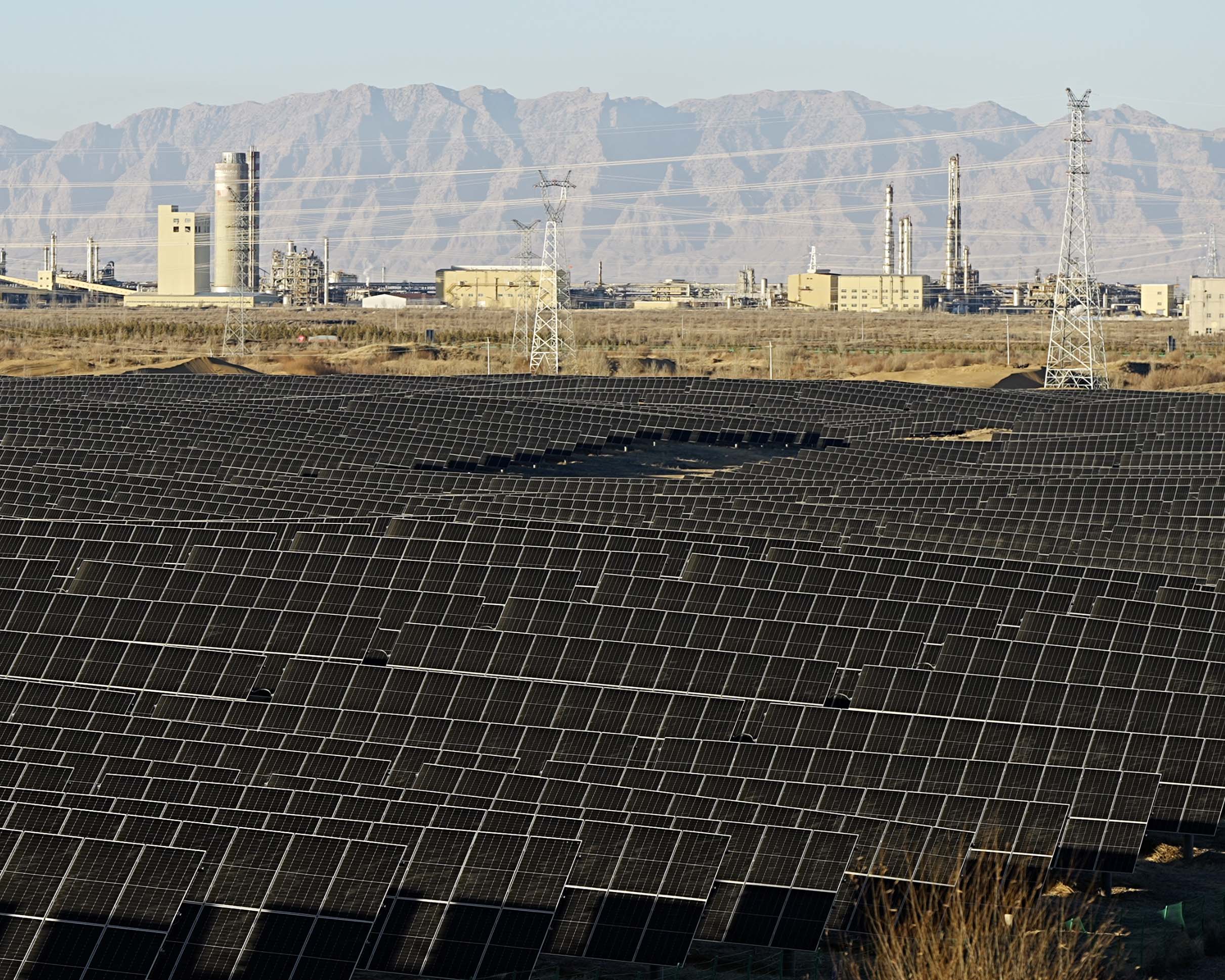
Across Inner Mongolia’s Kubuqi Desert, more than 46,000 hectares of barren land have been converted into sprawling solar farms. These installations not only generate electricity but also help stabilize the environment by acting as windbreaks and shading the soil, slowing desertification and allowing vegetation to recover. Similar mega-projects now stretch across regions like Xinjiang and Gansu, where vast arrays of solar panels and wind turbines generate enough electricity to power tens of millions of homes, according to a detailed report by the BBC.
China’s rise in renewable energy has been staggering. In 2010, the country produced just 0.1 gigawatts of solar power, far behind global leaders like Germany and the United States. Today, its solar capacity has surpassed 1,063 gigawatts, more than the rest of the world combined. Massive state investment, subsidies, and centralized planning have enabled China to scale renewable infrastructure faster than any other nation in history.
This transformation is part of Beijing’s broader strategy to peak carbon emissions by 2030 and reach carbon neutrality by 2060. Analysts say China’s emissions have already plateaued or declined for nearly two years, a key signal that renewable energy is beginning to displace fossil fuels in meaningful ways.
At the same time, the United States has reversed key climate policies, including rolling back scientific findings that supported federal emission regulations. This shift has allowed China to position itself as the global leader in clean energy development, manufacturing, and export.
China now dominates the global renewable supply chain. It produces more solar panels than the rest of the world combined, and one single Chinese factory manufactures one out of every seven solar panels globally. These inexpensive exports have made solar energy far more accessible worldwide, powering homes and infrastructure from Asia to Africa and beyond.
However, China’s green transition is not without challenges. The rapid expansion has led to oversupply, triggering price wars that have hurt domestic manufacturers financially. Solar companies collectively forecast billions of dollars in losses, while some planned renewable projects have already been canceled due to grid limitations and market imbalances.
There are also social and environmental trade-offs. In some regions, farmland and tea plantations have been replaced by solar installations, displacing farmers and raising concerns about soil stability and land use. Meanwhile, China still relies heavily on coal, which accounted for 58 percent of electricity generation in 2024, highlighting the difficulty of transitioning an economy of 1.4 billion people to clean energy.
Despite these complications, China’s momentum is undeniable. Massive solar installations, floating solar farms built on former coal mining sites, and expanding renewable manufacturing have placed the country at the forefront of the global energy transition.
Experts say China’s advantage is now so large that other countries may struggle to catch up. Its dominance in electric vehicles, battery production, and solar manufacturing has positioned it not just as a participant in the green transition, but as the central force driving it.


