

Imagine driving from New York to Las Vegas or crossing an entire continent without ever stopping to charge your electric vehicle. This scenario might sound like a sci-fi fantasy, but Huawei believes it could become a reality sooner than we think. The Chinese tech giant has unveiled a bold claim: a next-gen solid-state battery with the potential to deliver a staggering 1,860 miles (3,000 km) of range on a single charge, and recharge fully in just five minutes.
While today’s EVs typically offer 250–400 miles of range per charge, Huawei’s new solid-state battery technology could blow those numbers out of the water. Drawing comparisons to record-setting gas-fueled feats like the infamous Cannonball Run, Huawei’s patent outlines a potential EV battery capable of powering a mid-sized car for more than 1,800 miles in one uninterrupted trip. That’s thanks to cells featuring sulfide-based electrodes doped with nitrogen.
According to the Chinese patent filing, these advanced cells boast an energy density of 400–500 Wh/kg, around three times higher than conventional lithium-ion batteries currently in use. If realized in production vehicles, this would mark a seismic leap in EV performance. Huawei claims such a setup could enable full charging (not just up to 80%) in as little as five minutes, rivaling the speed of a traditional gas station pit stop.
“Even in a future where we can sleep while our car does the driving, we’re still going to need bathroom breaks and to stretch our legs,” the article wryly observes, pointing out a very human limitation to super-range travel.
It’s important to note that Huawei’s range estimate is based on China’s CLTC (China Light-Duty Vehicle Test Cycle), which is generally more optimistic than real-world conditions. Under the more conservative EPA standard, that impressive 1,860 miles might translate closer to 1,300 miles (2,090 km)—still triple what top-performing EVs today can achieve.
Despite the tech’s promise, skepticism remains because of practical demand and cost concerns. Ultra-long-range EVs come with significant weight and price penalties, which may not align with consumer behavior.
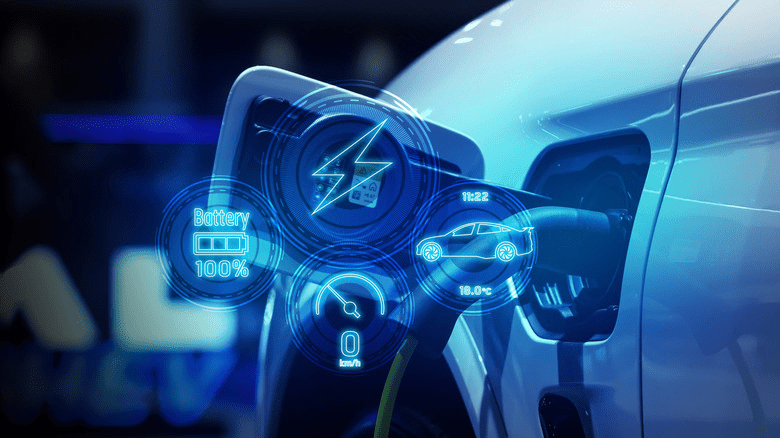
The smarter play, according to industry speculation, is to leverage these high-density batteries for smaller, lighter, and more affordable EVs that still offer impressive range, perhaps 600 to 750 miles (1,000–1,200 km). This would lower production costs, reduce vehicle weight, and make electric mobility more accessible to the masses.
Toyota, for instance, has already floated plans for EVs with 750-mile capability, which may represent the industry sweet spot for family-sized vehicles.
After all, beyond a certain point, extreme range may simply be overkill when factoring in real-world habits like rest stops, cost-efficiency, and daily commuting needs.


