

Apple has overtaken Samsung to become the world’s top smartphone seller for the first time in more than a decade, according to full-year shipment data cited by DW. Research from Hong Kong-based Counterpoint shows Apple capturing a 20 percent share of global smartphone shipments last year, edging past Samsung’s 19 percent and ending the South Korean company’s 14-year run at the top.
The margin was slim, but analysts say the shift reflects deeper structural changes in the global smartphone market. Apple’s rise comes after years in which its position appeared increasingly threatened by Chinese manufacturers and by consumers holding onto their phones for longer periods. Instead of competing head-to-head across every price tier, Apple benefited from a combination of timing, product refreshes, and strategic repositioning.
A major factor was the launch of the iPhone 17 lineup, which arrived just as millions of users were finally replacing devices purchased during the pandemic boom. That surge in delayed upgrades helped drive Apple’s strongest fourth quarter on record, with the company accounting for roughly a quarter of all global smartphone shipments during that period. Counterpoint estimates Apple’s shipments grew by 10 percent year on year, compared with Samsung’s 5 percent increase.
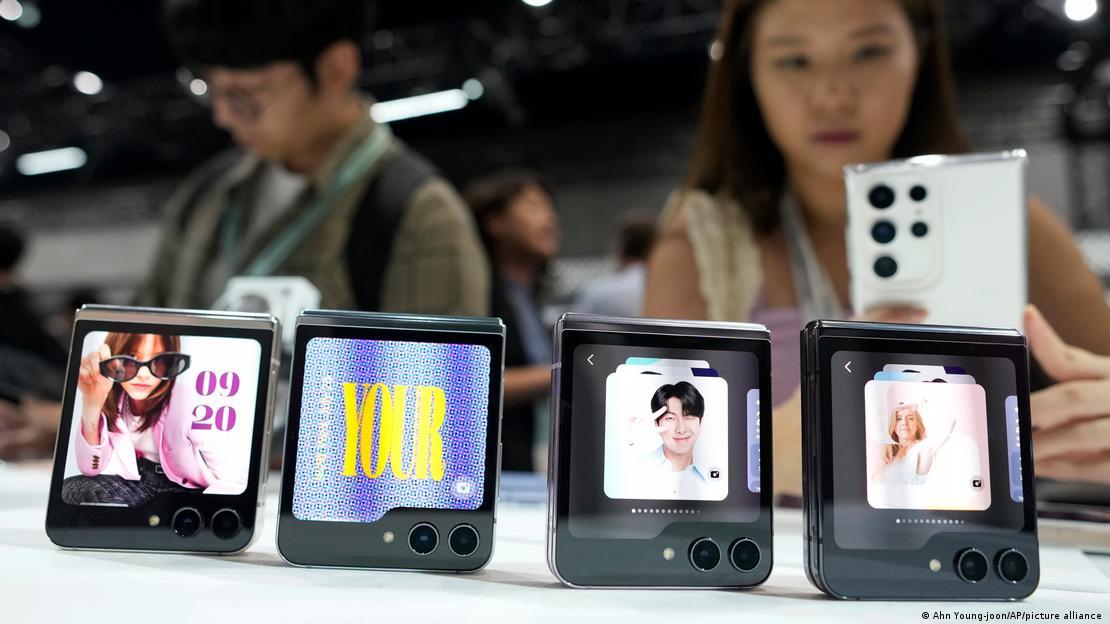
Apple’s expansion into the mid-range also played a key role. While Samsung has increasingly focused on premium and foldable devices, Apple has quietly pushed lower-priced models to attract cost-conscious buyers, particularly in emerging markets. Analysts point to India, the Middle East, and Southeast Asia as regions where Apple’s strategy is beginning to pay off, as buyers look for longer-lasting devices backed by strong software support.
External factors also boosted Apple’s performance. Uncertainty around potential US tariffs on China prompted early purchases, as consumers rushed to buy phones before possible price increases. At the same time, US sanctions on Huawei limited the Chinese firm’s access to advanced chips, weakening its presence in the premium segment and allowing Apple to consolidate its position in China during a difficult period for the broader market.
Samsung, despite losing the top spot, still increased its total shipments last year and remains a dominant force, particularly in foldables and Android devices at multiple price points. The competition is far from settled, with both companies facing pressure from aggressive Chinese rivals that release new models more frequently and compete on features and price.
Looking ahead, analysts expect overall smartphone shipments to soften in 2026 due to rising component costs. Apple’s next test may come from its long-promised artificial intelligence upgrades, with the success of a more capable Siri seen as a potential driver of future growth in an increasingly crowded and mature market.


