

China is moving ahead with what could become the most powerful hydropower station on the planet, a $165 billion dam project in Tibet’s Medog County. According to Reuters, the facility is planned to generate 60 gigawatts of electricity, nearly triple the capacity of the famous Three Gorges Dam. If it stays on schedule, this dam could reshape not just China’s energy landscape, but also the rivers that millions of people depend on downstream.
The project sits on the Yarlung Tsangpo River, which eventually flows into India and Bangladesh as the Brahmaputra. That’s where concerns start stacking up. Officials in Beijing insist that water flow won’t be disrupted, but both India and Bangladesh have voiced unease over the long-term effects. The Brahmaputra supports drinking water, agriculture, and livelihoods for millions, and critics worry the dam could give China outsized control over those resources.
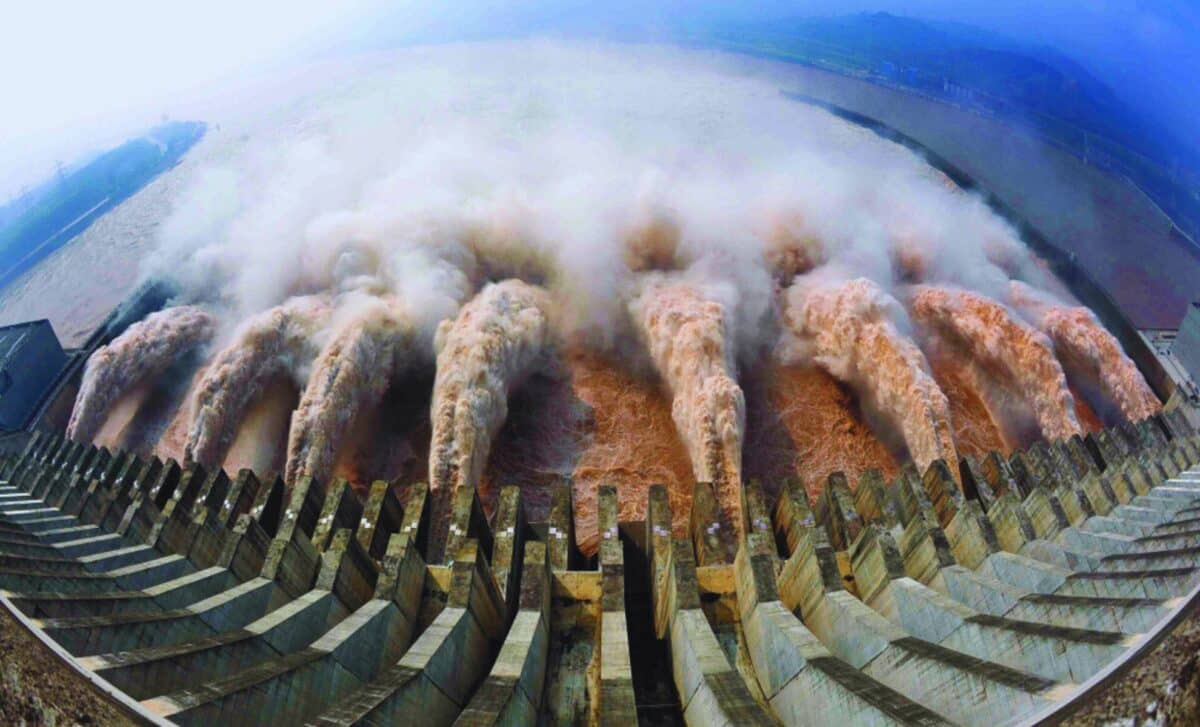
The Three Gorges Dam
The scale alone makes it extraordinary. The dam is expected to produce about 300 billion kilowatt-hours annually. For comparison, The Guardian noted that’s close to triple Three Gorges’ yearly output. Supporters say that kind of renewable power could help China hit its carbon neutrality goals faster, reducing reliance on coal. But environmental groups are flagging the risks: fragile ecosystems in the Himalayas, seismic activity in the region, and the potential displacement of entire communities.
There’s also a fascinating scientific angle. When the Three Gorges Dam was filled, NASA scientists pointed out that the mass of the water reservoir actually shifted Earth’s rotation slightly—by just fractions of a microsecond, but enough to show how massive these projects are. If the new dam reaches its projected capacity, it could have similar effects, though again too small for humans to notice. Still, it underscores just how large the engineering challenge is.
This isn’t the first time China has built a controversial dam, but the Medog project raises the stakes. The promise of clean power and global leadership in renewables is clear, yet the potential for political and ecological fallout is just as significant. For now, construction is underway, and the world is watching closely to see whether this mega-dam becomes a symbol of progress or another flashpoint in regional tensions.


