

The future of sports and technology collided in Beijing as the inaugural World Humanoid Robot Games concluded its three-day run, bringing together innovation, competition, and a glimpse into how robotics may soon transform human activities.
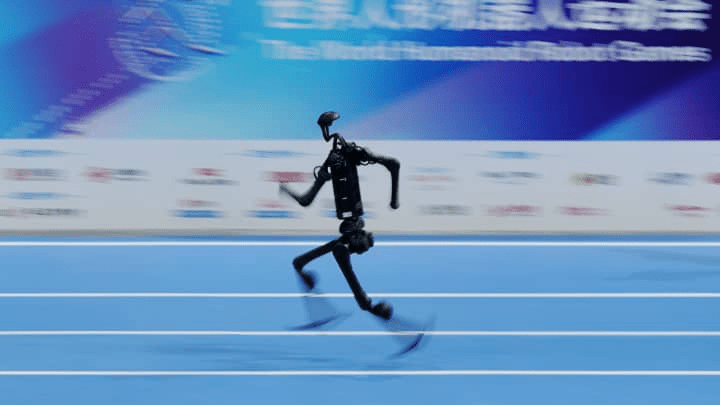
The event gathered 280 teams from 16 countries, including the United States, to showcase robots largely developed by Chinese companies such as Unitree and Booster. Over the weekend, humanoid athletes took part in a variety of contests from dance-offs and martial arts duels to traditional track-and-field events like the 400-meter, 1500-meter, long jump, and even a soccer tournament.
For many participants, the games weren’t just about performance but about envisioning the role of robots in the future. “Robots have stronger joints and core strength,” explained programmer Guo Tong, who trained a robotic soccer player for his team, Hephaestus. Looking ahead, he boldly predicted, “I see robots replacing my idol Cristiano Ronaldo by 2050.”
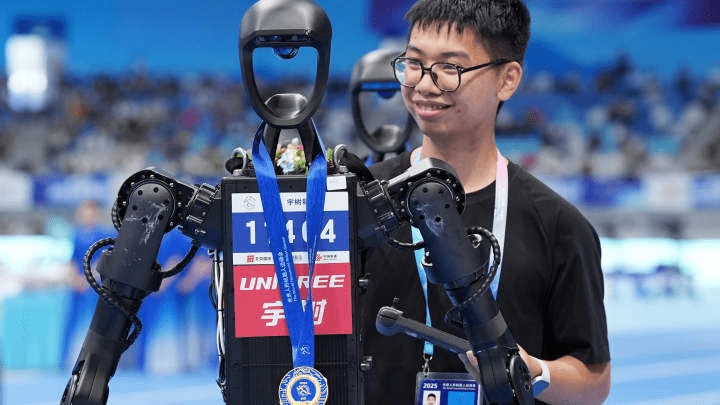
Boxing champion Li Yang also weighed in while observing his robot in the ring, remarking: “Robots are easier to coach. Humans are emotional.”
Chinese robotics companies made a strong showing, with Hangzhou-based Unitree claiming multiple medals, while X-Humanoid from Beijing and UBTECH from Shenzhen also earned recognition. One of the highlights came when Unitree robots captured first place in the 4x100m relay on the final day of competition.
The event reflects China’s growing investment in robotics, with the government designating humanoid robots as a strategic industry and aiming to build a world-leading robot sector by 2027. Following this debut, Beijing has already announced plans for a second Olympics-style humanoid games next year.
The competition extended beyond athletic contests to test robots in practical job skills—acting as hotel staff, store clerks, and factory workers. In one challenge, housekeeping robots were tasked with cleaning a mock hotel room and taking out the trash. Surprisingly, referees noted that the biggest obstacle wasn’t lifting garbage but managing to open and close a door.
For designers, these hurdles serve as valuable lessons. “We are refining our robots,” said engineer Wang Xidong. “Everyone feels motivated to compete.”


