

Image Courtesy: Wikimedia Commons
A remote desert region known as Bir Tawil continues to stand out as one of the world’s only territories not officially claimed by any nation, the result of a long-standing border dispute between Egypt and Sudan.
Located between the two countries, Bir Tawil exists because of conflicting interpretations of colonial-era boundaries. Egypt recognizes a straight border drawn in 1899, while Sudan supports a different administrative boundary established in 1902. Each version grants control of the more valuable Hala’ib Triangle to the country that adopts it, leaving Bir Tawil as the less desirable alternative, according to IFLScience.
As a result, both nations effectively forgo any claim to Bir Tawil in order to maintain their competing claims over the Hala’ib Triangle, a coastal region with strategic and economic importance. This unusual situation has left Bir Tawil without formal sovereignty, despite being geographically accessible and habitable.
The territory itself is a sparsely populated desert, characterized by rocky terrain, extreme heat, and limited infrastructure. While often described as uninhabited, it has long been used by nomadic groups such as the Ababda and Bisharin tribes, who travel through the area for grazing and trade.
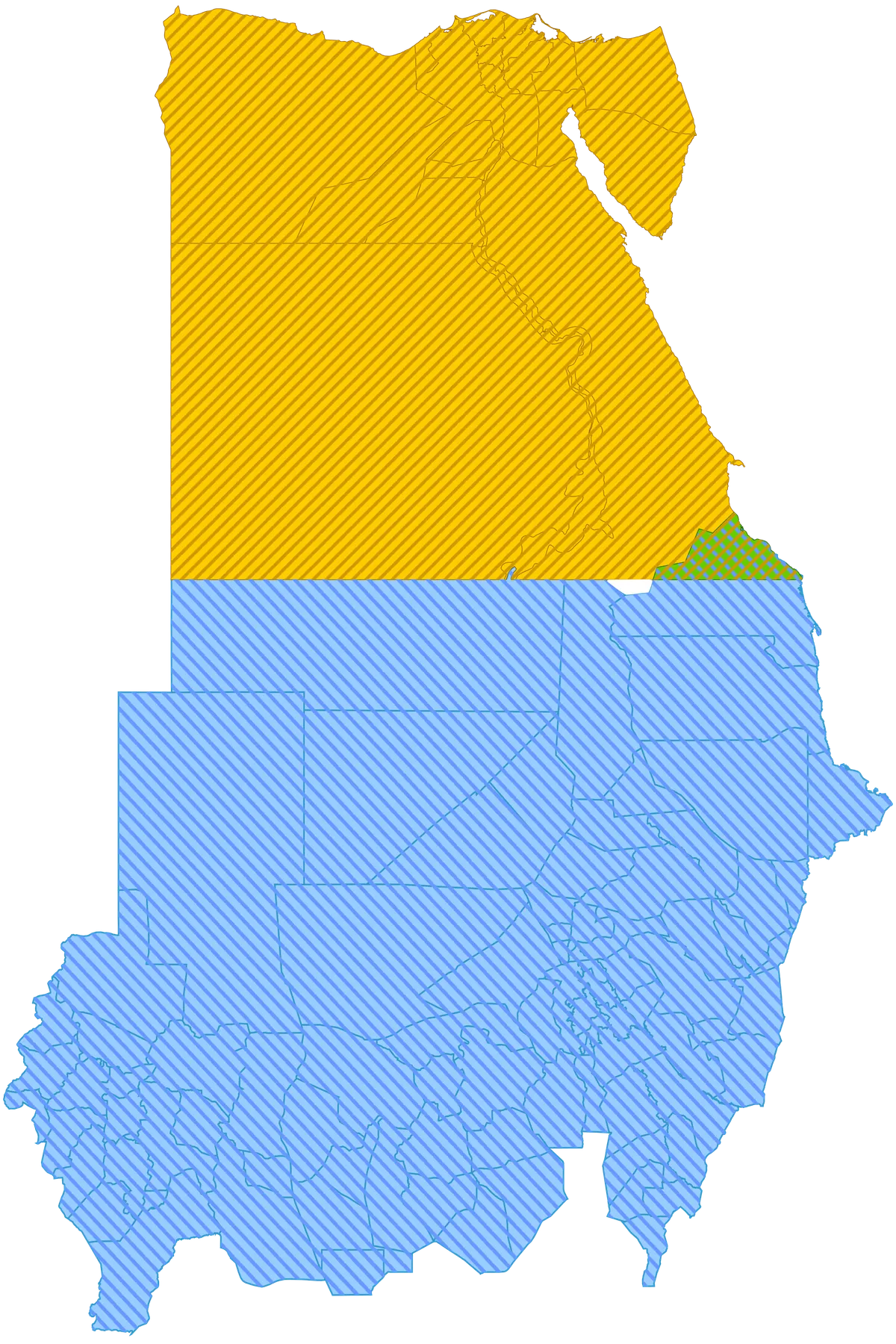
Bir Tawil is seen here in white, tucked between Egypt to the north and Sudan to the south. Courtesy: Wikimedia Commons
In recent years, Bir Tawil has attracted attention from individuals attempting to claim it as a private “nation.” One of the most widely publicized cases involved Jeremiah Heaton, who declared the area the “Kingdom of North Sudan” in 2014. Such claims have no legal recognition and have been criticized for ignoring the presence and rights of local communities.
Despite its reputation as a “no man’s land,” the area does see human activity. Informal settlements, mining operations, and small trading hubs have been reported, particularly linked to gold prospecting in the wider region. These activities underscore that the territory, while lacking official governance, is not entirely unused.
The origins of Bir Tawil’s status trace back to British colonial administration, when overlapping boundary definitions were created without clear resolution. When Egypt and Sudan later became independent, each adopted the version that favored its territorial interests, unintentionally leaving Bir Tawil outside both claims.
The case illustrates how historical border decisions can produce lasting geopolitical anomalies. While Bir Tawil lacks formal ownership, its existence remains tied to the unresolved dispute over surrounding land.


