

In a moment that bridges prehistoric wonder with modern fascination, Sotheby’s is set to auction off a one-of-a-kind juvenile Ceratosaurus nasicornis fossil an event that could change hands for an estimated $4 to $6 million.
Standing 6 feet 3 inches tall and stretching nearly 11 feet in length, this juvenile Ceratosaurus is a striking relic from the Jurassic world. Closely related to the Tyrannosaurus rex but more agile and smaller in size, this young predator has never before been mounted for public display, until now.
Discovered in 1996 at Wyoming’s renowned Bone Cabin Quarry (West), the fossil emerged from a site famously described by Henry Fairfield Osborn of the American Museum of Natural History as “the greatest find of extinct animals made in a single locality in any part of the world.” Since the late 1800s, this fossil-rich bed has produced some of the most significant dinosaur remains in history.
Fewer than four Ceratosaurus specimens have ever been unearthed, making this auction an extraordinary opportunity. Cassandra Hatton, Vice Chairman of Science and Natural History at Sotheby’s, called it one of the “very finest dinosaurs” ever seen at auction.
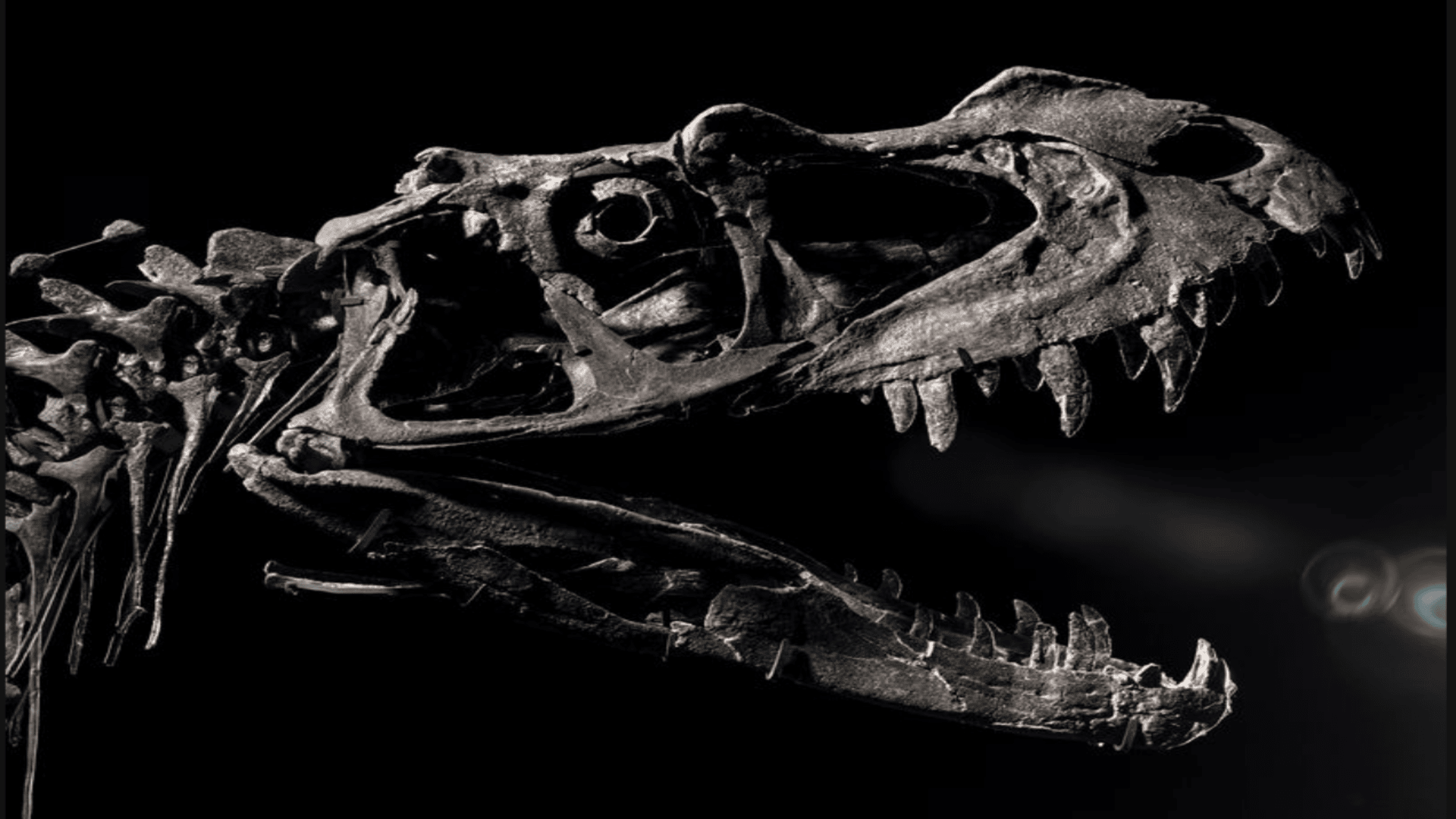
Sotheby’s detailed the specimen’s stunning preservation: composed of 139 fossilized bones, including a “remarkably complete and fully articulated skull,” the juvenile features a rare level of anatomical integrity. It retains its iconic nasal horn, sharp elongated teeth, and a ridge of bony armor along its back—details that underscore the Ceratosaurus’ lethal design. The fossil’s mineralization process has left the bones with a striking grey-black hue, adding to its visual and scientific appeal.
From an evolutionary standpoint, this young Ceratosaurus reflects a specialized predator of its time. Living during the Kimmeridgian Stage of the Late Jurassic, roughly 150 million years ago, it roamed a dynamic world marked by warming climates, rising sea levels, and the slow fracturing of the supercontinent Pangaea.
Sotheby’s noted that such dramatic environmental shifts “allowed predators like Ceratosaurus and herbivores such as Stegosaurus and Apatosaurus to thrive.” This particular fossil is a relic from a time of rapid evolutionary expansion, offering more than just aesthetic awe, it delivers scientific and historical context from one of Earth’s most transformative epochs.


