

A new portable wind turbine roughly the size of a water bottle aims to make off-grid power simpler and more reliable. The device, called the Shine 2.0, is built by a Canadian company that says it has solved many of the durability and efficiency problems that have long made small wind turbines impractical for campers and travelers, according to GearJunkie.
Unlike most portable wind turbines, which are often fragile and low-powered, the Shine 2.0 is designed to be compact, weatherproof, and lightweight while still delivering meaningful output. It weighs about three pounds and can generate up to 50 watts of power, an increase over the earlier Shine 1.0 model launched through crowdfunding in 2021. The turbine can charge phones, laptops, drones, and even portable power stations, thanks to USB-C support and optional adapters.
One of the key advantages highlighted by the company is that wind power works day or night and does not depend on sunlight. This makes the turbine particularly useful in coastal areas, open plains, and mountainous regions where wind is more consistent. The Shine 2.0 begins generating power in winds as low as 8 miles per hour and can operate up to about 28 miles per hour.
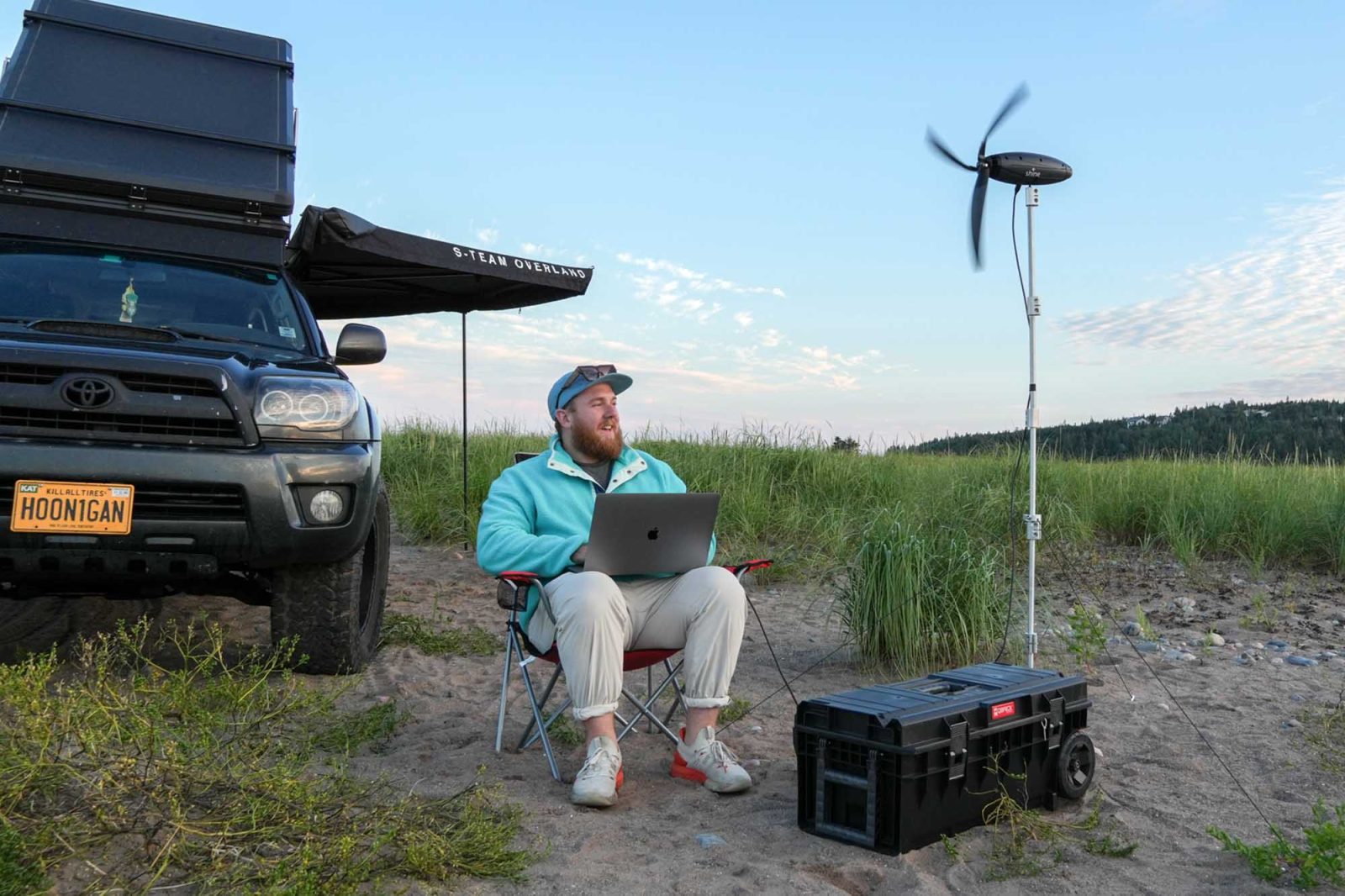
The upgraded model includes a built-in charge controller using maximum power point tracking, which helps stabilize output as wind speeds fluctuate. Users can also monitor performance and adjust settings through a Bluetooth-connected smartphone app that displays battery level and real-time generation data.
The device includes an internal 12,000 mAh battery, allowing it to function like a conventional power bank even when there is no wind. It automatically turns to face the wind and mounts on a compact pole that fits inside the unit for transport, with optional taller mounts available for better access to smoother airflow.
The Shine 2.0 is currently being funded through an Indiegogo campaign and is aimed at campers, van lifers, overlanders, field researchers, and anyone looking for emergency backup power. While it will not replace solar panels in calm or forested environments, its creators argue it offers a useful alternative or complement in windy locations where solar struggles.
If successful, the company plans to expand the concept with larger, more powerful versions designed for home backup and vehicle-based energy systems, signaling a broader push to make small-scale wind power practical beyond niche use cases.


