

Amid an increasingly volatile situation in the Red Sea, a U.S. Navy F/A-18E Super Hornet was lost overboard from the aircraft carrier USS Harry S. Truman. The incident unfolded during heightened U.S. military activity in response to repeated Houthi assaults, as the Navy continues to assert its mission readiness despite growing regional instability.
According to a statement from the U.S. Navy on Monday, the Super Hornet fighter jet was under tow within the carrier’s hangar bay when a sudden maneuver caused the aircraft and its tow tractor to fall into the Red Sea.
“The F/A-18E was actively under tow in the hangar bay when the move crew lost control of the aircraft. The aircraft and tow tractor were lost overboard,” the Navy reported.
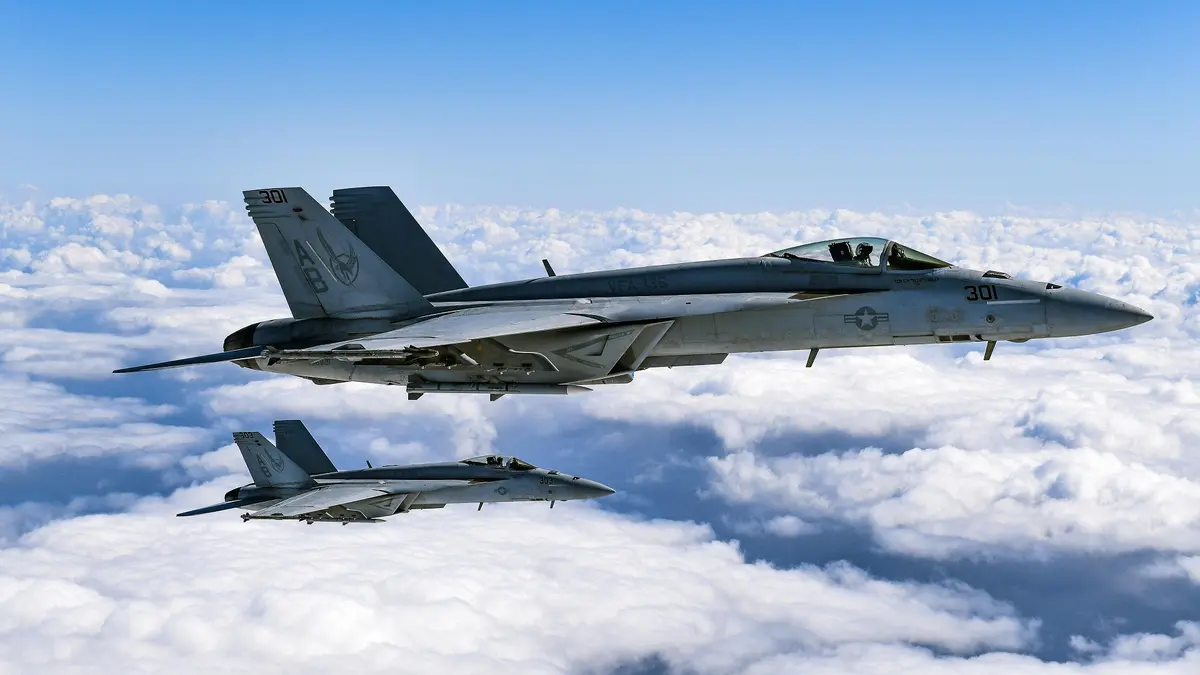
Fortunately, all personnel involved were accounted for, with only one sailor sustaining a minor injury. The Navy commended the quick response of the tow crew, noting,
“Sailors towing the aircraft took immediate action to move clear of the aircraft before it fell overboard.”
An investigation is underway to determine the full circumstances of the incident, though officials have acknowledged that recovery of the jet may prove difficult due to the challenging depth and conditions in the Red Sea.
Despite this loss, Navy officials stressed that the Harry S. Truman Strike Group remains “fully mission capable.” The carrier strike group includes not just the Truman but also nine squadrons of Carrier Air Wing 1, three guided-missile destroyers from Destroyer Squadron 28, and the Ticonderoga-class cruiser USS Gettysburg.
This latest mishap is not the first sign of trouble for the USS Truman. In recent months, the vessel has come under repeated Houthi attacks. In February, the carrier collided with a merchant vessel near Egypt, though the event caused no injuries. In an even more alarming incident last December, one of its fighter jets was accidentally downed by friendly fire from the USS Gettysburg. Both pilots ejected safely, avoiding further tragedy.
The backdrop to these events is a broader U.S. military campaign targeting Houthi forces in Yemen. The Houthis—an Iran-backed rebel group—have claimed responsibility for various drone and missile strikes against American naval assets, including the recent assault that may have prompted the Truman’s evasive action.
Amid these developments, Houthi leaders have publicly warned former President Donald Trump, accusing him of dragging the U.S. into a “strategic quagmire called Yemen.” Trump’s administration, in turn, had ordered a series of airstrikes aimed at neutralizing Houthi capabilities, following disruptions to international shipping lanes through critical waterways like the Red Sea, Bab el-Mandeb Strait, and the Gulf of Aden.
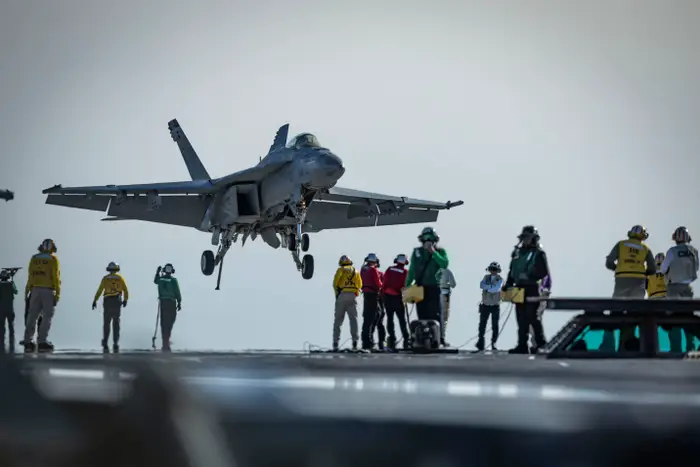
CENTCOM, overseeing U.S. operations in the region, stated that since March 15, it has pursued an “intense and sustained campaign” against Houthi targets. These efforts, according to CENTCOM, are grounded in precision intelligence to strike militant positions while minimizing civilian harm.
“CENTCOM will continue to ratchet up the pressure until the objective is met,” the command emphasized in a Sunday statement. “Restoring freedom of navigation and deterrence remains our central goal.”


