

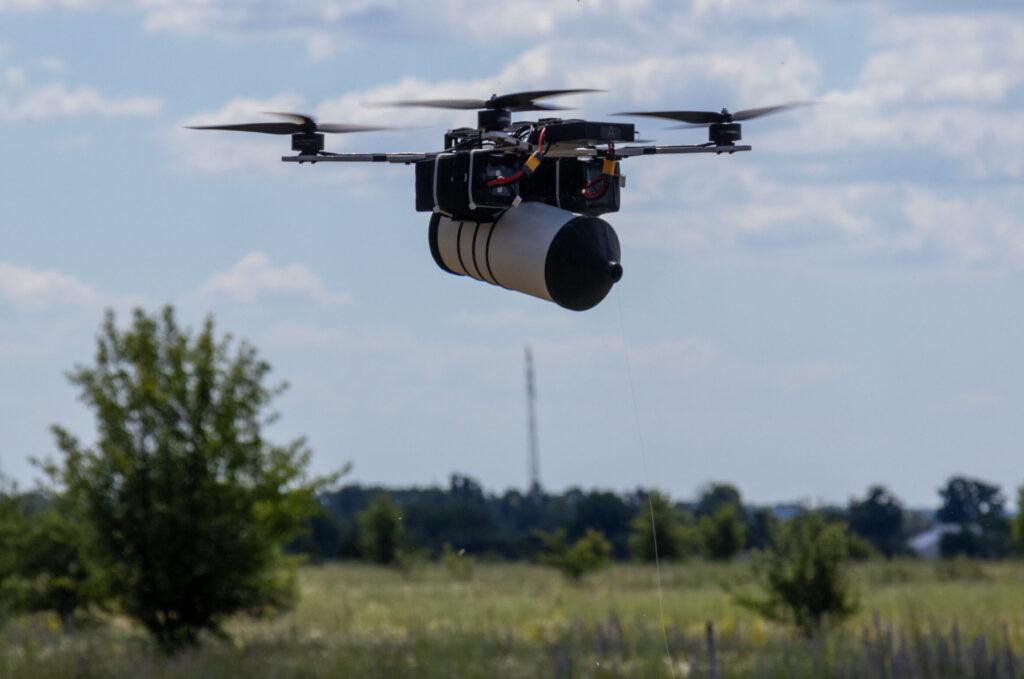
Ukraine has revealed another striking leap in battlefield technology, saying its small propeller-driven interceptor drones can now fly faster than Formula 1 cars. The claim comes from Kyiv’s digital transformation minister and highlights just how rapidly drone warfare is evolving, as reported by Business Insider.
According to Mykhailo Fedorov, Ukraine’s minister of digital transformation, a newly developed interceptor drone recently reached a speed of 400 kilometers per hour, or about 248.5 miles per hour. The drone is powered by a motor produced by Motor-G, a Ukrainian manufacturer that is part of Brave1, the country’s defense innovation platform. At that speed, the drone surpasses the official Formula 1 top speed record of 231.46 mph, set by Valtteri Bottas in 2016.
What makes the achievement even more remarkable is how it is accomplished. Unlike jets or missile systems that rely on combustion engines or extreme thrust, this interceptor uses a propeller-driven motor. That puts it in a different category from most vehicles that reach similar speeds. To put it in perspective, the drone’s velocity approaches that of the world’s fastest high-speed trains. The Shanghai Maglev has reached around 280 mph during testing, though it typically operates much slower in commercial service.
Speed is only part of the story. These interceptor drones are designed to be relatively cheap, with Ukrainian manufacturers typically pricing them below $6,000 each. That low cost is crucial because their main mission is to hunt down and destroy other drones, particularly Russia’s Shahed loitering munitions, which are often launched in large swarms to overwhelm air defenses.
The war has forced Ukraine’s defense industry to innovate at a remarkable pace. What began as hobbyist drone modifications has turned into a domestic production ecosystem capable of building some of the fastest small aircraft on the battlefield. Just four months ago, another Ukrainian interceptor drew attention for reaching 195 mph. The jump to nearly 250 mph shows how quickly capabilities are improving.
Fedorov also pointed to major progress in manufacturing. Producing drone motors domestically was seen as nearly impossible just two years ago. Today, Motor-G is reportedly manufacturing around 100,000 motors per month, and more Ukrainian drones are flying with locally made components.
The push for speed is driven by necessity. Russia has been experimenting with faster versions of the Shahed, including jet-powered variants believed to reach around 230 mph. While those developments initially raised concerns that interceptors would not be able to keep up, recent footage and reports suggest Ukraine’s drone makers have largely closed that gap.
Beyond the battlefield, Ukraine has signaled ambitions to export its drones, missiles, and air defense systems, arguing that few products are more credible than weapons tested in real combat. If current trends continue, small, fast, and inexpensive drones may redefine what air superiority looks like in modern warfare.


