

Google made a daring gamble in 2013 by starting an ambitious project to produce smartphones in the US, which had both potential benefits and drawbacks. The brief history of Google’s endeavour provides important insights for the tech sector as President Trump steps up his pressure on firms like Apple to relocate their manufacturing to the United States.
Google introduced the Moto X, a smartphone made in a Fort Worth, Texas, factory, as part of its acquisition of Motorola Mobility. The company emphasised the advantages of American-made phones, including the ability to customise them with different colours and materials, such as bamboo and walnut backs. In stark contrast to the months-long wait times connected with Chinese-made phones, Motorola promised U.S. customers a speedy delivery time of just four days.
But the business soon ran into difficulties. Although thousands of phones were produced every day at the Fort Worth factory, it soon became apparent that the labour costs in the United States, which were about three times higher than those in China, could not be sustained. Sales of the Moto X fell short of expectations despite efforts to provide a personalised, patriotic alternative to multinational behemoths like Apple and Samsung. A significant effort to return smartphone manufacturing to the United States came to an end in 2014 when Google sold Motorola’s phone division and ceased its U.S. manufacturing activities.
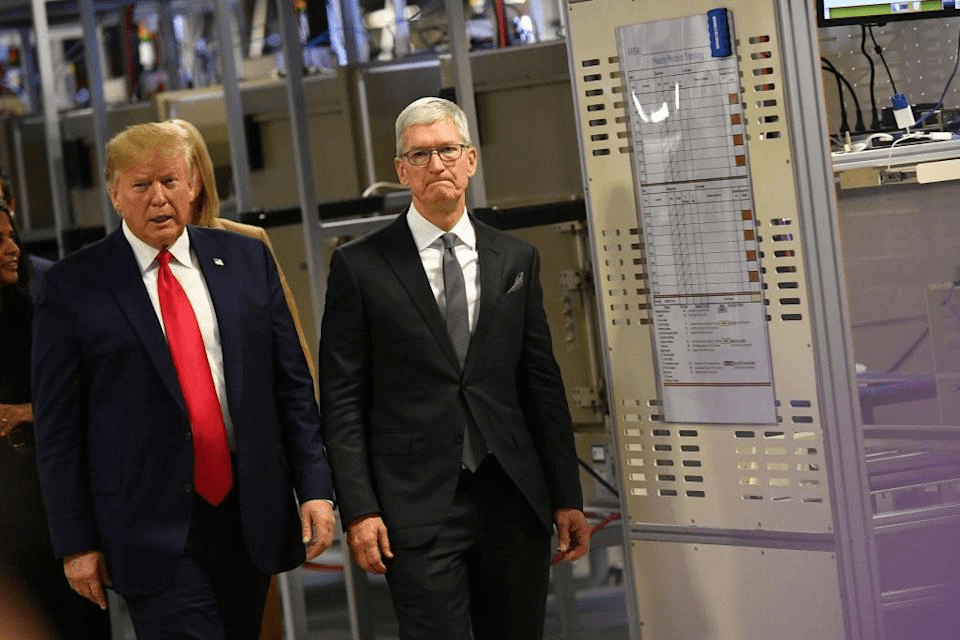
This experiment sheds important light on Trump’s push to reshoring tech manufacturing. Significant obstacles include limited domestic suppliers, the majority of whom are still based in China, and higher labour costs. According to analysts, if Apple were to relocate its iPhone manufacturing to the United States, the price would probably increase dramatically, possibly reaching $3,500 per phone as opposed to the $1,000 price tag of the current Chinese-made models.
The realities of American manufacturing, as Google’s experience demonstrates, might be too harsh for businesses to handle without sharply raising prices or altering their production methods. Trump’s campaign for American-made electronics is still ongoing, but there are still many logistical and financial obstacles in the way.


