

China has secured a major boost to its engineering and aerospace ambitions with the homecoming of Zhou Ming, a world-renowned engineer credited with developing critical software used in the design of aircraft such as the Boeing 787 Dreamliner and Airbus A380. After decades of international success, Zhou has stepped down from his executive role at U.S.-based engineering powerhouse Altair to take on a new mission in China.
Zhou has been appointed chair professor and founding dean of the College of Engineering at the Eastern Institute of Technology (EIT) in Ningbo, where he will lead efforts to build a cutting-edge research hub in engineering software and optimization design technologies. His decision reflects both personal commitment and a broader shift in the global engineering landscape.
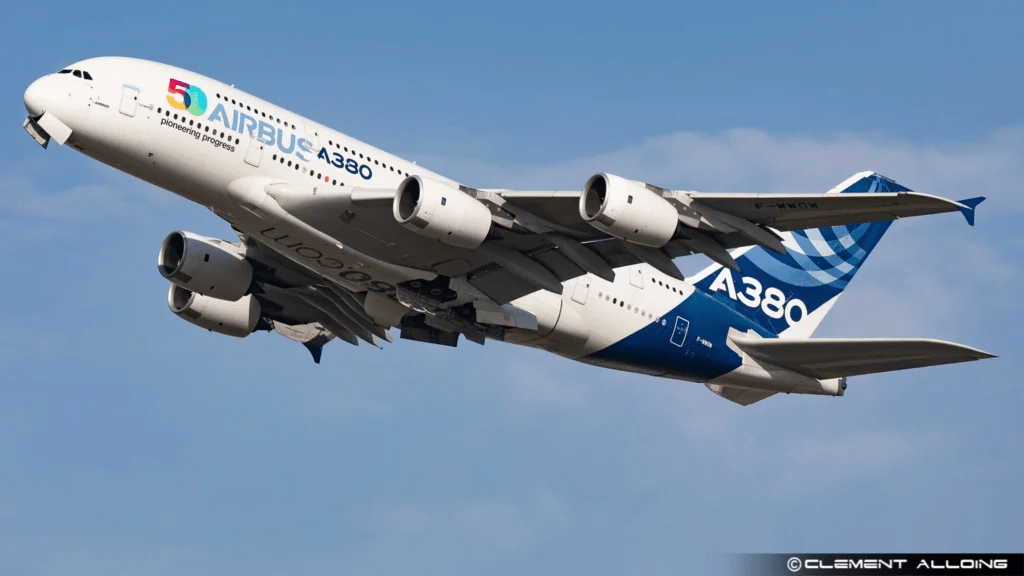
After years of pioneering achievements abroad, Zhou is now focusing on cultivating talent and strengthening China’s self-reliance in advanced computational engineering. According to reports, he is already assembling a team specializing in simulation-driven design, topology optimization, and software applications across aerospace, automotive, and energy industries.
Zhou’s journey began with a decade of rigorous study at Beihang University, one of China’s leading aerospace institutions. In 1988, he moved to Germany for doctoral and postdoctoral work at the University of Duisburg-Essen, honing his expertise in structural mechanics and optimization.
His research into topology optimization which is a technique that uses computational models to create efficient structures laid the foundation for breakthroughs that would redefine aircraft and vehicle design.
By 1998, Zhou joined Altair, where he bridged academic theory with industrial application. Rising to global senior vice president and chief engineer, he helped design next-generation aircraft including the Boeing 787 and Airbus A380, while also shaping innovations in supercomputing, automotive engineering, and energy systems.
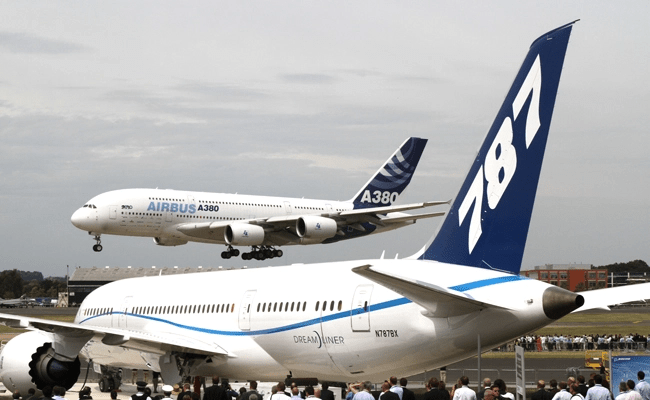
His influence has been widely recognized. Earlier this year, Zhou was elected to the U.S. National Academy of Engineering for his pioneering work in generative design and simulation-driven optimization. He also serves as editor-in-chief of the official journal of the International Society for Structural and Multidisciplinary Optimization, cementing his role as a global thought leader.
The Eastern Institute of Technology, a young private university near Shanghai in the Yangtze River Delta, has positioned itself as an ambitious player in advanced research. Although it enrolled just 70 students in its first undergraduate class, the institution has recruited a roster of high-profile scholars, Zhou becoming its 16th academician-level appointment.
The institute aims to create a startup ecosystem within its campus, encouraging applied research and entrepreneurship alongside academic excellence. With Zhou leading its College of Engineering, EIT hopes to accelerate China’s drive toward high-end manufacturing, aerospace leadership, and global research collaboration.


