

According to project details released by Zaha Hadid Architects, construction has begun on the ambitious Bishoftu International Airport, a massive cross shaped aviation hub in Ethiopia that is set to become the largest airport in Africa and one of the most visually striking terminals anywhere in the world.
Commissioned by Ethiopian Airlines Group, the new Bishoftu International Airport is rising just south of Addis Ababa in Ethiopia. When complete, the structure will span roughly 660,000 square meters, or about 7 million square feet, instantly placing it among the largest airport terminals ever built.
True to the firm’s futuristic design language, the building takes on a bold X shaped footprint that looks more like a spacecraft than a conventional airport. But the unusual geometry is not just aesthetic. Architects say the layout improves passenger flow by shortening walking distances and simplifying connections between gates.
At the heart of the design is a central spine that links multiple piers, allowing travelers to move efficiently between arrivals, departures, and transfers. Each pier will also feature its own materials and color palette inspired by different regions of Ethiopia, giving the interior a sense of place rather than the anonymous feel common in many mega airports.
Sustainability plays a major role in the project. The airport is targeting LEED Gold certification, with natural ventilation and semi enclosed spaces helping regulate indoor temperatures while reducing energy demand. Outdoor areas will allow passengers to enjoy the region’s relatively mild climate during layovers.
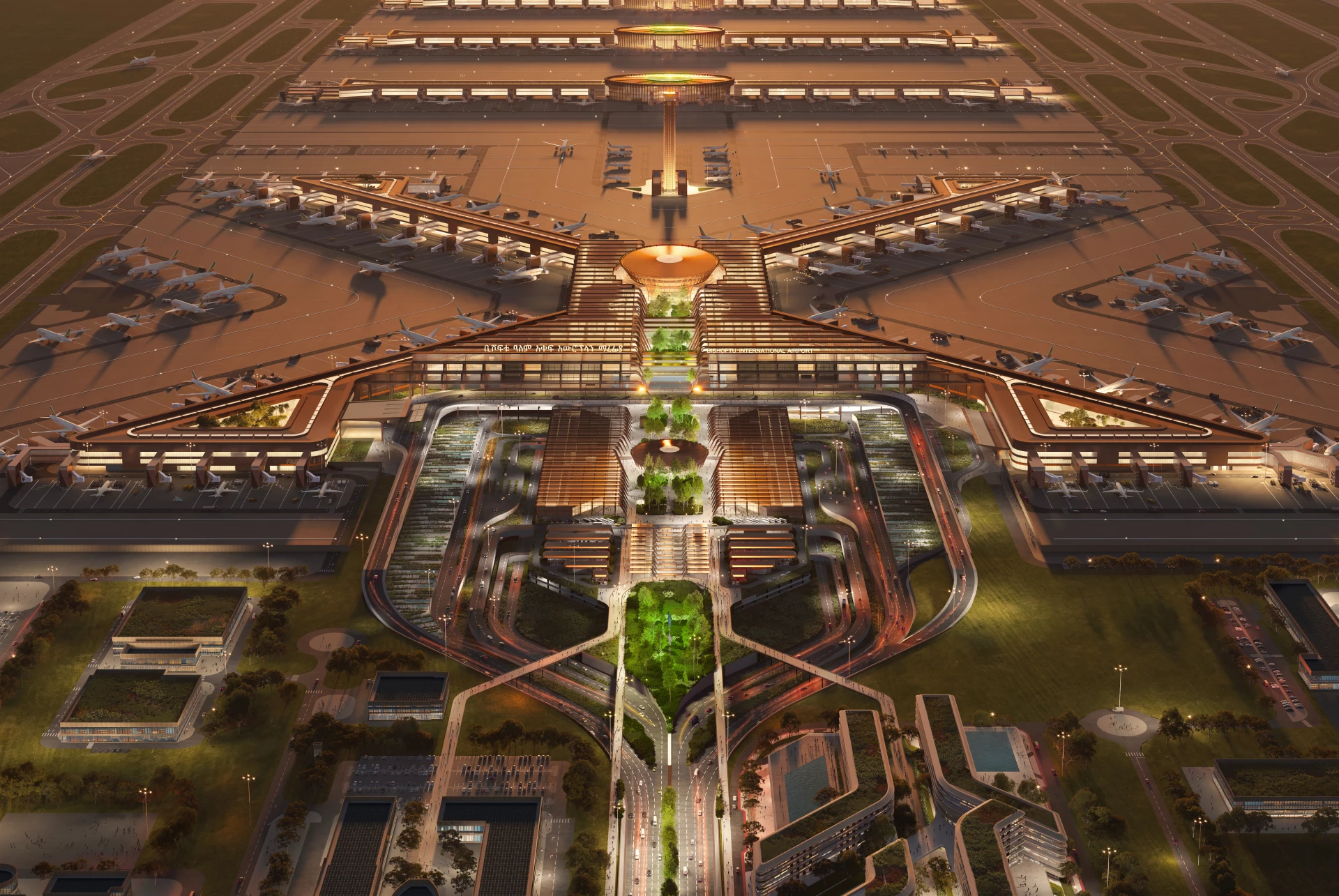
Construction will rely heavily on locally sourced materials and modular fabrication methods to reduce environmental impact. Plans also include solar panel arrays for on site power generation, wetlands to collect and reuse storm water from runways and taxiways, and native drought resistant landscaping to conserve water.
The scale of the development is equally dramatic. Built in phases, the airport is ultimately expected to handle up to 110 million passengers per year and provide parking for 270 aircraft. The first phase is scheduled to open around 2030.
If it delivers on its promise, Bishoftu International Airport will not just expand Ethiopia’s aviation capacity. It could redefine what a modern airport looks and feels like, blending infrastructure, culture, and sustainability into one massive X shaped landmark.


