

A New York City startup has unveiled a compact machine that captures carbon dioxide directly from the air and converts it into usable gasoline, offering a futuristic twist on the idea of treating the atmosphere itself like a giant energy reservoir.
For years, scientists have explored direct air capture as a way to fight climate change by pulling excess carbon dioxide out of the sky. Aircela’s pitch goes a step further. Instead of simply storing that carbon underground, the company wants to recycle it into fuel that can power today’s gas powered cars without any engine modifications.
The process happens in three stages. First, the machine extracts carbon dioxide from the surrounding air using direct air capture technology. At the same time, it splits water through electrolysis to produce hydrogen. The captured carbon dioxide and hydrogen are then combined to create methanol, which is finally converted into motor grade gasoline using established chemical methods. The company describes the result as a fossil free, drop in fuel that behaves just like regular petrol.
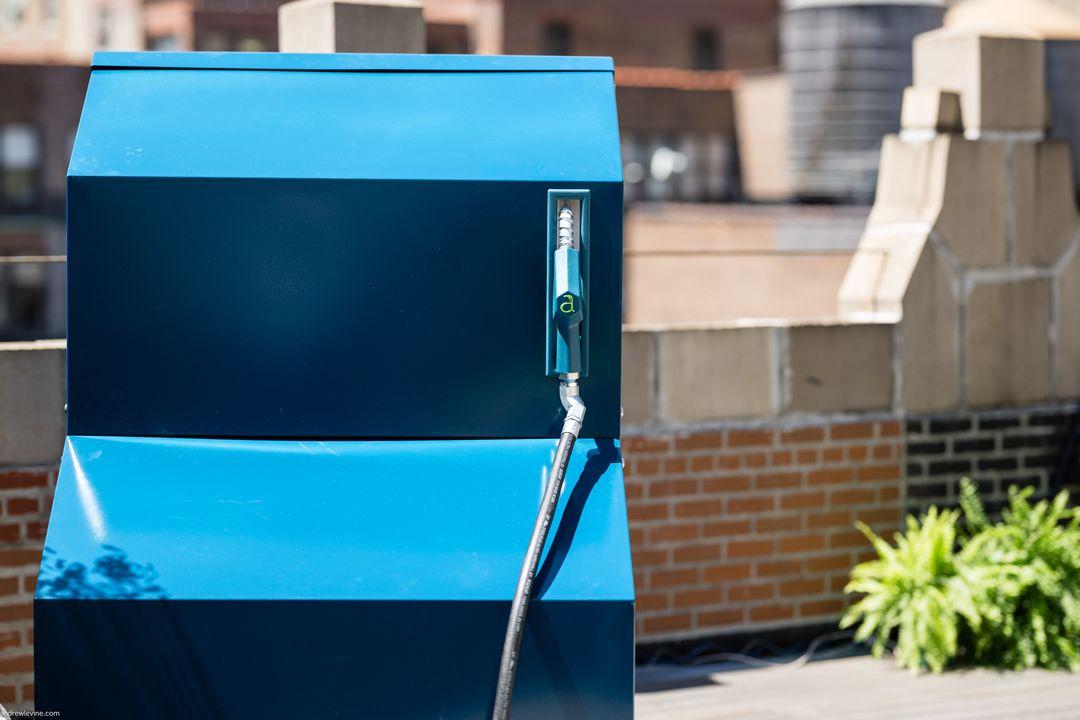
Aircela
On paper, the concept sounds almost too convenient. A refrigerator sized device quietly making gasoline at home could seem like a dream at a time of volatile fuel prices and climate concerns. But the reality is more complicated.
Right now, each unit can only produce about one gallon of gasoline per day. That is barely enough for a short commute, making it impractical as a primary fuel source for most drivers. The system is also energy intensive. Reports cited by outlets like Jalopnik and The Autopian note that the process requires roughly twice as much energy input as the energy stored in the fuel it produces, translating to relatively low overall efficiency.
Aircela argues that pairing the device with off grid solar panels could keep electricity costs low, estimating less than $1.50 per gallon in power expenses. Still, the upfront hardware is expected to cost somewhere between $15,000 and $20,000, placing it far outside the range of an everyday household appliance.
That means the machine may appeal only to niche users, such as remote farms, research stations, or specialty vehicles that cannot easily switch to batteries. For most consumers, simply charging an electric vehicle would be far more efficient.
Even so, the idea of literally turning air into gasoline highlights how creative climate tech has become. Whether practical or not, Aircela’s device shows that the line between science fiction and real world engineering is getting thinner by the day.


