

The largest combustion engine ever built is not found in a power plant or a laboratory, but deep inside the hull of giant container ships. The 14-cylinder Wärtsilä-Sulzer RTA96-C two-stroke diesel engine was designed to move some of the biggest vessels ever constructed, and its scale still borders on the unbelievable.
Built by Finnish manufacturer Wärtsilä, the RTA96-C stands around 13 meters tall, stretches roughly 26 meters in length, and weighs about 2,300 tons. The crankshaft alone tips the scales at approximately 300 tons, while each of the 14 pistons weighs around five tons. Operating at a relatively slow 102 revolutions per minute, the engine produces up to 108,920 brake horsepower, or about 80 megawatts of power.
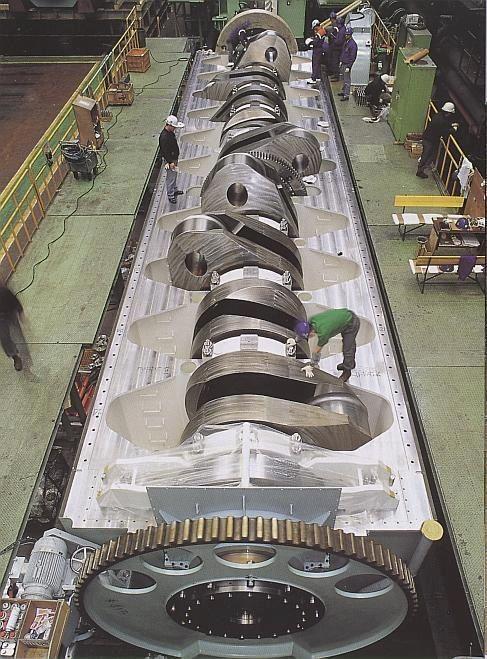
Fuel consumption matches its immense output. At full load, the engine burns close to 250 tons of heavy fuel oil per day. Even when running at peak efficiency, it consumes roughly 1,660 gallons of fuel per hour. That fuel demand is enormous, but it is justified by the role the engine plays, pushing ultra-large container ships across oceans with remarkable reliability.
The RTA96-C was developed after it became clear that the existing 12-cylinder version was no longer sufficient for a new generation of container ships. Instead of starting from scratch, Wärtsilä extended the proven design by adding two additional cylinders, significantly boosting power output while preserving efficiency. This approach required substantial engineering changes, including reinforcing the crankshaft and ensuring the engine block could withstand the increased torque and mechanical stress.
The first 14-cylinder RTA96-C entered service in 2006 aboard the Emma Maersk, which at the time was the largest container ship in the world. Its debut marked a turning point in marine engineering, demonstrating that extreme scale could coexist with operational efficiency.
These engines are built to order, assembled piece by piece, and installed directly into ships during construction. With price tags exceeding $25 million, they represent some of the most complex and expensive combustion engines ever produced. Despite growing interest in alternative fuels and electrification, engines like the RTA96-C remain critical to global trade, moving vast quantities of goods across the planet every day.


