

The Swedish auto publication Teknikens Värld recently asserted that the new Model 3 Long Range sedan has “deficient” brakes. Tesla Sweden has formally addressed this criticism. When the publication tested the updated all-electric sedan’s braking distance and discovered that it was short of what was expected and comparable to other models, the controversy started. The Model 3 Long Range needed to brake 133.2 feet (40.6 meters) to stop completely, according to Teknikens Värld. According to the magazine, when it conducted the test again with a different Model 3, it only noticed a slight improvement of roughly five feet (1.5 meters). For background, the magazine cited data from Edmunds in the United States to support its claim that a reasonable stopping distance should be closer to 124 feet (38 meters). According to reports, the Volkswagen ID.7 Tourer, which has rear drum brakes, was able to stop 16 feet (5 meters) shorter than the Model 3 under comparable circumstances.
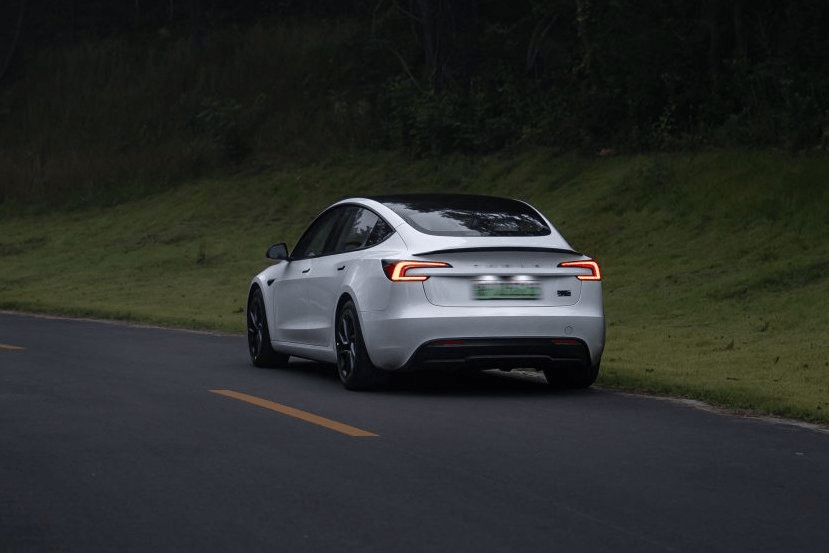
Tesla Sweden reacted negatively to the publication’s conclusions, claiming that they were inconsistent with both its own internal data and the new Model 3’s safety ratings. Tesla noted that the 2021 tests conducted by Teknikens Värld showed noticeably shorter braking distances of 36.5 meters for the Model 3 RWD and 36.7 meters for the Long Range AWD variant. To find out if there was a problem with the two cars the magazine tested, the company has now started an investigation. With an overall score of 90% under its most stringent testing standards to date, the Model 3 recently earned a full 5-star rating from independent crash safety body Euro NCAP, demonstrating Tesla’s dedication to safety.
Teknikens Värld is adamant that the updated Model 3 be regarded as a new generation vehicle, distinct from earlier tests and ratings, despite Tesla’s rebuttal. The magazine maintained that the brakes on the new Model 3 are not up to par, arguing that Euro NCAP crash safety results are not directly comparable to braking performance tests.


