

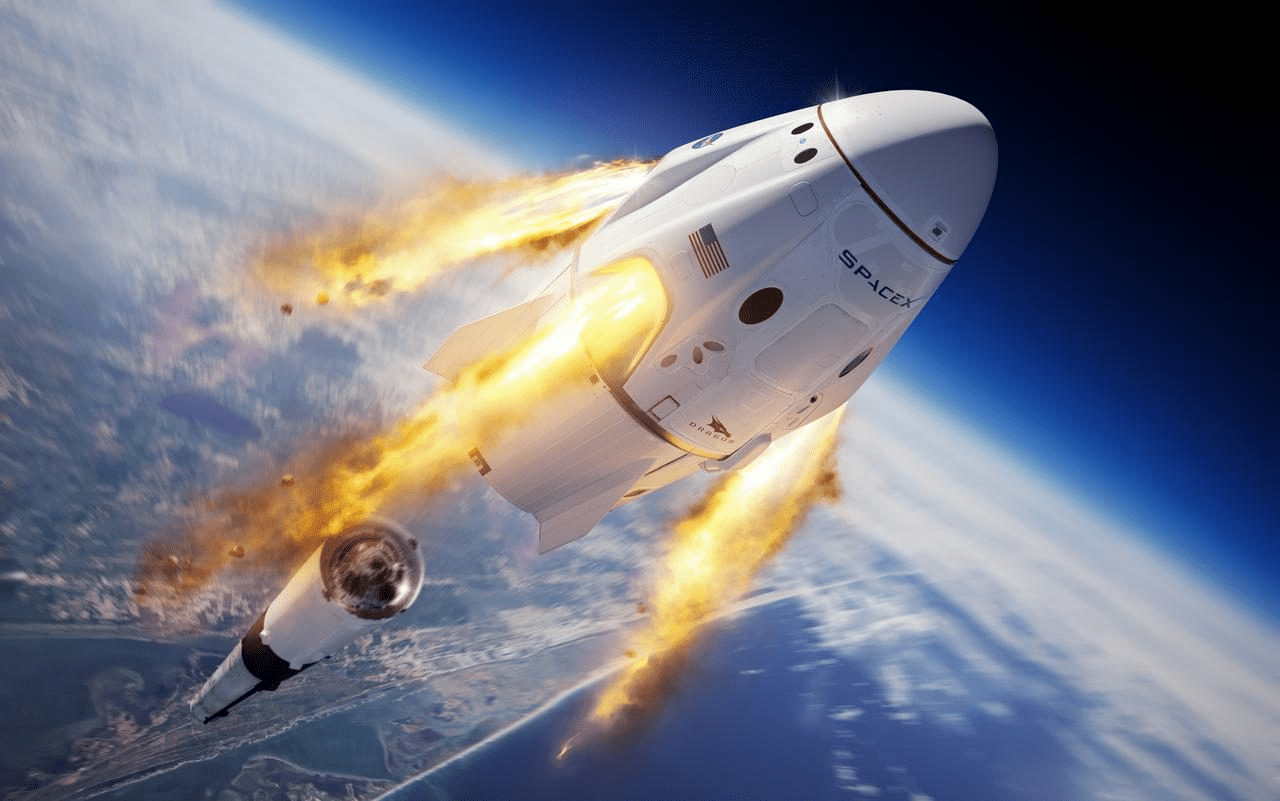
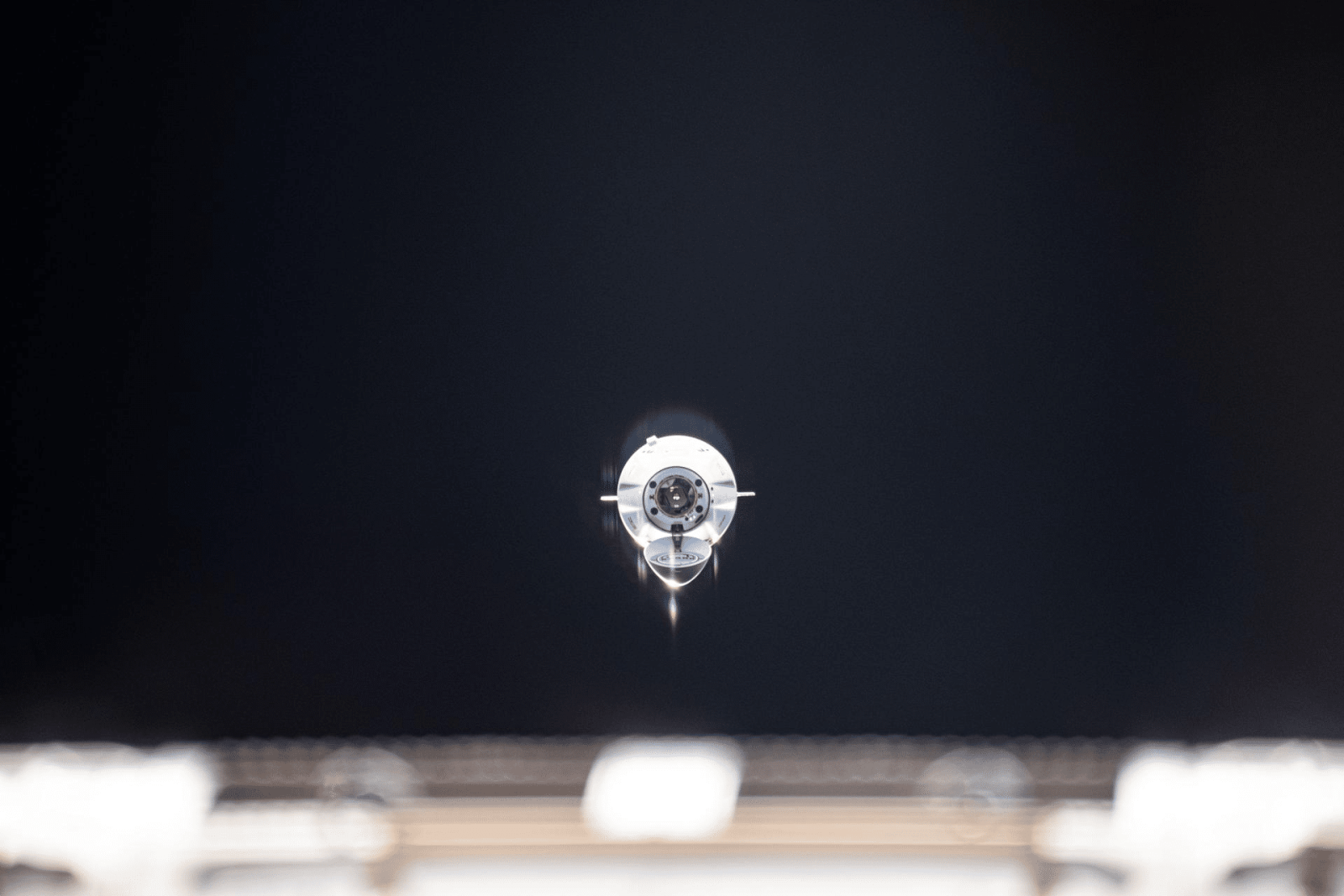
On May 25, 2025, SpaceX’s Dragon capsule splashed down safely off the coast of California, bringing home a remarkable 6,700 pounds of cargo from the International Space Station (ISS).
Inside Dragon’s cargo hold were materials that had endured the unforgiving environment of orbit, robotic tentacle arms tested for object handling in microgravity, advanced imaging systems for Earth observation, and even a set of children’s books read aloud by astronauts to inspire young students. Each item tells a different part of the story of how space science is moving from experimentation toward practical impact.
Among the most valuable returns was MISSE-20 (Multipurpose International Space Station Experiment), a collection of material samples that had spent months attached to the station’s exterior. These samples, ranging from radiation shielding foils and solar sail coatings to ceramic composites for reentry and specialized heat-shield resins were subjected to ultraviolet radiation, atomic oxygen, and extreme temperature swings.
By studying how they withstood these punishing conditions, scientists can design spacecraft that are more durable for future missions to the Moon, Mars, and beyond. The research also has near-term benefits: stronger, more radiation-resistant materials could extend the lifespan of Earth-orbiting satellites, ensuring that communication, weather tracking, and Earth monitoring systems remain reliable for longer periods.
Dragon also carried home results from Astrobee-REACCH (Responsive Engaging Arms for Captive Care and Handling), an experiment that could redefine how astronauts and robots manage objects in orbit. Mounted on NASA’s free-flying Astrobee robots, REACCH tested tentacle-like robotic arms tipped with adhesive pads capable of grabbing items of varying size and shape.
In orbit, the technology proved its ability to capture and maneuver objects—a skill that could become critical for addressing the growing issue of space debris. With thousands of satellites already in orbit and many more on the way, the risk of collisions is mounting. A system like REACCH could help remove debris, perform satellite repairs, or even refuel spacecraft, laying the foundation for safer and more sustainable space operations.
Not all the mission’s cargo was about hardware. Dragon also brought back Story Time From Space, a series of children’s books and accompanying science demonstrations performed by astronauts aboard the ISS. The recordings, showing astronauts reading STEM-themed stories while conducting simple experiments in microgravity, are being shared with classrooms around the world.
The project highlights the softer side of space exploration: showing children not just the science, but the human experience of living and working in orbit. The hope is to spark curiosity and encourage students to pursue careers in science, technology, engineering, and mathematics (STEM)—a reminder that exploration is as much about inspiring the next generation as it is about advancing technology.
Another milestone returning to Earth was OPTICA (Onboard Programmable Technology for Image Compression and Analysis), a hyperspectral imaging system designed to capture vast amounts of data while dramatically reducing transmission costs. By compressing and processing imagery directly in space, OPTICA can send down ultra-high-resolution visuals in real time, without overwhelming bandwidth.
The applications are immense: environmental monitoring, disaster response, agriculture, and climate science could all benefit from faster, more affordable access to high-quality Earth imagery. From tracking wildfires in real time to assessing crop health at a regional scale, OPTICA represents a step forward in turning space-based imaging into actionable insights for life on Earth.
Now in its 25th year of continuous habitation, the ISS has become far more than a symbol of international cooperation. It is a laboratory where new materials, medical research, and robotic systems are tested in ways impossible on Earth. Every return capsule like Dragon brings back not only physical samples but also data that pushes humanity closer to long-duration spaceflight, lunar settlements, and interplanetary exploration.


. Inside Dragon’s cargo hold were materials that had endured the unforgiving environment of orbit, robotic tentacle arms tested for object handling in microgravity, advanced imaging systems […]&media=https://wonderfulengineering.com/wp-content/uploads/2025/08/image-217.png)