

Scientists are finding that instead of spending months designing and building tiny robots, it can be faster to turn real insects into remote-control cyborgs. Now, researchers have built an assembly line that can convert cockroaches into cyborgs in under 70 seconds, compared to the 15 minutes to an hour it takes by hand.
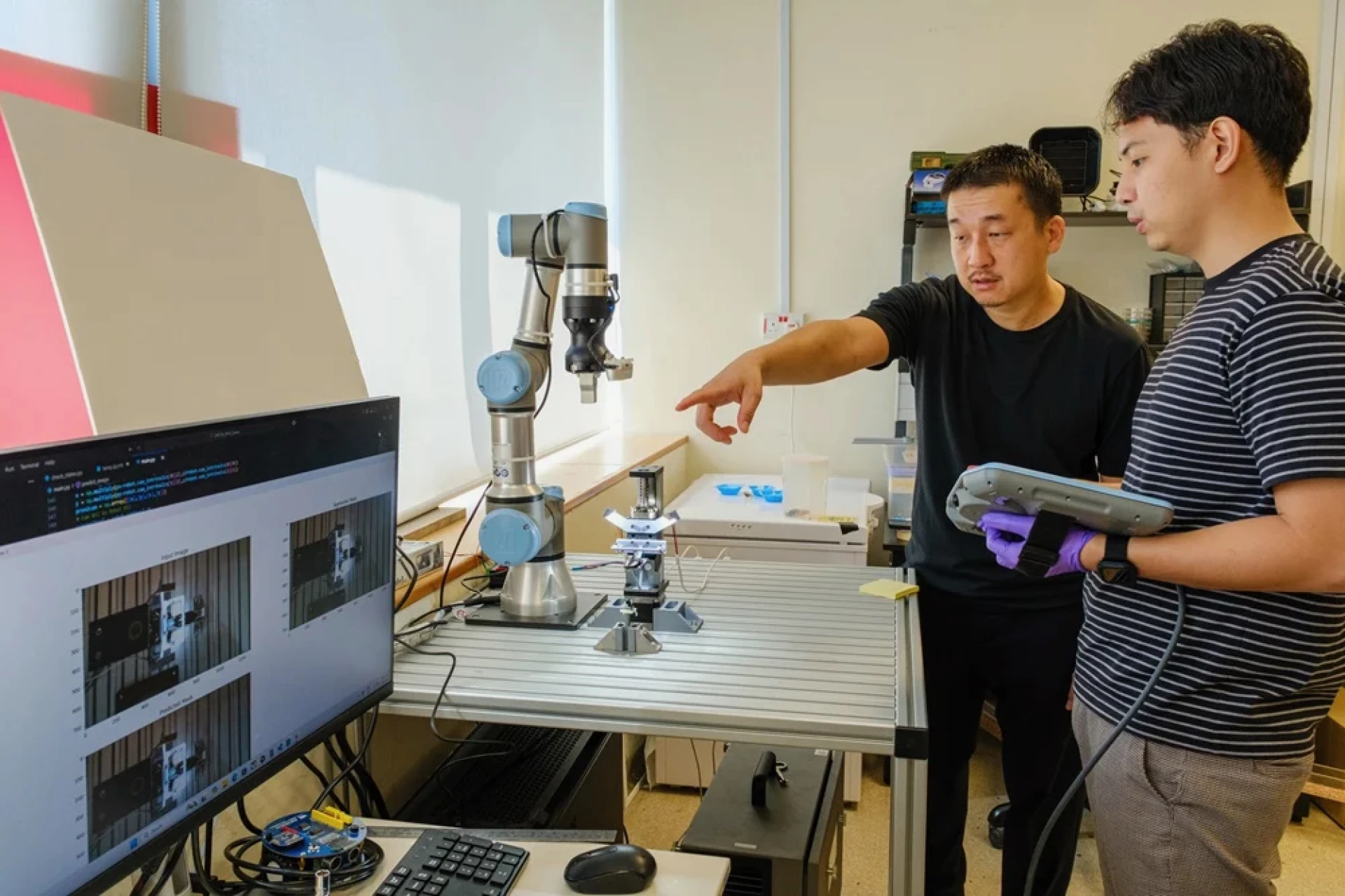
Image credits: Nanyang University
A cyborg cockroach usually starts with a large insect, often a Madagascar hissing cockroach, fitted with a small electronic backpack. Electrodes in that pack send tiny signals to the insect’s antennae or eyes, making it start or stop walking, or turn left and right. This isn’t just a strange science project. One of the main ideas is using these insect robots for search and rescue. Equipped with a camera, a cockroach could crawl through collapsed buildings, sending back live video and the location of survivors. But to be useful, you’d need hundreds of them, and that’s where automation comes in.
At Nanyang Technological University in Singapore, Professor Hirotaka Sato and his team developed a computer-controlled system with a platform that holds the insect in place, an Intel RealSense depth camera, and a robotic arm. Once the cockroach is anesthetized, a motor moves it into position. A vision system measures its body, a preassembled 2.3-gram backpack is lowered on, and two electrodes are implanted into a small membrane on its back. The backpack latches in place, and the insect is slid out, still asleep.
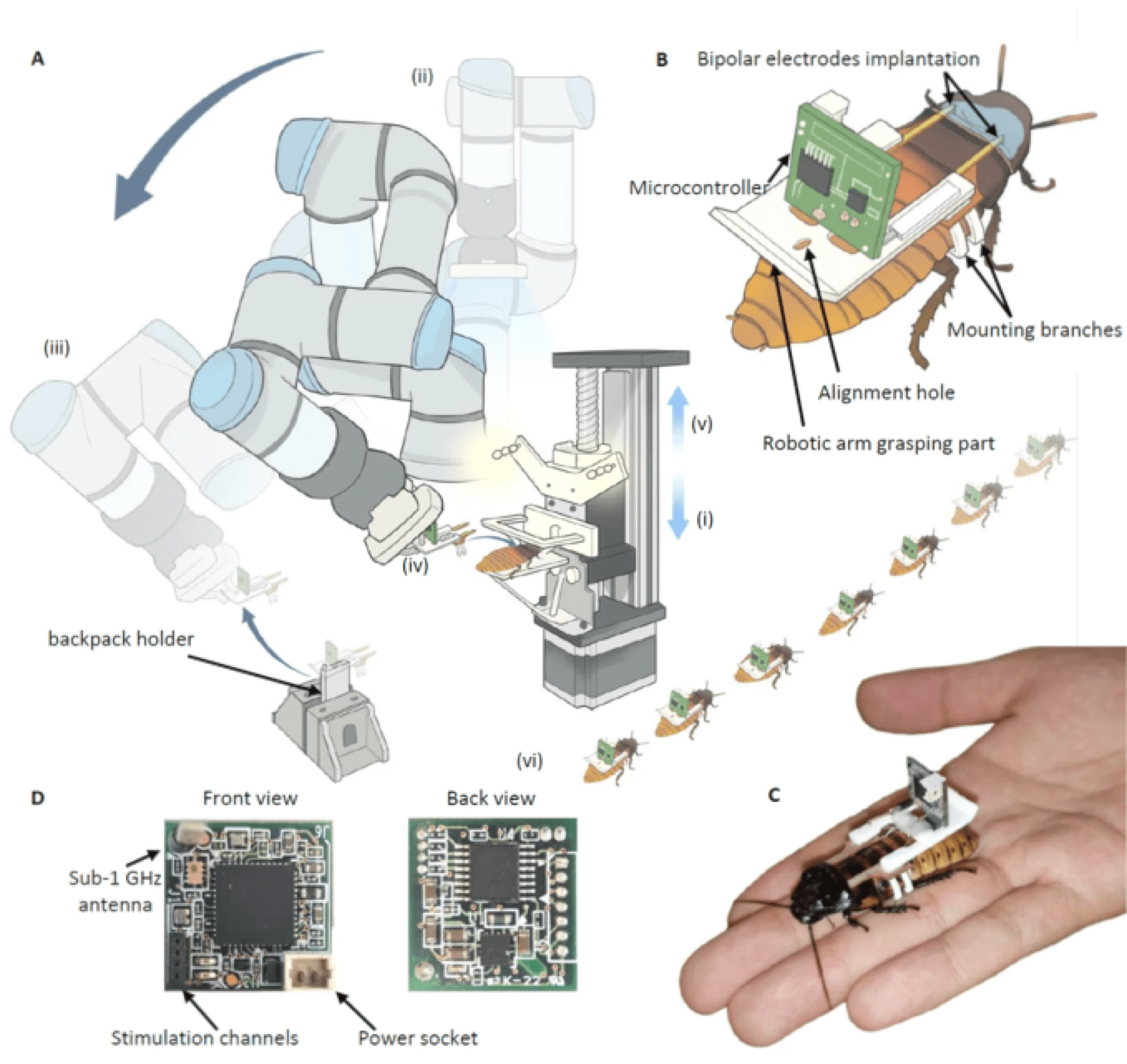
Image credits: Nanyang University
In tests, these assembly-line cyborg cockroaches performed just as well as manually prepared ones, following S-shaped paths and navigating obstacles. The setup also uses less battery power, requiring only 40 percent of the stimulation time and 75 percent of the voltage of earlier systems. The backpacks can even be removed and reused between missions.
“Our innovation makes the dream of deploying large numbers of cyborg insects in real-life scenarios far more practical,” Sato said in a statement. A paper on the work was published in Nature Communications.


