

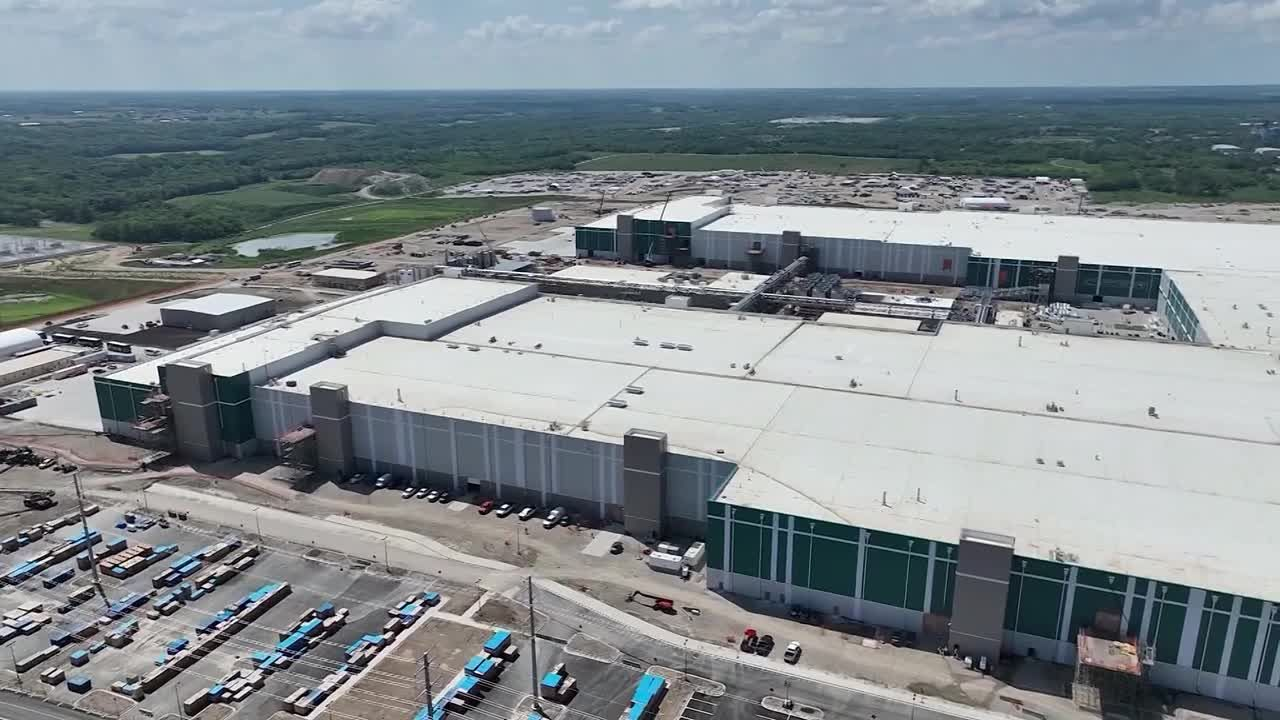
In a milestone for America’s clean energy and manufacturing sectors, Panasonic has opened what it calls the world’s largest electric vehicle battery factory in De Soto, Kansas. Spanning 4.7 million square feet. The $4 billion facility aims to supercharge U.S. EV production, strengthen domestic supply chains, and help cities cut both costs and pollution.
The Kansas plant is Panasonic’s second battery facility in the United States, following its operations inside Tesla’s Gigafactory campus in Nevada. Developers say it is also the largest economic development project in Kansas history, set to bring 4,000 manufacturing jobs plus 8,000 additional supply chain roles.
By mass-producing EV batteries domestically, Panasonic hopes to simplify supply chains, reduce reliance on imports, and potentially lower EV prices delivering savings to both consumers and businesses. Battery storage also plays a key role in supporting renewable energy, enabling homes and cities to pair systems with solar panels to reduce fossil fuel use and slash utility bills.
The plant’s opening comes at what Inside EVs calls a “critical moment” for the U.S. EV sector. Global demand has slowed, with Tesla reporting a 13% drop in second-quarter deliveries in 2025. Panasonic, however, is using the new facility to diversify beyond Tesla, already supplying Lucid and Mazda.
Trade tensions with China and incentives from the Inflation Reduction Act have also fueled a domestic “battery manufacturing boom,” with billions in investments and thousands of new jobs nationwide.
Addressing concerns about market slowdowns, Megan Myungwon Lee, Panasonic’s head of North American operations, told Bloomberg: “We’re going to be full production this year. When we commit to something, we’re fully committed, and we want to make sure we support all the customers. We’re not feeling the slowdown yet, and we’re very bullish.”


