

The internet runs on data centers, but according to a new global analysis, most of them are operating in places that are far from ideal. Nearly 7,000 of the world’s 8,808 operational data centers are located in climates that fall outside the recommended temperature range for efficient operation, as reported by Tom’s Hardware.
The analysis, published by Rest of World, combined data center location information with long-term climate records from the Copernicus Climate Data Store. Researchers then compared those locations against guidelines from ASHRAE, the American Society of Heating, Refrigerating, and Air-Conditioning Engineers. According to ASHRAE, data centers operate most efficiently when inlet air temperatures stay between 18°C and 27°C. Outside that range, problems begin to stack up. Too hot, and cooling systems burn more energy and drive up costs. Too cold, and condensation and reliability risks increase.
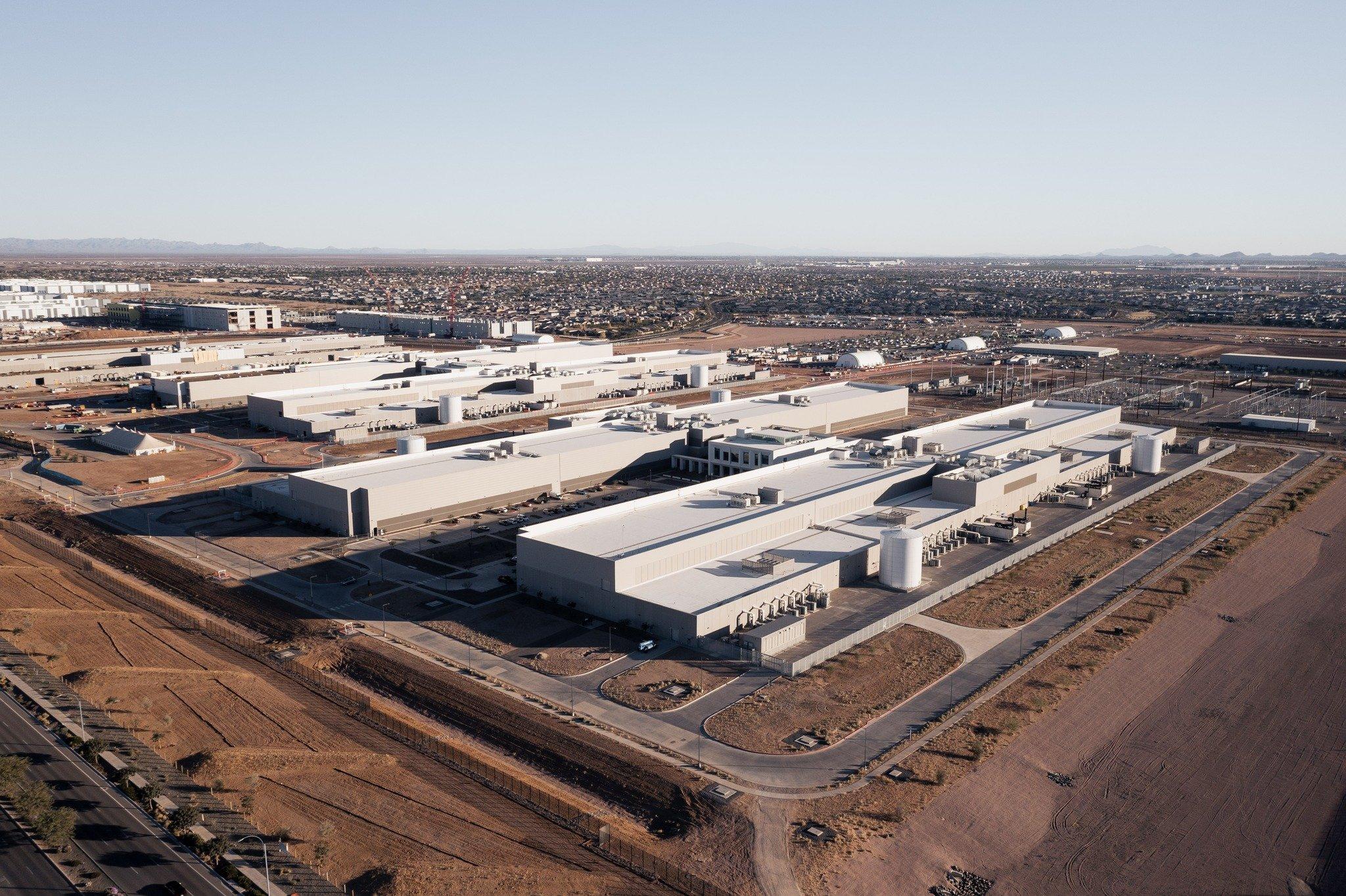
A Meta data center in Arizona
Using that definition, almost four out of five data centers worldwide fall outside the optimal climate window. Most of them are in cooler regions below 18°C, which is generally easier to manage from a cooling perspective. However, around 600 facilities, just under 10% of the global total, are located in regions where average temperatures exceed 27°C, creating persistent heat challenges.
Some countries face this issue across the board. In 21 nations, including Singapore, Thailand, Nigeria, and the United Arab Emirates, every operational data center is located in a climate considered too hot under ASHRAE guidelines. Nearly all facilities in Saudi Arabia and Malaysia fall into the same category. In India, about 30% of its more than 200 data centers are exposed to sustained high temperatures, while in Indonesia, nearly half of its roughly 170 sites sit in overly hot regions.
Singapore stands out as a prime example of the tradeoff between climate and connectivity. Despite average daily temperatures near 33°C and humidity frequently above 80%, it has one of the densest concentrations of data centers in the world. More than 1.4 gigawatts of capacity is already online, and the government plans to approve additional capacity under stricter efficiency rules. Data centers accounted for roughly 7% of Singapore’s electricity use in 2020, a figure expected to rise sharply.
So why keep building in the wrong places? The answer is that temperature is only one factor. Companies prioritize proximity to users, data sovereignty laws, access to power and water, land prices, tax incentives, and political stability. As AI and cloud demand surge, governments increasingly require data to stay within national borders, limiting the ability to concentrate infrastructure in cooler regions like Scandinavia.
The stakes are rising fast. Data centers consumed about 415 terawatt-hours of electricity in 2024, around 1.5% of global demand, and that figure is expected to more than double by 2030. Operators are experimenting with liquid cooling and other advanced methods, but retrofitting existing facilities is costly. Analysts warn that by 2040, extreme heat could materially affect two-thirds of major data center hubs worldwide.
In short, the digital world is expanding fastest where cooling is hardest, and that tension is only going to grow.


