

US Air Force
The US operation that led to the capture of Venezuelan President Nicolás Maduro relied heavily on low-flying helicopters, terrain masking, and tightly integrated electronic warfare rather than sheer force. The mission, which unfolded in under three hours, was the result of months of preparation combining surveillance, cyber operations, and precision aviation.
US intelligence agencies, led by the Central Intelligence Agency, first built an extensive “pattern of life” profile of Maduro. Analysts tracked his movements, routines, and security posture to determine when he would be most vulnerable. That intelligence pointed to the Fuerte Tiuna military complex in Caracas as the optimal location and timing for the raid.
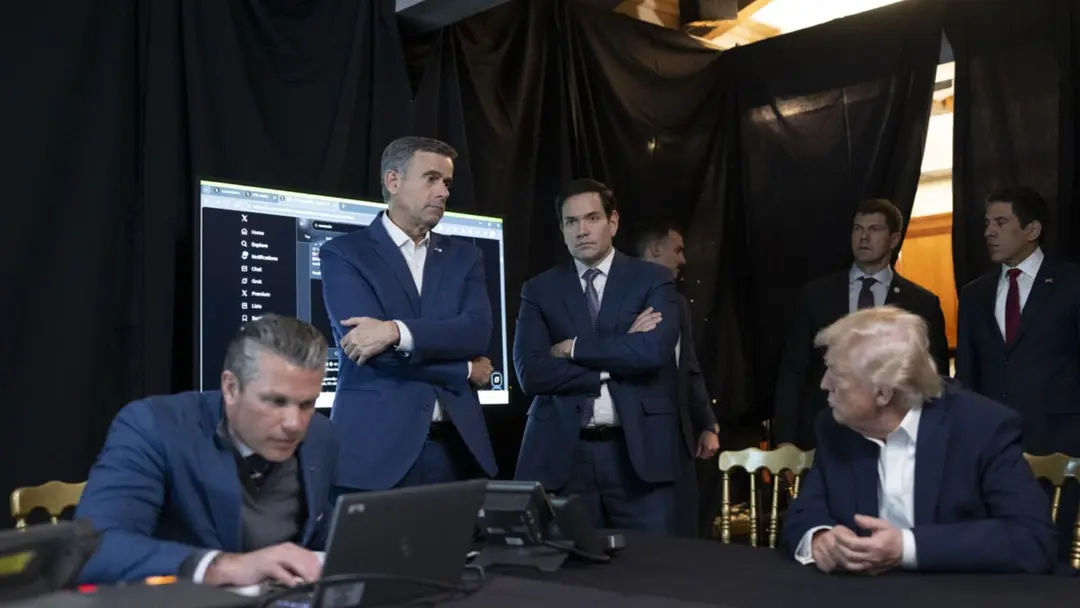
Courtesy: The White House
Persistent surveillance played a central role. Low-observable drones, including the RQ-170 Sentinel, were reportedly used to monitor key sites without alerting Venezuelan air defenses. These platforms gathered radar and imaging data while remaining difficult to detect, feeding real-time information into mission planning systems. Signals intelligence complemented the aerial picture, allowing US planners to monitor communications even as Maduro’s security limited mobile phone use.
Before any helicopters crossed into Venezuelan airspace, US forces moved to disrupt defenses electronically. Cyber operations and electronic warfare reportedly caused localized power outages in Caracas at the opening of the mission, degrading command and observation systems. At the same time, US Navy aircraft suppressed Russian-made air defenses using jamming and anti-radiation strikes with AGM-88 HARM, forcing radars offline and creating a narrow but critical air corridor.
Insertion was handled by the 160th Special Operations Aviation Regiment, which flew modified helicopters at extremely low altitude, in some cases near 100 feet above the surface. Terrain-following systems allowed crews to mask their approach using coastline and mountainous geography, minimizing radar exposure. Even when aircraft took ground fire near the target, onboard countermeasures kept them operational.
On the ground, operators from Delta Force used specialized cutting tools instead of explosives to breach secured areas quickly. Maduro and his wife were taken into custody within minutes. Extraction followed the same low-observable routes, with helicopters departing under fighter cover toward US naval assets, including the USS Gerald R. Ford.
Beyond its political impact, the raid illustrates how modern military operations increasingly depend on the integration of stealth aviation, terrain masking, cyber disruption, and electronic warfare to achieve strategic objectives with speed and precision.


