

At the 2025 World Artificial Intelligence Conference (WAIC) in Shanghai, China is showcasing its ambition to lead the future of robotics with a dazzling display of over 60 humanoid robots.
Spanning over 70,000 square meters, the 2025 WAIC has brought together more than 800 companies and over 3,000 cutting-edge AI products. Among the main attractions are humanoid robots, which are evolving beyond novelty into practical tools for industry, healthcare, education, and logistics.
According to Du Guangda, deputy director of the Department of Science and Technology at the Ministry of Industry and Information Technology, these robots are poised to transition from laboratory prototypes to commercially viable machines:
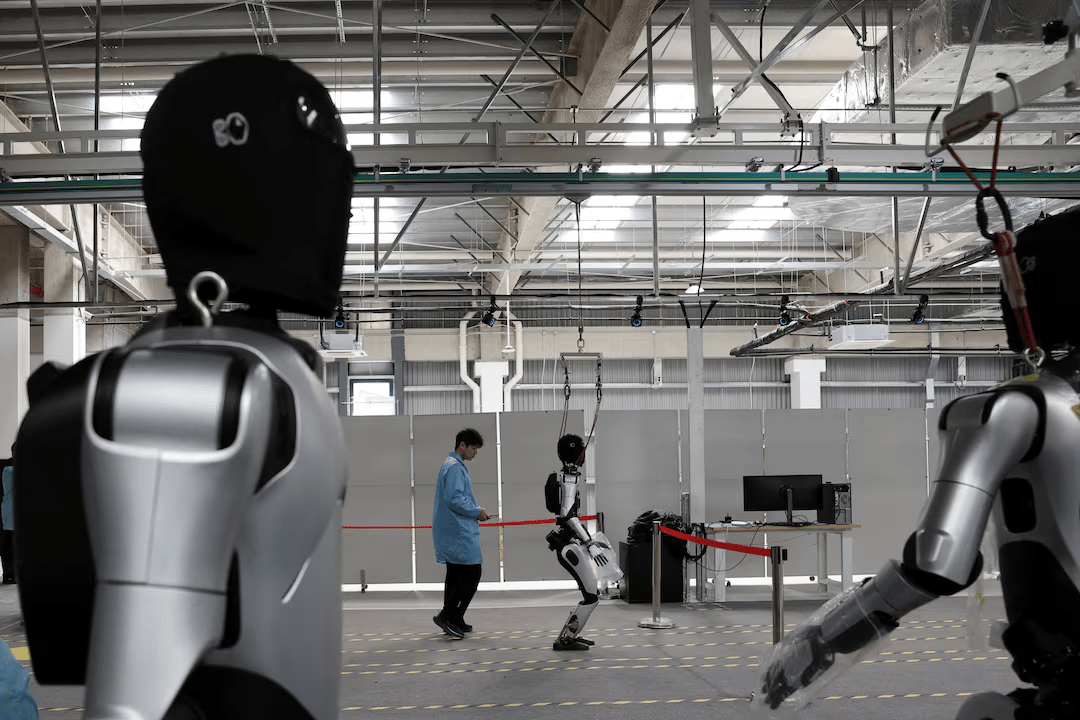
“Humanoid robots in China are now transitioning into practical industrial use.”
The backbone of this transformation lies in embodied intelligence — AI systems that are not only smart but physically present and capable of interacting with the environment in real-time. As Xu Xiaolan, president of the Chinese Institute of Electronics, put it:
“Humanoid robots integrate key technologies such as chips, sensors, AI, mechanics and materials. They are the ideal carriers of embodied intelligence and represent an advanced form of intelligent robotics.”
She further emphasized their disruptive potential, stating they could be the next game-changing technology after smartphones and electric vehicles.
One of the event’s stars, XMAN-F1, a new bipedal humanoid from Keenon Robotics, stole the show with its capability to perform standardized service tasks like food preparation and table service. Visitors to Keenon’s interactive booths—featuring settings such as a tavern bar and a medical station—saw firsthand how robots are shifting from performing single duties to working as part of complex service ecosystems.
Li Tong, founder and CEO of Keenon Robotics, explained:
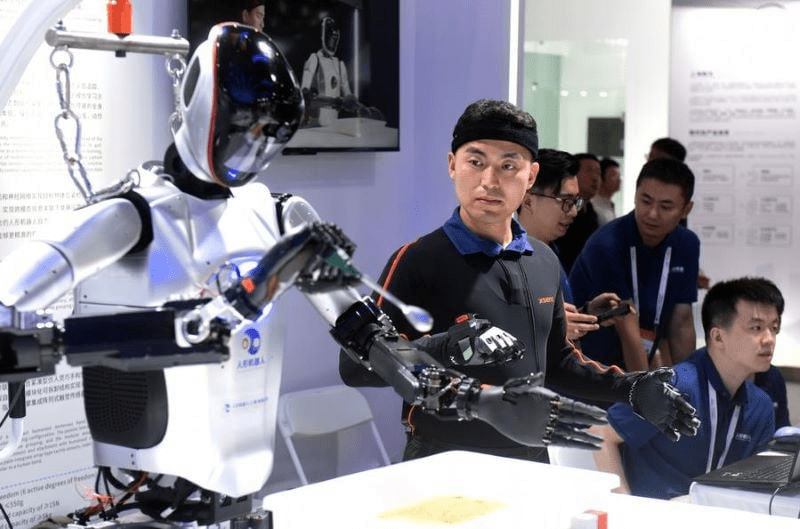
“Specialized robots excel in specific tasks, while general-purpose robots are valued for their adaptability… both will work in tandem to jointly serve human society.”
On the healthcare and emotional front, Fourier Intelligence unveiled GR-3, a humanoid robot designed for companionship and interactive care. With expressive facial features and a touch-sensitive body, GR-3 can sense movements and emotions, aimed at future roles in education and elderly care. Its predecessor series, GRx, has already supported over 1 million patients across more than 300 medical facilities in China.
Industry-focused applications are also gaining momentum. Shanghai Kepler Robot Co., Ltd. showcased humanoid robots suited for “blue-collar” tasks from automotive assembly lines to warehouse logistics. These demonstrations highlight how AI-driven machines can help alleviate labor shortages and improve efficiency in physically demanding or repetitive jobs.
WAIC 2025 also saw the debut of a national training base for heterogeneous humanoid robots, located in Shanghai’s Pudong New Area. As part of China’s broader strategy, the event marked the launch of a significant proposal to unify data standards for humanoid robot development. The goal? To foster an open, compliant, and collaborative data ecosystem for embodied intelligence.


 in Shanghai, China is showcasing its ambition to lead the future of robotics with a dazzling display of over 60 humanoid robots. Spanning over 70,000 square meters, the 2025 WAIC has brought together more than 800 companies and over 3,000 cutting-edge AI products. Among the main attractions […]&media=https://wonderfulengineering.com/wp-content/uploads/2025/08/image.png)