

Humanoid robots are stepping out of science fiction and into reality. From Tesla’s Optimus to Figure AI’s Figure 02, the field is buzzing with prototypes that can walk, balance, and even pull off acrobatics. Now, China’s Unitree Robotics best known for its agile four-legged robots has entered the spotlight with the launch of the Unitree R1, a humanoid priced at under $6,000.
Standing about 1.2 meters tall and weighing 25 kilograms, the R1 is roughly the size of a small teenager or a packed suitcase. It’s built with 24–26 degrees of freedom, giving it a range of motion that allows it to walk, squat, wave, kick, balance, and, as Unitree has shown in demonstrations, perform athletic stunts such as cartwheels.
The robot comes equipped with an array of sensors, including 3D cameras, directional microphones, and wireless connectivity. Its onboard computer can process both vision and sound at once, and users can supercharge its capabilities by adding Nvidia’s Jetson Orin chip, a $249 AI computing module that enables advanced tasks like real-time image recognition, decision-making, or even running Unreal Engine for 3D simulations.
Battery life is limited to about an hour, but a quick-swap system allows new batteries to be slotted in without delay more than enough for research, demonstrations, or short bursts of training.
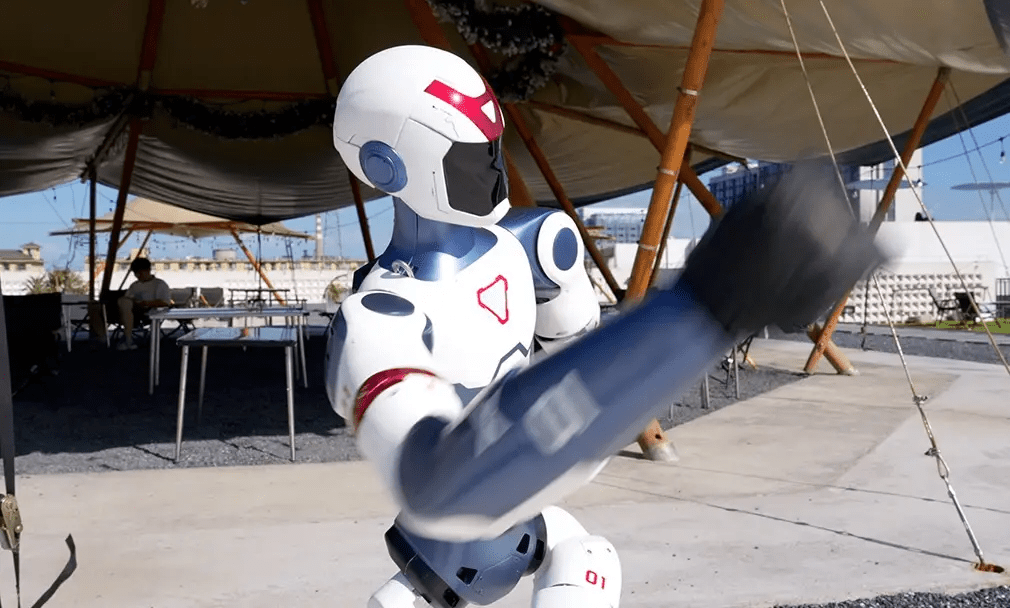
As impressive as the R1’s physical capabilities are, the real challenge lies in software. Unitree cautions buyers to “understand the limitations” of humanoid robots, acknowledging that autonomy remains an unsolved problem. The difficulty isn’t in getting the machines to move, but in teaching them to understand environments, adapt on the fly, and interact safely with people.
For now, most humanoid demonstrations remain scripted routines or teleoperated performances, but research teams are working to close that gap. Efforts include programming robots to sort packages, navigate uneven terrain, and refine finger dexterity for delicate tasks. As one robotics observer noted: “The hardware says, ‘I can do it.’ The software still has to figure out how.”
Critics often ask why build robots that look like us, instead of specialized machines? The answer lies in both practicality and perception. A humanoid form can more easily use doors, tools, and stairsenvironments already designed for human workers. Equally important is social acceptance, people tend to feel more comfortable interacting with a robot that has arms, legs, and gestures rather than a faceless machine on wheels.
That said, humanoids aren’t always the most efficient choice. Wheeled robots can move faster and use less energy, while industrial robotic arms outperform humanoids in strength and precision. What humanoids offer is versatility and a platform for experimentation qualities that become increasingly valuable as AI advances.
By slashing the cost of entry, Unitree’s R1 makes it possible for universities, small labs, and creative teams to experiment with humanoid robotics. Students might program the R1 to help in a care home; warehouse engineers could explore safe human-robot collaboration without cages; artists could even put it on stage.


